Services

3M Respiratory Program Services for Enterprise EHS Teams

Respiratory protection is not a simple reorder task. It is a managed program that connects hazard assessment, product selection, fit testing, worker training, medical clearance coordination, cartridge change rules, and periodic audit evidence. Our service model is built for safety leaders who need deployment discipline across multiple sites without making unsupported claims about universal protection.

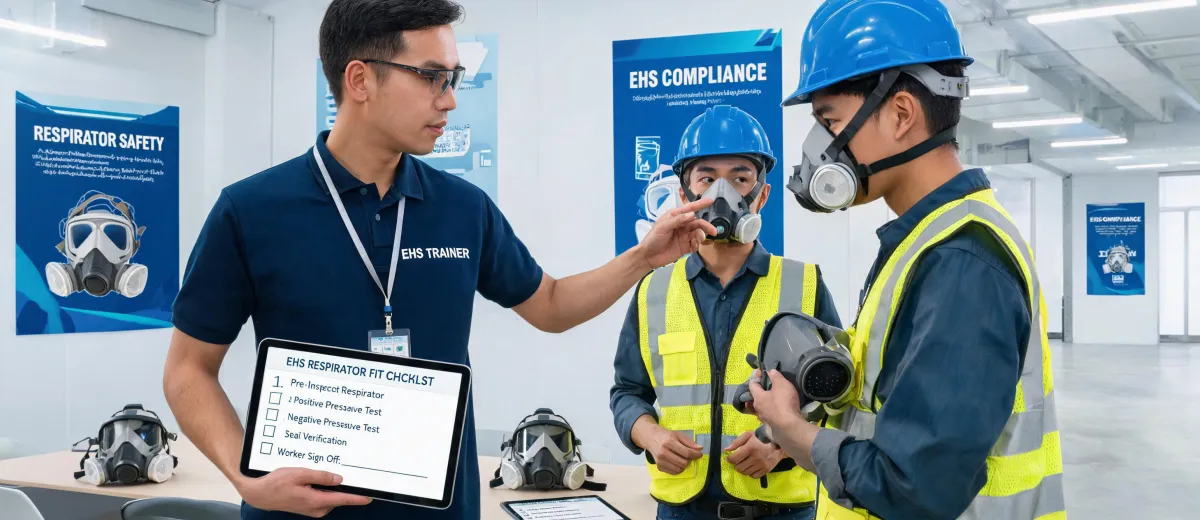
Respirator training and fit testing service

Service pillars for a controlled rollout

Each engagement is scoped around your hazard profile, workforce size, and procurement controls. The goal is practical readiness: the right respirator class, the right training record, and the right replenishment rule for each user group.

01

Program Mapping

We document wearer groups, airborne hazards, APF targets, disposable versus reusable economics, and regional requirements such as OSHA 1910.134, EN 149:2001+A1:2009, or local equivalents. The output is a practical matrix that procurement and EHS can both use.

02

Fit and Wear Trials

Field trials compare seal, comfort, communication needs, lens fogging, filter resistance, and shift duration. Teams can align facepiece options to worker feedback before standardizing a catalog or changing a cartridge platform.

03

Digital Evidence Setup

Inspection forms, training logs, and fit-test status can be structured for export into an EHS system. The service does not replace your compliance owner; it gives that owner cleaner evidence and fewer disconnected spreadsheets.

Four steps from assessment to steady-state support

The workflow is intentionally short because respiratory programs fail when rollout tasks are scattered across procurement, supervisors, and site safety without a shared timeline.

1

Review exposure groups

Gather SDS, sampling data, task lists, and current respirator usage so the service team can see where selection rules need confirmation.

2

Build the selection matrix

Map each group to facepiece style, filter class, APF, change schedule logic, and supporting PPE such as ANSI Z87.1-2020 eye protection.

3

Run wearer validation

Conduct fit and comfort trials, record training gaps, and identify users who need alternate sizes, alternate seal materials, or PAPR evaluation.

4

Launch evidence controls

Finalize catalog rules, replenishment triggers, inspection reminders, and export fields that help EHS teams show due diligence during audits.

Documentation-first service, not unsupported safety promises

We avoid absolute protection language. Instead, the service emphasizes documented standard alignment, verified product approvals, clear wearer instructions, and repeatable audit records. That distinction matters when corporate safety teams must defend decisions across construction, manufacturing, oil and gas, utilities, and hygiene-sensitive facilities.

Start with a service scope

Request a respiratory program review for your next site group.

Include the number of wearers, exposure types, current respirator models, and target launch date. A program specialist can suggest a practical pilot sequence before you commit to a broad catalog change.