My name is on the purchase orders for every piece of safety equipment that comes through our three facilities—roughly $85,000 annually in PPE and related supplies. I don't decide what our safety manager needs. I execute the order and make sure it arrives on time, with the right certification docs, at a price finance won't flag.
Here's what five years of doing this has taught me: there is no single "best" PPE setup. What works for a welding shop falls apart on a general construction site. A configuration that passes a NIOSH audit for one operation gets flagged as overkill—or underkill—for another.
If you're trying to figure out where your operation falls and what to actually order, here are the three scenarios I see most often, and what works in each.
Scenario 1: High-Dust, Welding, or Chemical Exposure — Respiratory Protection Leads
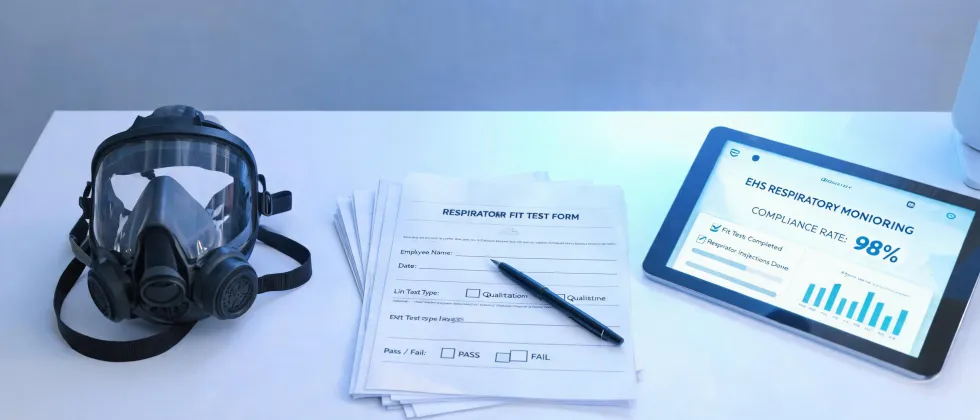
In this environment, respiratory is the core purchase. We use Bullard's PAPR systems (powered air-purifying respirators) because the sites that need this kind of setup with a bullard hood respirator—welding, grinding, chemical handling—require equipment that holds up to NIOSH certification review. Not every brand manages that.
The specific configuration depends on the job site. The bullard hood respirator for welding isn't the same as the one for grinding or chemical spray. Shell material, hood style, cartridges—those come from the safety manager's spec. My job is to make sure the spec matches the order and nothing gets lost in translation.
One small thing that matters more than people realize: batteries. PAPRs run on batteries. We keep spares on-site for every shift. In the beginning, we didn't. A welding crew went down mid-process when a unit died, and it took two hours to get a replacement battery in. That downtime cost more than triple the price of a few spares. Prevention over correction—five extra minutes of checking saves five hours of rework.
I'll be honest—I'm not sure I fully understand why some setups that look identical on paper perform so differently in the field. My best guess is it comes down to maintenance habits and how well the battery management actually gets followed. If anyone has cracked that code, I'd love to hear it.
Scenario 2: General Construction or Light Industrial — Head and Face Protection Are the Workhorses
This scenario is simpler. It's mostly hard hats, face shields, safety glasses—and sometimes light respiratory protection. We use Bullard's S51 line for hard hats because the safety manager specifies that brand (Bullard invented the hard hat in 1919, and that carries weight in our industry).
But let me clear up what "net ppe" actually means. I thought it was net price when I first heard the term. It's not. It refers to your complete protective stack—not just the unit cost. The hard hats you buy, their replacement cycle, the consumption rate on face shields, the training hours. That's your net PPE.
Here's a practical example: a $3 hard hat that breaks twice a year is worse than an $8 hard hat that lasts two years. But finance only sees the unit price. So when I calculate net PPE cost, I do the math myself: annual volume, replacement frequency, training time. Then I use that number in the budget conversation.
The procurement flow in this scenario is fairly straightforward. As long as the specs are right, the certifications are in order, and the stock keeps moving, it's not a headache.
Scenario 3: PPE Plus Physical Site Barriers — Combined Security
Some sites need more than PPE alone. I've run into several where physical security matters just as much as personal protection. And "securing the site" means something different when it enters the procurement process—including fencing and barriers.
For the people side, it's the same lineup: hard hats, a PAPR system with bullard hood respirator if the dust conditions are still present, face shields, safety glasses. That part doesn't change.
What does change is whether the site has a perimeter. In some cases, our safety manager has asked for chain link fence privacy screens—the kind that attach to chain link and provide visual blocking—or for some layouts we've used woven wire fence to define zones and restrict unauthorized access. It sounds disconnected from PPE, but it's part of site safety. PPE protects the person. Fencing protects the area.
I have mixed feelings about this part. On one hand, fencing and privacy barriers add budget and don't directly protect a worker's body. On the other, an open site with no defined zones creates its own hazards—trespassing, material theft, people walking where they shouldn't. The safety manager calls it "layered protection." That makes sense to me.
Part of me wants to keep everything in one big order for simplicity. Another part knows that separating PPE from physical security purchases has saved us from compliance headaches. I compromise: distinct purchase orders by category, reviewed by different stakeholders.
How to Figure Out Which Scenario You're In
The test can be as simple as this:
- If the site involves welding, grinding, high dust, or chemical exposure—you're in Scenario 1. Prioritize the respiratory budget.
- If it's mostly construction maintenance, general labor, and moderate dust control—you're in Scenario 2. Head and face protection plus a realistic replacement cycle are the focus.
- If the site is an open yard with boundary or security concerns on top of worker protection needs—you're in Scenario 3. Budget for both PPE and physical barriers.
But honestly—it's rarely clean. Some sites hit all three profiles at once. What I do is buy by category under the safety manager's spec. Scenario 1 orders for respiratory, Scenario 2 for head and face, Scenario 3 for site security. Separate purchase orders, separate verification checks.
That's simpler than trying to jam everything into one order. And after a few years of this, I've learned that separate orders let me match each item to the right person. A wrong respirator spec on a mixed order can bounce the whole thing back. Separate orders avoid that. (Trust me, I've eaten that mistake.)
If your situation sits between two scenarios, go with whatever the safety manager flags as the higher risk. Prevention always costs less than correction.