-
What does a 3M dust mask actually protect against?
-
Is 3M safety gear always the best choice for industrial use?
-
What do hard hat colors mean across different industries?
-
Are nitrile gloves latex-free? And should you care?
-
Can I use privacy fence ideas for temporary safety barriers?
-
How do I choose between different 3M respirators? (The one question nobody asks but should)
What does a 3M dust mask actually protect against?
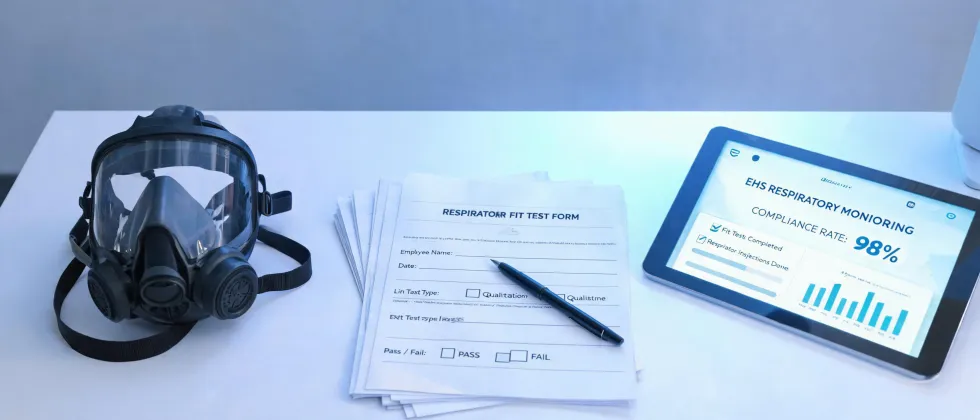
If you've ever grabbed a 3M 8210 or similar disposable respirator, you probably assume it blocks “dust.” But the real answer depends on the rating. N95 means it filters at least 95% of airborne particles (≥0.3 microns) – think silica, wood dust, pollen, and some biological aerosols. But it doesn't protect against gases, vapors, or oil-based particles (you need N100 or P100 for that).
Take it from someone who once ordered 200 3M N95s for a construction site only to realize the work involved painting solvents. We had to swap to 3M 60923 cartridges overnight. Bottom line: check the NIOSH approval label on the box. If you see “N95,” assume it's for dry particles only.
Is 3M safety gear always the best choice for industrial use?
I get this question a lot from purchasing managers. 3M is a brand that's earned its reputation, but “best” depends on your context. Their Versaflo PAPR system? Game-changer for long shifts. Their standard earplugs? Solid, but some workers prefer Earsoft for comfort. The real advantage of 3M is consistency: when you spec a 3M 6800 full-face respirator, you know the seal and filter compatibility are tested together.
That said, don't buy the brand blindly. I've seen companies pay a premium for 3M safety glasses when a cheaper brand with ANSI Z87.1+ certification would have been fine. What matters more than the logo is: does the product meet the specific hazard? For high-heat environments, 3M's Nomex-based hoods are hard to beat. For general fall protection, their DBI-SALA line is excellent, but there are equally good competitors.
Here's what you need to know: 3M is rarely a wrong choice, but it's not always the most cost-effective one. Evaluate the hazard first, then the brand.
What do hard hat colors mean across different industries?
You've probably seen white, yellow, blue, and green hard hats and wondered if there's an official code. Short answer: there's no universal standard, but common industry practices exist. In construction, white often signals supervisors or engineers; yellow is for general laborers; blue for carpentry/electrical trades; green for safety inspectors. In oil & gas, red may indicate fire marshals.
But here's the catch – these conventions change. In 2023, a major general contractor I worked with switched to white for all workers because the old color system caused confusion on a multi-trade site. They now use sticker decals for role identification instead. So if you're setting up a site, don't assume everyone follows the same code. Post a chart at the check-in point. I learned this the hard way after a near-miss involving a green-hatted visitor who everyone assumed was a safety inspector – he wasn't.
3M makes hard caps in most standard colors, and their Uvicator sensor (turns red when helmets degrade from UV) is worth the upgrade, regardless of color.
Are nitrile gloves latex-free? And should you care?
Yes, 100% nitrile gloves contain zero natural rubber latex. That's the whole point – they're designed for people with latex allergies. But I've seen buyers assume all “medical gloves” are latex-free. Actually, many exam gloves are still latex. 3M's nitrile offerings (like the 3M 9010 series) are explicitly latex-free and powder-free.
But here's a nuance I missed once: some nitrile gloves use accelerators that can cause contact dermatitis in sensitive individuals. 3M's Accelerator-Free nitrile line solves that. So if you're ordering for a lab where technicians need to wear gloves all day, the accelerator-free version is a no-brainer. The cost is about 15% higher, but the reduction in lost work time from skin issues more than pays for itself.
Can I use privacy fence ideas for temporary safety barriers?
Interesting question – and one I've fielded from event organizers. Typical privacy fence panels (wooden slats, vinyl) are not designed for safety barrier loads. They'll stop a person from casually walking through but won't withstand a vehicle impact or a fall from height. For temporary barricades, you need products like 3M's modular barrier systems or heavy-duty traffic cones with retroreflective sheeting.
That said, if you're just blocking visual access to a work zone during a renovation, a privacy fence combined with proper hard barricades can work. I once used 3M's Scotchlite Reflective Tape on the top edge of a privacy fence to make it visible at night – simple, cheap, and effective. The idea here: don't repurpose fencing meant for your backyard for industrial safety. Use the right tool for the job.
How do I choose between different 3M respirators? (The one question nobody asks but should)
Most buyers just pick the cheapest N95. But 3M makes dozens of models. The 8210 is the classic. The 8511 has an exhalation valve for comfort in hot jobs. The 9210+ is their latest generation with better breathability and a braided headband that doesn't snap as often. For weld fumes, you want the 3M 9925 or a half-face with P100 filters. For painting, you need organic vapor cartridges (6001 series).
Here's a real mistake I made: I ordered 3M 8210s for a job that involved both dust and low-level solvent vapors. The N95 stopped the particles but did nothing for the vapors. We had to emergency-order 3M 7502 half-face respirators with 6001 cartridges. That rush cost us $400 in shipping and lost two hours of production. So before you click “buy,” answer three questions: 1) What's the particle? 2) Are there gases or vapors? 3) How long will it be worn?
In my experience, the 3M 7000 series (7501/7502/7503) offers the best value for general industrial use because they're reusable, the filters snap on easily, and they fit under welding hoods. That's what I now keep in stock for emergency orders.
– Written from experience coordinating emergency PPE deliveries for 200+ industrial sites. If you've ever had to scramble when the wrong safety gear showed up, you know the cost of that mistake. Trust me on this one.
