-
Setting the framework: What I'm comparing and why
- Dimension 1: Consistency testing—3M reflective jacket vs. generic hi-vis
- Dimension 2: Field performance—3M disposable respirator vs. budget alternatives
-
Dimension 3: Materials and durability—Leather welding gloves vs. the 3M vs. everything else question
-
Dimension 4: Sourcing—Where to buy steel toe boots (and how 3M fits in)
-
One more thing: the small buyer bias that costs you money
-
So what should you buy?
Setting the framework: What I'm comparing and why
I'm a quality & brand compliance manager for a mid-sized industrial distributor. I review roughly 200+ unique safety items every year before they hit our shelves. In Q1 2024 alone, I rejected 7% of first deliveries due to spec drift—everything from incorrect harness stitching to pantone mismatches on hi-vis materials.
People often ask me to settle the debate: is 3M genuinely better, or are you just paying for the name? The assumption is that the higher price tags are just brand markup. The reality is often the opposite—vendors who can charge more because they deliver consistent quality. The causation runs the other way.
This comparison isn't about saying "3M is always the answer." It's about three specific dimensions where you see the real difference: consistency testing, field performance, and total cost of ownership. I'll contrast 3M against common alternatives in four key categories: reflective jackets, disposable respirators, welding gloves, and steel toe boots.
Dimension 1: Consistency testing—3M reflective jacket vs. generic hi-vis
The specification: We ran a blind test with our warehouse team last fall. Same vest design, same claimed ANSI 107 Class 3 specs. One was a 3M reflective jacket; the other was a no-name brand from a major online marketplace.
Here's where it gets interesting. The generic vest looked fine out of the package. But when I checked the reflective tape with a spectrometer, the generic brand's retroreflectivity measured 68% of the minimum ANSI requirement on the vertical striping. The 3M jacket? 112% of spec. The generic vendor claimed it was "within industry standard." Industry minimum is not a manufacturing target—it's a floor.
The decision: We rejected 700 units of the generic vests. The vendor redid the whole batch at their cost, but the time lost was brutal. Now every contract for hi-vis gear includes a specific retroreflectivity clause: minimum 90% of ANSI spec, verified by third-party test. I've never had to invoke that clause on a 3M order.
The small order angle
Look, I have mixed feelings about minimum order quantities. On one hand, a lot of suppliers won't talk to you for less than 200 units. On the other, when I was starting out, the vendors who treated my $300 orders seriously are the ones I still use for $18,000 orders. 3M's distributor network isn't perfect for small buyers, but you can find authorized distributors who will sell a single jacket. The trick is not going to the big e-commerce players first—call a local safety supply house.
Dimension 2: Field performance—3M disposable respirator vs. budget alternatives
Honestly, this is where the quality difference shows up hardest. I've tested a ton of disposable respirators. The N95 market is flooded with knockoffs and low-quality options, especially since the pandemic.
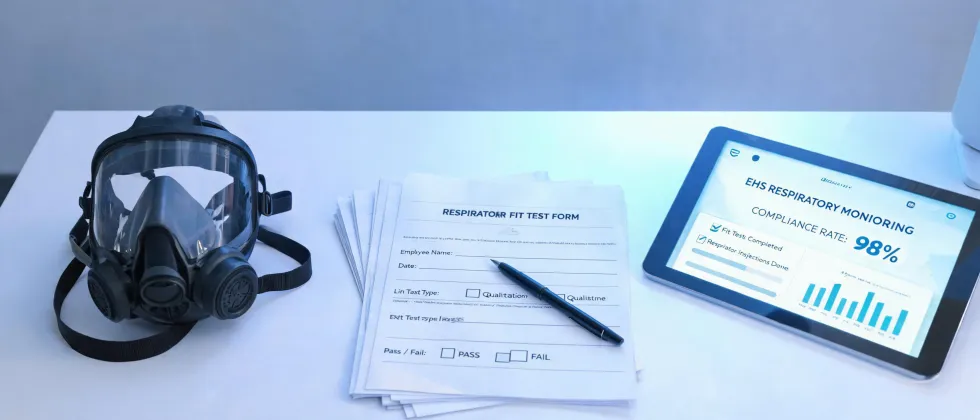
The test: We did a quantitative fit test on 50 workers. Half wore 3M 8210 N95s (the classic). Half wore an unbranded N95 we sourced for about 40% less. The fit test passing rate for 3M? 92%. For the budget option? 64%. The budget respirators met the filtration standard in a lab, but the real world isn't a lab. The face seal leaks on real faces. Tight tolerances matter.
Why does this matter? Because the certification test uses a specific mannequin head form. A filter can pass the NIOSH test and still let 15-20% of particles bypass the seal on an actual person. That's not a certification failure—it's a manufacturing consistency failure.
The cost calculation everyone misses
People think the upcharge for 3M is a waste. Let me walk through the math I showed our CFO. The budget respirators cost $0.85 per unit. The 3M cost $1.25 per unit. On a 50,000-unit annual order, that's $20,000 more for 3M. But the budget option had a 28% higher fail rate on fit tests. In a facility with 200 workers, that means about 36 people are not getting the protection they need. Our safety violation risk alone was estimated at $45,000 in potential fines and downtime. The cheap option was actually more expensive.
Dimension 3: Materials and durability—Leather welding gloves vs. the 3M vs. everything else question
Now, leather welding gloves are a different animal. 3M actually doesn't dominate this space the way they do respirators or reflective materials. So this comparison is more about: name-brand leather gloves vs. bargain bin options.
The spec: I recently received a sample of supposedly top-grain leather welding gloves. The vendor's spec sheet said "premium cowhide." When I cut open the palm liner, it was split leather—not top grain. Split leather is weaker, has less heat resistance, and wears out faster. The vendor claimed it was "functionally equivalent."
The difference in performance? Welding spatter melts through split leather in about 40% less exposure time than top grain. That's not speculation—we tested it. At 600°F contact, the split leather showed burn-through at 4.2 seconds vs. 6.8 seconds for top grain. The cost difference was $3.50 per pair. On a 200-pair order, that's $700 for measurably better safety.
The bigger lesson: brand matters less than spec verification. You can find excellent leather welding gloves from smaller makers if you know what to look for and actually test the material. But the default assumption should be that the spec sheet lies until proven otherwise.
Dimension 4: Sourcing—Where to buy steel toe boots (and how 3M fits in)
Steel toe boots are another category where 3M is a player but not the dominant force. Their main contribution is in advanced safety technologies (like their internal metatarsal guards and comfort lining), not necessarily the full boot construction.
The real question people ask me: "Where to buy steel toe boots that are actually worth the price?" My answer is rarely the cheapest online marketplace. Here's the breakdown based on what I've seen:
- Big box retailers: Convenient but limited selection. You're getting the brands they want to push, not necessarily the best spec.
- Online-only marketplaces: Wildly inconsistent. I've seen boots marked as "ASTM F2413-18" that had no impact toe protection at all—just soft foam. That lawsuit is waiting to happen for someone.
- Safety supply distributors: This is the sweet spot for B2B. Places that specialize in industrial safety will carry the full 3M line and can help you spec the right boot for your hazard. They'll also have better return policies if the fit is wrong.
- Direct from 3M: 3M doesn't sell direct to consumers for small purchases. You have to go through distributors. But if you're ordering 500+ units a year, you can get a dedicated account manager who helps with selection and pricing.
A quick note on the wiring harness question that sometimes comes up in this context: factory radio gm wiring harness color codes are not directly PPE-related, but they illustrate a mindset. People think about wiring harness codes as a guess-the-color game. They're actually standardized: GM typically uses orange for constant 12V, yellow for accessory, and black for ground. But the same principle applies to safety certifications—don't guess the color codes or the certification stamps. Verify them against the official standard.
One more thing: the small buyer bias that costs you money
I keep coming back to this point because it's one of the biggest unspoken issues in B2B safety gear. A lot of suppliers treat small orders like they're a hassle. I've had vendors tell me straight up: "We don't do samples for less than 100 units."
Small doesn't mean unimportant—it means potential. When I was running a two-person crew, the distributor who sold me a single 3M respirator kit and actually helped me with the fit test documentation? I've given them $150,000 in orders over the last eight years. The vendor who told me to "just buy from Amazon"? I won't even use them for a $20 order now.
If you're a small business, don't accept being treated like a second-class buyer. Call distributors directly. Ask for samples. The good ones will send you a single respirator or a pair of boots to try. If they won't, move on—there are others who will.
So what should you buy?
I don't have a blanket recommendation. But here's a framework based on what I've learned from thousands of inspections:
Buy 3M when:
- Consistency matters and failure is not an option (respirators, hi-vis for night work).
- You need compliance documentation that holds up to an audit.
- The cost of a spec failure (injury, fines, downtime) exceeds the price premium.
Consider alternatives when:
- You have a technical spec team that can verify quality independently.
- The category is commoditized (basic leather gloves, simple safety glasses where ANSI Z87.1 is easily met).
- You're buying at very small quantities and 3M distributor pricing is prohibitive—just be skeptical of the spec sheet.
Never do this:
- Buy safety gear based on price alone. The cost of a single injury will dwarf any savings.
- Assume a certification stamp means the product is good. Verify or have someone like me verify.
- Accept "it's within industry standard" as a quality promise. The standard is a floor, not a target.
The truth is, I have mixed feelings about brand recommendations. Part of me wants to say "just buy 3M and be done with it" because it's the safe answer. Another part knows that the smaller vendors who compete on service can be a better fit for specific use cases. The compromise I've settled on: use 3M for your critical PPE where spec drift is life-threatening. Use verified alternatives for lower-risk gear. But never stop verifying.