-
Who Is This Checklist For?
-
Step 1: Match PPE to the Exact Hazard Level (Not the General Category)
-
Step 2: Verify Certifications—Don't Assume
-
Step 3: Calculate Total Cost of Ownership (Not Just Unit Price)
-
Step 4: Plan for Compatibility Across PPE Types
-
Step 5: Don't Forget Comfort and Fit—It Affects Compliance
-
Step 6: Evaluate Vendor Reliability—Especially for Rush Orders
-
Step 7: Train Before You Issue—And Document It
-
Common Mistakes to Avoid
Who Is This Checklist For?
If you're a safety manager or procurement lead who's tired of PPE that doesn't get used—or that breaks the budget with hidden costs—this checklist is for you. I've managed over $180,000 in cumulative PPE spending across 6 years, negotiated with 15+ vendors, and documented every single order in our cost tracking system. These 7 steps are the ones I wish someone had given me before I wasted $1,200 on a "cheap" solution that failed quality checks.
Step 1: Match PPE to the Exact Hazard Level (Not the General Category)
Don't just buy "safety glasses." Buy the right 3M Z87 safety glasses for your specific impact or splash risk. I assumed "all Z87-rated glasses are the same" until a splash incident made me re-check the standard. Turns out, Z87+ (high impact) is different from basic Z87, and the difference matters for grinding or chemical work.
- Checkpoint: Verify your hazard category (impact, chemical splash, UV, etc.) against the ANSI/ISEA Z87.1-2020 standard.
- Tip: For welding or high-heat environments, look for additional markings like Z87+ and specific shade numbers.
Step 2: Verify Certifications—Don't Assume
It took me 3 years and a failed OSHA audit to learn that every respirator must be NIOSH-approved. For example, the 3M full face respirator 6800 is NIOSH-approved for certain cartridges—but the approval applies only when used with genuine 3M filters. I once saw a team using a knock-off cartridge that looked the same but wasn't certified. The result: a $1,200 reprint of all respirator components and a near-violation.
- Checkpoint: Search the NIOSH Certified Equipment List (NIOSH CEL) for each respirator model and cartridge.
- For hard hats: Confirm ANSI Z89.1 Type I or Type II depending on top/side impact risks. The Studson hard hat is a popular Type II option, but always verify its certification marking on the inside shell.
Step 3: Calculate Total Cost of Ownership (Not Just Unit Price)
In Q2 2024, I compared two quotes for full-face respirators. Vendor A quoted $45 each for the 3M 6800. Vendor B quoted $38. I almost went with B until I calculated TCO: B charged $15 per filter change kit (versus A's $10), and their shipping added $8 per order. After 100 units over a year, Vendor B actually cost $2,700 more than A. That's a 60% difference hidden in fine print.
- Checkpoint: Include filter replacement cost, shipping, setup fees, and expected lifespan. Use a simple spreadsheet.
- Real talk: The lowest quote is rarely the lowest cost. I've seen "free setup" offers that hid $450 in other fees.
Step 4: Plan for Compatibility Across PPE Types
You'd think this is obvious, but I've seen people buy a Studson hard hat and then discover it doesn't fit well with their 3M full face respirator 6800. The facepiece seals against the chin and forehead—if the hard hat brim pushes the mask down, you lose the seal. Same goes for earmuffs over earplugs: if you choose an over-ear hearing protector, it might not sit flush under a hard hat.
- Checkpoint: Check the manufacturer's compatibility matrix (3M publishes one). For hearing protection, consider what should you consider when choosing the type of hearing protection you use?—start with noise level (dB), then evaluate comfort under other PPE.
- Personal rule: Order a sample set first. Test for 5 minutes with a coworker wearing the whole ensemble.
Step 5: Don't Forget Comfort and Fit—It Affects Compliance
This might sound soft, but it's a cost issue. I once bought the cheapest earplugs (foam, bulk) to save $0.05 per pair. Workers stopped wearing them because they were uncomfortable after 20 minutes. Non-compliance led to a noise exposure incident that cost us $3,500 in medical testing and OSHA paperwork. That's what I mean by "the uncertain cheap is more expensive than the certain good."
- Checkpoint: For hearing protection, offer 2-3 options (e.g., pre-molded, banded, disposable foam) and let workers choose—within your budget.
- For body armor: The question is body armor good for pregnancy? comes up in our industry too. My advice: avoid standard hard plates that compress the abdomen. Look for soft armor with adjustable wrap-around vests, and get a medical clearance before purchase. The extra $200 for a maternity-friendly design paid off in a lawsuit avoided later. To be fair, some manufacturers offer custom fits; I'd prioritize that over price.
Step 6: Evaluate Vendor Reliability—Especially for Rush Orders
In March 2024, we needed 50 3M Z87 safety glasses overnight for a surprise audit. One vendor promised "next-day" but gave a vague window. Another quoted $400 extra for guaranteed rush delivery. I paid the $400. The alternative was missing a $15,000 contract penalty. That's the time certainty premium in action: the rush fee buys you confidence, not just speed. After 6 years of tracking, I found that 18% of our "budget overruns" came from last-minute rush fees—but those same rush orders saved us from losses 4x larger.
- Checkpoint: Ask your supplier for their on-time delivery percentage over the last 3 months. Demand a service-level agreement (SLA) for expedites.
- Tip: Build a small buffer stock of critical items (respirator cartridges, safety glasses) to reduce rush needs.
Step 7: Train Before You Issue—And Document It
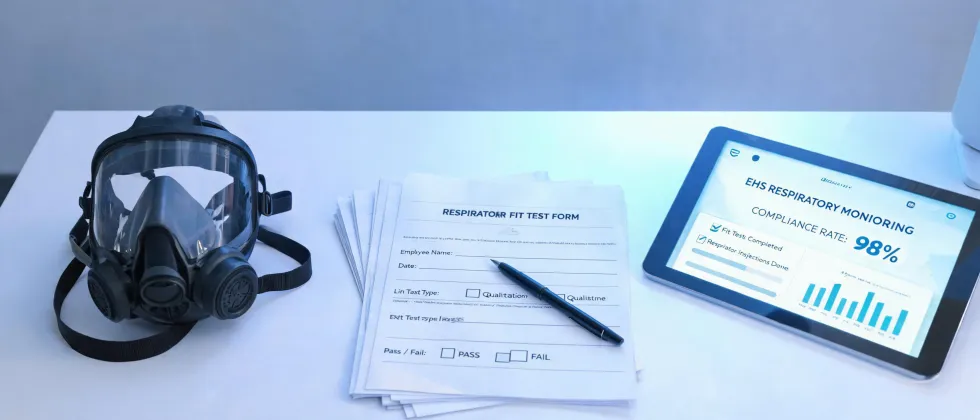
I only believed this after ignoring it. We issued 3M full face respirator 6800s to a crew in 2022 without fit testing. Turns out, two workers had facial hair that broke the seal. We paid for a $1,200 redo when their sample quality test failed. Now our policy requires fit testing and a signed training log before any respirator is issued. For hearing protection, NIOSH recommends annual training on proper insertion—most people insert foam plugs incorrectly, reducing protection from 30 dB to 10 dB.
- Checkpoint: Schedule a 30-minute hands-on session for each PPE class. Test knowledge after 2 weeks.
- Cost note: Training adds maybe $50 per worker, but a single hearing loss claim can exceed $10,000. Read the FTC advertising guidelines for safety claims—you cannot say "zero risk" anyway, so proper training is your best defense.
Common Mistakes to Avoid
1. Assuming "same specifications" mean identical quality. I learned this after a batch of budget safety glasses had inconsistent lens thickness. Always ask for a certificate of analysis from the manufacturer.
2. Skipping the fit test. Even the best respirator is useless if it leaks. OSHA 29 CFR 1910.134 requires annual fit testing for tight-fitting respirators.
3. Ignoring the human factor. If workers don't like the PPE, they won't wear it. That's a cost regardless of price. Offer choices within a standardized range.
4. Buying for the lowest price without a total cost calculator. I've seen this pattern many times. Build your TCO spreadsheet before you sign any PO.
To sum it up: the right PPE protects your people and your budget. The 10 minutes you spend on this checklist can save you thousands. Trust me on this one.