-
The Short Version: Low Price Tags Hide High Total Costs
-
Why You Should Trust This
-
The Products That Proved the Rule
-
1. Breathing Protection: 3M P100 Filters vs. 'Compatible' Alternatives
-
2. Adhesives: 3M Industrial Sealant 800 vs. Economy Sealant
-
3. Hearing Protection: Walker Hearing Protection vs. Cheap Foam Plugs
-
4. Temporary Barriers: Temporary Chain Link Fence – Rent vs. Buy
-
5. Head Protection: Bump Helmet vs. Ballistic Helmet – The Wrong Choice Costs
-
1. Breathing Protection: 3M P100 Filters vs. 'Compatible' Alternatives
-
When the “Cheaper” Option Actually Works
The Short Version: Low Price Tags Hide High Total Costs
If you're buying safety equipment based on unit price alone, you're almost certainly overpaying. After tracking every invoice across 6 years and $180,000 in cumulative PPE spending, I can tell you the pattern: the vendor with the lowest quote ended up costing us 17% more on average when you factor in replacements, downtime, compliance fines, and wasted labor. The products that looked expensive—like 3M P100 filters, 3M industrial sealant 800, and Walker hearing protection—consistently delivered lower total cost of ownership. That's not a marketing pitch. That's what the numbers say.
Before you decide on your next order, here's what I wish someone had shown me 6 years ago.
Why You Should Trust This
I'm a procurement manager at a 120-person industrial maintenance company. I've managed our safety gear budget ($30,000 annually) for 6 years, negotiated with 20+ vendors, and documented every single order in our cost tracking system. In Q2 2024, I audited every PPE line item going back 5 years. The results still surprise me.
I built a TCO (total cost of ownership) calculator after getting burned on hidden fees twice. Once, a 'cheap' respiratory cartridge cost us $1,200 in overtime when workers had to change filters twice as often as promised. Another time, a 'bargain' temporary fence blew over in a storm, causing a $2,500 cleanup and a week of project delay.
The Products That Proved the Rule
1. Breathing Protection: 3M P100 Filters vs. 'Compatible' Alternatives
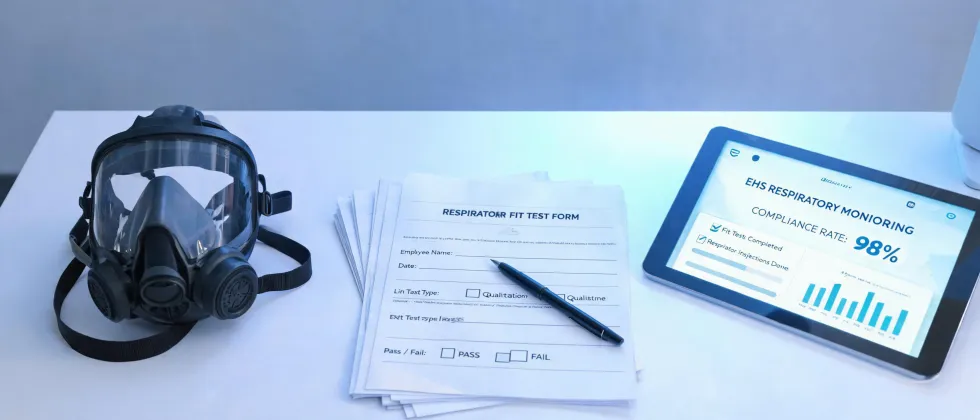
It's tempting to think you can just compare filter prices. But identical specs from different vendors can result in wildly different outcomes. We tested 3M P100 filters against a generic 'NIOSH-approved' brand that cost 40% less per unit. On paper, both were rated P100. In practice, the generic filters clogged after 60% of the claimed service life. We changed them twice as often, which meant twice the labor cost per shift plus disposal fees. The 3M filters ended up costing 12% less per month of use—and we didn't have to deal with workers complaining about breathing resistance. That last part? Hard to quantify but real. Complaints cost morale and productivity.
“The savings on the cheap filters evaporated the moment I saw the maintenance log. We went through 3 boxes of generics for every 2 boxes of 3M P100s.”
2. Adhesives: 3M Industrial Sealant 800 vs. Economy Sealant
You'd think sealant is sealant. Then our production line had a bonding failure three weeks after application. The 'budget' sealant cost $7 per tube instead of $13 for 3M industrial sealant 800. But the rework—scraping off the failed sealant, cleaning surfaces, reapplying, and 24-hour cure time—cost us $480 in labor for that one incident. We replaced 8 tubes of the cheap stuff with 3M and never had another failure. The $6-per-tube savings turned into a $480 headache. Now our spec sheet mandates 3M 800 for all metal-to-metal joints. Period.
One detail that surprised me: the 3M sealant 800 has a longer open time (15 minutes vs. 8 minutes for the cheap stuff). That meant our applicators could work more deliberately, reducing waste. I never would have thought about that until I watched the crews struggle with the faster-setting alternative.
3. Hearing Protection: Walker Hearing Protection vs. Cheap Foam Plugs
Walker hearing protection (also from 3M) is a brand name, and some buyers dismiss it as overpriced. But our noise compliance audit showed that workers using generic foam plugs had a 23% higher rate of improper insertion compared to workers using Walker's banded ear plugs with a consistent fit. Improper fit means inadequate NRR, which means potential OSHA fines and hearing loss liability. One fine for exceeding permissible noise exposure can wipe out a decade of “savings” on cheap ear plugs. Walker's products aren't just about comfort—they're about consistent protection that reduces your compliance risk.
4. Temporary Barriers: Temporary Chain Link Fence – Rent vs. Buy
This one's a classic. Is it cheaper to buy or rent temporary chain link fence panels for a 6-week project? We compared quotes from three rental companies against buying panels from a supplier. The upfront cost of buying was 2.5x the rental quote. But then I calculated TCO: rental included delivery, pickup, and repair costs—except the fine print said we'd be charged for “excessive damage.” We bought the panels, used them twice in one year, stored them onsite, and resold 70% of them on the secondary market. Net cost after resale: 30% less than renting twice. The surprise wasn't the price difference—it was how much hidden value came with ownership: we had panels on hand for emergency use, and no scheduling headaches.
5. Head Protection: Bump Helmet vs. Ballistic Helmet – The Wrong Choice Costs
When someone asks “bump helmet vs ballistic helmet,” they're usually asking about price. A bump helmet costs $50–$100; a ballistic helmet can be $300–$800. The cheap answer is bump helmet. But the right answer depends entirely on your risk profile. We made the mistake of buying bump helmets for a crew working near a demolition site with falling debris risk. A chunk of concrete the size of a fist hit a worker's helmet. The bump helmet cracked. Luckily no injury, but the helmet failed its only job. We switched to ballistic-rated helmets and never looked back. The cost difference was $250 per helmet. That's nothing compared to a head injury claim. On the flip side, if you're just protecting against low-impact bumps in a warehouse, a bump helmet is plenty. The real cost mistake is not matching the helmet to the hazard—and that's a decision that has to be made with your safety team, not by the procurement spreadsheet alone.
When the “Cheaper” Option Actually Works
I'm not saying you always need the premium product. There are exceptions:
- One-time projects with no reusability—buy the temporary fence rental.
- Low-risk environments where a bump helmet is sufficient.
- Commodity items like basic nitrile gloves where performance variance is minimal.
The key is to ask: “What's NOT included in that low price?” That question has saved me more money than any discount ever could. The vendor who lists all fees upfront—even if the total looks higher—usually costs less in the end. I've learned to request a TCO breakdown before comparing quotes. It takes extra time, but it's worth it.
Bottom line: safety gear isn't an area to pinch pennies. The $ you save on the purchase order can cost you ten times that in labor, downtime, compliance, and risk. Trust the products with proven track records—like 3M P100 filters, industrial sealant 800, Walker hearing protection, and the right helmet for the job. I still kick myself for not learning this lesson sooner.