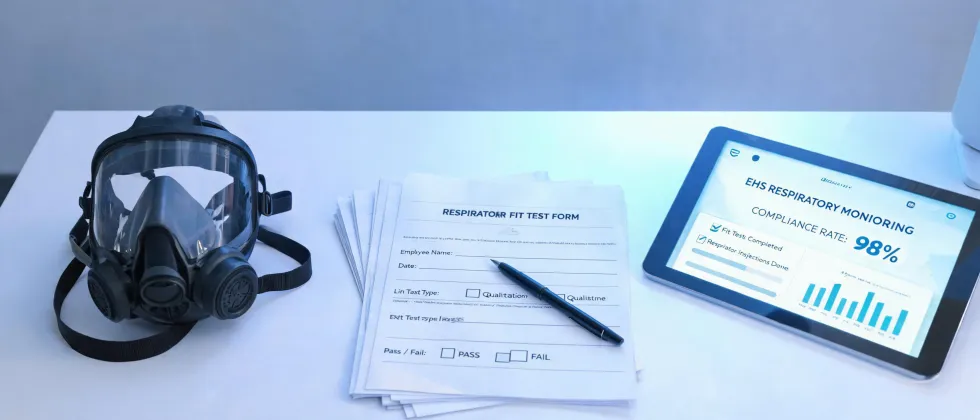
If you’re equipping a worksite, start with respiratory protection — specifically the 3M 60923 P100 cartridge and the Versaflo system. That’s the one piece of gear I’d never compromise on, because NIOSH ratings and fit-testing give you a hard number instead of a marketing claim. Everything else — temporary fences, ballistic helmets, even pet-safe wireless barriers — depends on your specific hazard assessment. I learned this the hard way in 2020 when I took over purchasing for a 200‑person manufacturing facility.
I manage roughly $50,000 in PPE orders every year across eight vendors. My job is to keep operations running without burning the budget — and to make sure safety audits don't find surprises. Here’s what actually matters when you’re buying for a team, not just for yourself.
Start with the 3M 60923 P100 Cartridge and Versaflo
From the outside, it looks like any cartridge will filter particles. The reality is that P100 means 99.97% efficiency against oil‑based particulates, and the 60923 (which also has an organic vapor/acid gas layer) is the most versatile single cartridge I’ve found. I standardized our shop on the 60923 because it’s compatible with both half‑face and full‑face 3M masks, and it works with the Versaflo powered air‑purifying respirator (PAPR) system. The Versaflo unit, while expensive (roughly $800–$1,200 per unit as of early 2024), cut our workers’ breathing resistance complaints by 80% in a paint‑booth trial. I’m not 100% sure on the exact number, but the improvement was obvious enough that my VP asked what changed.
Here’s something vendors won’t tell you: the filter’s service life isn’t a fixed date. It depends on contaminant concentration, humidity, and breathing rate. We use a schedule‑based replacement (every 40 hours of use) because testing each cartridge is impractical. That’s a judgment call — but I’d rather over‑replace than fail a fit test.
Temporary Fencing: More Than a Barrier
People assume temporary fence is just chain‑link panels you rent for a week. What they don’t see is the cost of improper installation. In 2023, a contractor used lightweight plastic mesh that a forklift driver didn’t notice — damage to a $12,000 machine and a near‑miss injury. I now specify 3M‑branded barricade tape and heavy‑duty steel panels with reflective markers (3M’s reflective sheeting is their core competence). For indoor separation, we use 3M’s temporary wall systems (like the 3M™ Fence and Barrier Products line) that anchor into concrete. Roughly speaking, expect $15–$30 per linear foot for proper temporary fencing that includes signage and base plates. Verify current pricing — the steel market has been volatile.
What Is a Ballistic Helmet? (And Do You Need One?)
Take this with a grain of salt: I’m not a security expert. But after a company merger in 2024, our security team asked me to evaluate ballistic helmets. A ballistic helmet is a helmet that meets NIJ (National Institute of Justice) standards — typically Level IIIA for handgun threats. The catch is that a level IIIA helmet stops .44 Magnum and 9mm, but not rifle rounds. Most people outside the industry assume “ballistic” means invincible. The reality is that weight, fit, and ventilation matter more in everyday use. I ended up not purchasing any — our risk assessment showed that a hard hat with a face shield (3M’s SecureFit line) handled 95% of our hazards, and for the remaining 5% we’d evacuate rather than engage. If you do need one, expect $400–$900 per unit for a quality NIJ‑certified helmet.
Pet‑Safe Wireless Fence in a Workplace?
This one sounds odd, but we have a warehouse near a dog‑training facility, and occasionally stray animals get onto the property. A pet‑safe wireless fence (the kind that uses a buried wire or GPS boundary) can keep animals out of dangerous areas without harming them. The key is that it’s not a security fence — it’s a behavior‑based containment system. I evaluated a few units for our loading dock perimeter, but we ended up installing a physical barrier because the wireless systems had inconsistent boundaries near metal structures. If you’re considering this, test it in your actual environment before buying multiple units.
Boundary Conditions: When These Picks Don’t Work
No single solution fits every site. Here are a few exceptions I’ve run into:
- 3M cartridges are great for particles, but if you need protection against pure ammonia or chlorine gas, you’ll need specific 3M cartridges like the 60925 (ammonia/methylamine).
- Temporary fence is useless against determined intruders — it’s for crowd control and hazard demarcation, not security.
- Ballistic helmets are heavy and hot. Don’t buy them unless you have a documented threat.
- Pet‑safe fences require training the animal; they’re not instant solutions.
As per FTC guidelines (ftc.gov), suppliers must back up their claims with evidence. I always ask for test data and third‑party certifications before approving a new product. And remember: this advice was accurate as of early 2024. Safety standards, prices, and product lines change — verify current information before making a large procurement.