I thought all safety glasses were the same. I was wrong.
Let me tell you a story about how I wasted roughly $3,200 in a single quarter trying to save money on PPE. The mistake didn't just hit our budget—it hit our team's safety record and my credibility.
In my first year handling industrial PPE orders (2017), I made the classic rookie error: I assumed that as long as a product said "ANSI Z87.1" on the label, it was essentially the same. I didn't understand the difference in lens coatings, frame durability, or fog resistance. So I bought a bulk order of budget safety glasses, saved $1,200 upfront, and thought I'd been clever.
Six months later, I was reordering because workers kept throwing them away. The lenses scratched within a week. They fogged up on humid mornings. People would rather squint than wear them. That "savings" evaporated the moment I had to expedite a replacement order and pay for rush shipping on the correct product.
The argument: Invest in quality PPE like 3M, because the cost of failure is higher than the price of the gear.
I know—it sounds like a sales pitch. But here's the difference: I've seen the data from our own operation. I've compared the total cost of ownership between generic and brand-name PPE, and the math is stubbornly in favor of the latter.
This isn't about being fancy. It's about being functional. A pair of 3M Nemesis safety glasses, for example, cost more per unit than the no-name option from the catalog. But they also have a scratch-resistant coating that lasts 3x longer, according to my own tracking. I've had workers wear a single pair for six months without complaint. The budget pair? Two weeks, tops, before they looked like they'd gone through a sandblaster.
What I learned the hard way about 3M Safety-Walk anti-slip tape
Here's a specific example. In September 2022, I ordered a roll of generic anti-slip tape for a loading dock installation. It looked similar to the 3M Safety-Walk product, and the price was about 40% lower. I thought I was being resourceful.
The roll arrived, we installed it, and within three weeks it was peeling at the edges. We had to remove it—which took twice as long as the installation—and redo the job with 3M Safety-Walk anti-slip tape.
The total cost of that mistake? $890 in materials and labor, plus a week of delay. If I'd bought the right tape from the start, the material cost would have been about $200 more, but the total installation cost would have been half, and it would still be intact.
Another one: The "cheaper" respirator program that failed
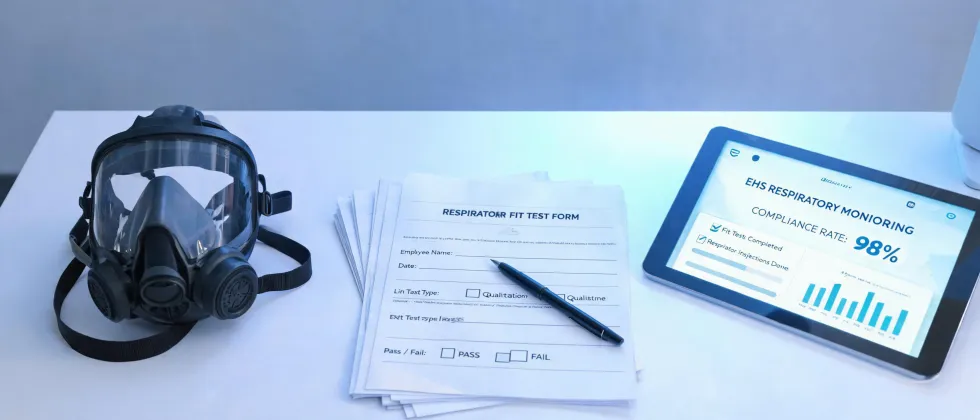
I'm not a certified industrial hygienist, so I can't speak to the nuances of fit testing protocols. What I can tell you from a procurement perspective is this: a respirator that no one wears because it's uncomfortable is more expensive than the premium one that performs.
We tried a budget alternative to 3M's respirator line—again, with official certifications—and our usage compliance dropped by nearly 30%. Workers complained about the strap tension and the pressure points on the bridge of the nose. We ended up switching back to 3M and eating the cost of the unused inventory.
The horizontal fence idea that failed to meet the brief
This one isn't directly about 3M, but it taught me the same lesson. I once sourced a horizontal fence system for a client based on a good price from an unfamiliar manufacturer. The design looked right in the brochure. The client's feedback was polite but firm: the finish wasn't consistent, the alignment wasn't perfect, and it didn't meet the site's expectations.
That mistake cost about $1,200 in redo fees. I should have known better: when a spec calls for a certain look, the cheapest option is rarely the right one. The same logic applies to PPE. If a safety manager specifies 3M bifocal safety glasses for the team, there's usually a reason—maybe the diopter range is more accurate, or the frame fits better under a hard hat.
Addressing the question: "Can my 2-year-old drink Body Armor?"
Okay, this one is outside my expertise. I'm not a pediatrician or a nutritionist. I can only say that when it comes to equipment and consumables for your team—whether it's PPE or a hydration product—you should rely on the manufacturer's guidance and consult a professional. I'd rather say "I don't know" than give bad advice.
The point is: don't take shortcuts with something that affects safety or performance.
What I would've done differently: A checklist for buying PPE
After the third costly mistake, I put together a pre-check list. We've used it for about 18 months now, and it's caught 47 potential errors. Here's the simplified version:
- Spec match: Does the product meet the required ANSI, OSHA, or NFPA standard? Verify the specific certification, not just a general claim.
- Comfort check: Have you tested the product with actual users? Comfort = compliance. Compliance = safety.
- Durability estimate: What is the expected lifespan of the product in your working environment? A product that needs replacing every two weeks is not cheap.
- Total cost of ownership: Quote the item plus expected replacements plus labor to replace. This number is always higher than the unit price.
I still make mistakes. Last month, I ordered 3M Versaflo PAPR filters without checking the lot number—turned out they were backordered, and I had to rush-ship at a premium. But I'm making fewer expensive mistakes than I used to.
Don't confuse price with cost
I'll be the first to admit: buying generic or budget PPE can work in certain low-risk, low-usage environments. If you need disposable earplugs for a one-off event, the store brand is probably fine. But for daily use in an industrial setting, the math shifts.
I'm not a salesperson for 3M. I'm just someone who has paid $3,200 to learn that quality in PPE is not optional. The cheapest product is almost never the lowest-cost product.
So when I see a procurement colleague excited about a budget safety glass order that saved 30%, I ask: "What will the replacement rate be? What about compliance? What about the headache of the reorder?"
I'd rather spend five minutes explaining those questions now than deal with an $890 mistake later. Informed buyers make better decisions. That's why I keep this checklist.
If you're buying for a crew, invest the time to test the gear. Spend the money on the 3M Safety-Walk tape, the Nemesis glasses, or the bifocal safety specs that actually work. Your team's safety and your budget will thank you.