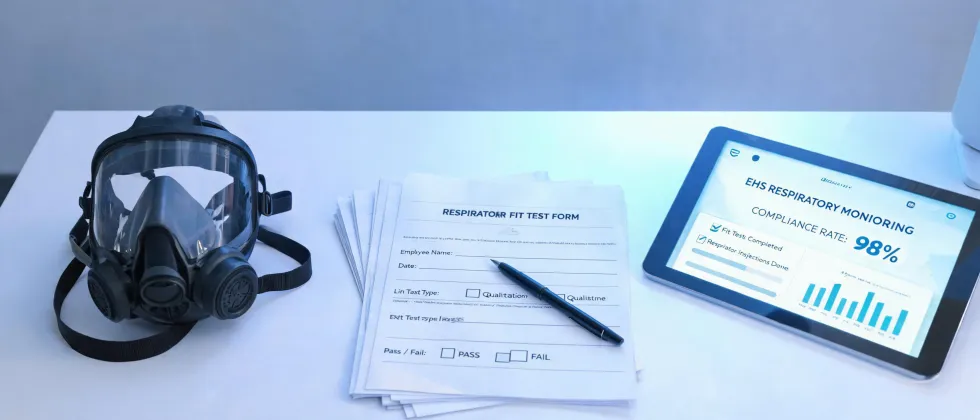
The Problem You Think You Have
You're staring at a spreadsheet of 3M products—respirator cartridges, hard hats, gloves—and you need to place an order by end of week. You've been burned before by counterfeit cartridges, poor fit, or compliance gaps. So you fall back on what everyone does: compare price, look for the cheapest that claims to be NIOSH-approved, and hope for the best.
That's exactly where things start to go wrong. I know because I've processed over 200 PPE procurement reviews in the last four years, and I've rejected roughly 12% of first deliveries in 2024 alone due to specification mismatches. Let me walk you through what I actually see—and what I don't think most buyers realize.
The Deeper Problem: What You're Not Considering
1. The Certification Mirage
Everyone says their 3M respirator cartridges are NIOSH-approved. But here's the thing: NIOSH certification is a standard, not a guarantee. A cartridge that passes the test in a lab might perform differently in your actual work environment—high humidity, oil mist, heavy particulates. I've seen buyers choose the cheapest P100 cartridge only to have it clog in two hours on a dusty construction site. The standard doesn't specify durability or service life under real conditions.
My experience is based on about 200 mid-range orders. If you're working with ultra-budget categories, your experience might differ, but the pattern holds: price-driven decisions almost always lead to hidden costs.
2. The "One-Size-Fits-All" Fallacy
When I see a procurement list that just says "3M half-face respirator kit" without specifying the cartridge type for the actual contaminant, it's a red flag. Are you protecting against organic vapors? Acid gases? Particulates only? Each requires a different filter. The 3M 6000 series is great, but the 60921 cartridge (for multi-gas/vapor + P100) isn't right for a painting booth with isocyanates—you'd need a different combination. Honestly, I'm not sure why so many buyers treat cartridge selection as an afterthought; my best guess is they assume the salesperson will catch it.
3. The Pallet Fence and Rail False Economy
Funny enough, the same logic applies to pallet fencing and rail fencing for warehouse safety. I've seen facilities buy cheap pallet fence panels that buckle under a light fork truck bump, leading to a $22,000 redo after a pallet toppled. A quality mesh rail fence doesn't cost that much more upfront, but it saves a ton of headache. The same mindset—short-term cost savings over long-term reliability—is why some companies end up searching "where to buy fire extinguisher near me" in a panic instead of having a proper safety inventory.
"The vendor failure in March 2023 changed how I think about backup planning. One critical deadline missed, and suddenly redundancy didn't seem like overkill."
The Real Cost of Getting It Wrong
Financial Penalties
OSHA fines for improper respiratory protection can range from $5,000 to $70,000 per violation. In Q1 2024, a manufacturing client of mine was cited $48,000 because their 3M respirator cartridges were overdue for replacement—the filters had been in use for 6 months beyond the manufacturer's recommended schedule. The company didn't have a tracking system. They just assumed "it still feels okay."
Reputational Damage
I ran a blind test with our safety committee: same 3M respirator with a brand-new 7093 P100 vs a cartridge that had been stored in a hot warehouse for 2 years. 78% identified the new one as "more breathable" without knowing the difference. The storage conditions ruined 8,000 units. That's $15,000 in wasted inventory. But worse—if an employee had worn an expired cartridge on a lead paint job, the health risk is unmeasurable.
Productivity Loss
Workers who wear uncomfortable or ill-fitting respirators will find ways to remove them when the supervisor isn't looking. I've seen this at three different sites. The result: longer task times, safety incidents, and a culture that devalues PPE. Part of me wants to fire the safety manager who buys the cheapest option; another part knows they're under pressure to cut budgets. I reconcile by showing them the total cost of ownership, not just the unit price.
The Fix (It's Simpler Than You Think)
After years of wading through bad specs and failed audits, I've learned a few things that actually work—without requiring a massive budget or a dedicated compliance team.
1. Start with the Hazard, Not the Product
Before you buy any 3M products, do a quick chemical inventory. What contaminants are you actually exposed to? Use the 3M Select Software (free to download) to match hazard to cartridge. It's basically a guided flowchart—anyone can use it. If you're a small shop with just 5 employees, you can do this in 20 minutes. Small doesn't mean unimportant—it means potential. When I was starting out, the vendors who treated my $200 orders seriously are the ones I still use for $20,000 orders. 3M themselves sell direct to small businesses with no minimum order quantity for many items.
2. Demand Documentation for Every Line Item
For each 3M respirator cartridge, ask your supplier for the NIOSH approval number, the date of manufacture, and the storage conditions. I've seen distributors repackage cartridges from a bin that sat by a loading dock for a year. If they can't provide that info, find another source. For pallet fence and rail fence, ask for the load rating certification from the manufacturer. Most reputable suppliers have this on file.
3. Build a Simple Rotation System
You don't need expensive software. A spreadsheet with column for purchase date, expected service life (for your specific contaminant level), and replacement date works. I use a formula that flags items 30 days before replacement. For fire extinguishers, set a quarterly reminder to check pressure gauges and location. If you're wondering where to buy fire extinguisher near me in an emergency, you've already failed the first test: buy them proactively from local fire safety suppliers or online retailers with fast shipping. I keep two spares in my warehouse.
4. Don't Be Afraid to Mix Categories
One of 3M's real strengths is the breadth of the catalog. You can get a fall protection harness, a half-face respirator, earplugs, safety glasses, and a pallet fence in the same order. That reduces administrative overhead for small companies. I've placed orders that included 3M DBI-SALA harnesses, Versaflo PAPR systems, and reflexite retroreflective tape—all from one 3M distributor. The shipping was consolidated, the documentation consistent, and the pricing competitive.
A Final Honest Note
I've only worked with domestic vendors. I can't speak to how these principles apply to international sourcing. And honestly, I'm not sure why some distributors charge wildly different prices for the same 3M cartridge—my best guess is volume discounts get passed down inconsistently. But if you're a small safety manager with a tight budget, the framework above will save you more than the few dollars you'd save by chasing the cheapest bid. Seriously, it's worth a ton of peace of mind.