I've been reviewing PPE and safety supplies for over four years. In my role, I'm the one who signs off before products ship to customers—maybe 200 product lines a year, or 180, I'd have to check the system. The question I get most often isn't 'What's the best 3M product?' It's 'Which one do I actually buy?' Fair question. I work mostly with manufacturing and construction buyers, so if you're in mining or healthcare, some things may be different. But the core decision is the same: the right product depends on the hazard.
When I first started doing quality reviews, I assumed the highest-rated product was always the right call. Then a batch of 2,000 respirators came in with a valve-seating issue, and we had to reject the whole order. That cost us a week and a lot of explaining to procurement. It taught me that specs matter, but only when they match the job.
Here are four comparisons I keep coming back to: the 3M 2091 P100 particulate filter vs the 3M 8210 N95 mask, Kevlar gloves vs general work gloves, privacy fence panels vs open fencing, and the 'can you sleep with earplugs' question.
3M 2091 vs 3M 8210: Filter vs Disposable Mask
The 3M 2091 P100 particulate filter and the 3M 8210 N95 mask both stop particulates, but they're not interchangeable. The 2091 is a filter element that attaches to a reusable 3M respirator facepiece. The 8210 is a disposable N95 filtering facepiece respirator. That difference is a deal-breaker for many operations.
The filtration levels are not just 95% vs 99.97% on paper. P100 is also oil-proof, while N95 is not. If you're dealing with oily particles or very fine dust, the 2091 is the safer choice. If you only need protection against normal construction dust, an N95 mask is often enough.
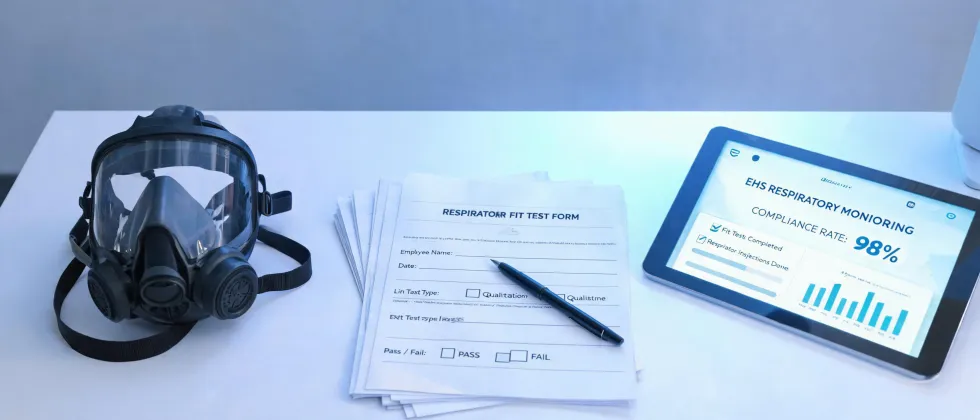
Here's what surprised me when I ran a side-by-side fit check between the two: a poorly sealed 8210 leaked more than a properly sealed 2091. The higher rating doesn't help you if the mask doesn't seal. Fit testing is not bureaucracy—it's the part that makes the spec real.
The 2091 costs more upfront, especially with a reusable facepiece. But for a crew that needs respiratory protection every day, a reusable system can be cheaper per use than a stack of 8210s. I say 'can' because I've seen companies buy advanced respiratory protection and then skip the training. That's a bad investment.
Bottom line: choose the 3M 8210 for lightweight, single-shift jobs. Move to the 3M 2091 P100 filter when you need higher filtration, oil resistance, or a better long-term cost curve. Both are solid; they just solve different problems.
Kevlar Gloves vs Standard Work Gloves
Kevlar gloves get a lot of attention, and for good reason. When I compare a Kevlar glove to a standard seamless knit glove, the first difference is cut resistance. Kevlar fibers can stop sharp edges better than ordinary cotton or polyester.
But Kevlar gloves are not a no-brainer for every task. They run warmer, less breathable, and some styles have less grip than a nitrile-coated general glove. In one glove trial, I want to say nine out of twelve workers preferred a coated general glove for precision assembly, even though the Kevlar option scored higher on cut protection. If a glove makes a task harder, people take it off—and then the protection is zero.
I've also rejected 'cut-resistant' gloves that had no ANSI cut level and no test data behind them. Kevlar gloves from a reputable manufacturer give you a spec you can verify. That spec matters when a worker's hand is near a sharp metal edge.
Bottom line: use Kevlar gloves for glass, metal, and real laceration risks. Choose a lighter coated glove when dexterity matters more. And always check the cut level, not just the label.
Privacy Fence Panels vs Open Fencing
The phrase 'privacy fence panels' usually makes me think of residential yards, but the same decision shows up in industrial settings. Are they better than open chain-link fencing? It depends on whether you want to be seen or not.
In 2021, I reviewed a storage yard where expensive equipment was visible from the road. Chain-link fencing made it easy for anyone to scout inventory. We switched to solid privacy fence panels to block that view. The upside was fewer prying eyes. The risk was creating blind spots for our own security patrols. I kept asking myself: are we making the yard harder to break into, or just harder to see into?
We ended up adding more cameras and lighting. I can only speak to the industrial side; for residential use, the trade-off is similar. Privacy fence panels screen your yard, but they also block your view. And if a fence panel blocks a mailbox or delivery access, you'll create avoidable problems. Under federal law (18 U.S. Code § 1708), mailboxes are protected and only authorized mail can be put in them. More basic than that: a letter carrier needs to reach the box. Leave clearance.
If you install solid panels, add reflective markings on them. I've seen a backing accident that a cheap reflective strip would have prevented.
Bottom line: privacy fence panels make sense when you need screening and can add compensating security. Open fencing is better when visibility is your best deterrent.
Can You Sleep with Earplugs? Yes, with Caveats
This is a question I hear in toolbox talks: can you sleep with earplugs? People want to use the same foam earplugs they wear at work. The short answer is yes, generally, but there are caveats.
Compared to sleeping without them, earplugs help when the room is noisy. But they don't cancel all sound—they reduce it. A high noise reduction rating isn't necessarily better for sleep, because you still want to hear a smoke alarm or a door opening. Some people use electronic hearing protection for that reason, but that's a different budget.
The bigger red flag is hygiene. Reusing dirty foam earplugs can cause ear infections. Replace them regularly. I'm not a sleep specialist, and honestly, I'm not sure why some people can't tolerate earplugs; my best guess is pressure on the ear canal. If you wake up with sore ears, stop.
One more thing: per FTC advertising rules, hearing protection claims need to be substantiated. If a label says 'blocks 33 dB', the manufacturer should have the test data behind it. That matters for sleep earplugs just as much as industrial hearing protection, because you're trusting your ears to it.
Bottom line: yes, you can sleep with earplugs, as long as they're clean, moderate in noise reduction, and used as an extra layer—not a substitute for controlling the actual noise.
Quick Recommendations
If you're choosing right now:
- Need disposable dust protection for a short task? Go with the 3M 8210.
- Need a high-efficiency filter on a reusable respirator? Go with the 3M 2091 P100 particulate filter.
- Handling sharp metal or glass? Kevlar gloves.
- Need to hide a yard from prying eyes? Privacy fence panels, with cameras and reflective markings.
- Sleeping in a noisy house? Yes, with clean earplugs—but don't overdo the noise reduction.
These are the decisions I've seen hold up in real use. Buy the hazard first, the product second, and the training always.
Prices and specs change; verify current 3M product data and applicable standards before you buy.