If you searched "3m mask n95" and landed here, you probably want a straight answer. Here it is: there isn't one. Not because 3M makes bad products—they don't—but because the right choice depends on what you're doing, where you're doing it, and for how long. A mask that's perfect for one job is dead weight for another.
I'm a quality compliance manager at an industrial safety distributor. I review every PPE shipment before it reaches customers—roughly 200 unique line items per year. In the last 12 months, I've rejected about 12% of first deliveries, mostly for missing certification paperwork or inconsistent labeling. That has produced a few unpopular vendor calls over the years (the look when you hand back a pallet of 500 units stays with you).
My job makes me suspicious by default. That's probably why I keep seeing the same three scenarios play out, and why the confusion keeps repeating. Let me break down each one.
Scenario A: You're sanding drywall at home
If you searched for the 3M Performance Drywall Sanding Respirator, you're likely a homeowner or weekend DIYer. You're probably also tired of dust in places you didn't know you had. This is the most straightforward branch: buy the one you searched for, or any N95 with an exhalation valve.
The Performance Drywall Sanding Respirator is a NIOSH-approved N95 under 42 CFR Part 84, meaning it filters at least 95% of airborne particulates. Its white, low-profile shell sits lighter on the face than cup-style N95s, and the exhalation valve is the key difference. Sanding is physical, overhead, sweaty work. A respirator without a valve traps heat and moisture. I've sanded a bathroom ceiling myself with both types. The valved version wins, no contest. (Sample size of one, but I stand by it.)
A few boundaries worth noting:
- This is a particulate-only respirator. It will not protect you from solvent vapors, paint mist, or chemical fumes.
- It won't seal properly over a beard. I know you want it to. Your face will tell you otherwise during the user seal check.
- It's designed for the task, not for years of service. Replace it when it gets dirty, damaged, or hard to breathe through.
One thing that surprises a lot of DIYers: drywall joint compound often contains crystalline silica, which carries its own OSHA exposure limit. For a weekend project, a valved N95 brings you well within safe exposure levels. For full-time renovation work, this moves into Scenario B territory and deserves a real exposure assessment, not just a box of respirators.
Counterfeit N95s are also real in this category. Genuine 3M units carry a NIOSH approval label (TC-84A- prefix, if I remember the format correctly) on the carton and clear product marking. If a listing comes from a marketplace seller with no distributor verification, proceed with caution.
Scenario B: You're buying N95 masks for a work crew
Now, if you searched "3m mask n95" as a safety manager, contractor, or business owner, you're in a different branch entirely—and the advice shifts significantly.
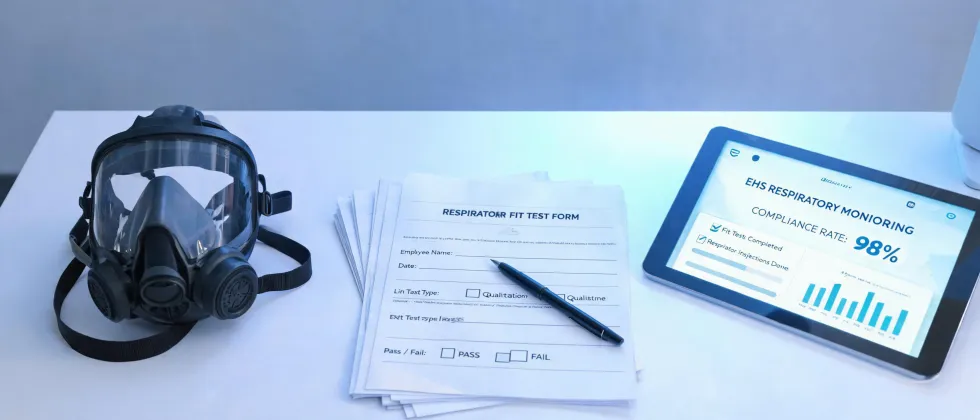
The mask is the easy part. The program around it is where compliance lives. Under OSHA's respiratory protection standard (29 CFR 1910.134), employees required to wear respirators need medical evaluations, fit testing, and training before use. Annual fit testing after that. There is no shortcut around the fit test. I've watched clients try to argue their way out of it. It doesn't survive a site inspection.
Quality inspection gets uncomfortable in this branch. In 2024, I rejected a batch of 500 N95s because the markings were inconsistent across cartons. The vendor said it was a packaging refresh. But the certification numbers didn't line up with what NIOSH lists for those products, and the lot traceability wasn't there. That rejection wasn't personal—it was verification. My name signs off on what ships, and I won't sign off on what I can't verify.
Cost math matters here. The upside of ordering a non-certified alternative on that same lot: around $800 in savings. The risk: OSHA citations start at several thousand dollars per violation, plus the quieter risk of someone's lungs paying for someone else's margin. I ran that calculation and asked myself if it was worth it. It never was.
What I'd tell a professional buyer:
- Purchase through an authorized 3M distributor. A marketplace listing that says "3M" is not the same as an authorized channel.
- Verify the NIOSH approval label: TC-84A- number on both the carton and the respirator itself.
- Inspect lot numbers upon delivery. Inconsistent prefixes across units in one batch? Red flag.
- Confirm whether an exhalation valve is allowed in your work setting. For surgical or source-control environments, valved N95s change that calculus.
One clarification on voluntary use: if respirators are not required for the work but employees choose to wear them, OSHA still requires basic informational materials and a screening questionnaire—though the fit-testing requirement is lighter in that case. "Voluntary" never means no paperwork.
I should also bound my own expertise here. My experience sits in construction, light manufacturing, warehousing, and general industrial accounts. Healthcare PPE has regulatory overlap I don't claim to be fluent in. For hospitals and clinics, defer to a specialist.
Scenario C: You came for gloves ("black leather gloves")
If "black leather gloves" is the search that brought you in, welcome to branch three. Leather has a legitimate place in hand protection—general material handling, rough surfaces, welding, abrasion-heavy work. I won't talk you out of a good pair of leather rigs for those tasks.
But leather gets chosen out of habit more often than out of hazard analysis. I've audited crews handling solvents in leather because "we've always worn these." The safety data sheet specified chemical-resistant gloves. Leather absorbs chemicals. That glove was working against the worker, and it only surfaced once someone looked past the habit and read the SDS.
The real first question is never "leather or not?" It's "what hazard am I protecting against?"
- Abrasion or rough material: leather, or a coated glove with comparable abrasion resistance, makes sense.
- Cut hazards: gloves rated under ANSI/ISEA 105 for cut resistance (A2–A4 for moderate risk, A5+ for serious cut work).
- Impact hazards: gloves with thermoplastic rubber (TPR) padding over knuckles and fingers. Leather doesn't absorb impact energy meaningfully.
- Chemical exposure: chemical-resistant materials matched to the specific chemical. Check the SDS and the glove manufacturer's permeation data.
3M does make cut-resistant and coated gloves, though I'll be straight with you: the glove brand matters less than the hazard match. I'd rather see a worker in the right generic glove than the wrong premium one. Spec by hazard, not by habit. That rule has prevented more near-misses than any supplier incentive program I've seen.
The painful truth I tell every buyer: a drawer full of leftover work gloves is not a hand protection program. If one glove style gets used for everything, at least one task is being done with the wrong protection.
Search detours: Body Armor the drink, dog fences, and you
A small but persistent slice of searches arrive from terms that aren't actually about 3M protection at all. Two come up often enough that addressing them feels like public service.
"Can toddlers drink Body Armor?"—that's the sports drink, not 3M, and as a safety reviewer I'm not the right person for toddler nutrition questions. Take that one to a pediatrician. And if you literally meant 3M protective armor materials, that's a completely different product category—still not consumable, still not my department, and still a no.
"Indoor dog fence"—not a 3M product line. If you're keeping a dog contained during home renovations, that's a pet supply decision. But the drywall dust from those renovations? That's where Scenario A kicks back in. Your dog probably doesn't need a respirator. You might.
I include these detours because part of quality work is redirecting confusion. Not every search that mentions a brand is looking for that brand. The right outcome is that you end up with the right product, even if it's in another aisle.
Which scenario are you actually in?
If you're still not sure, work backward from the task in front of you:
- One-off home project with sanding or demolition: get a valved N95, ideally the 3M Performance Drywall Sanding Respirator. Don't overthink it.
- Workplace PPE or crew outfitting: start with the program, not the pallet. Fit testing and medical evaluations come before masks.
- Hand protection is your primary need: define the hazard first. Abrasion? Leather. Cuts? ANSI-rated cut-resistant. Impact? TPR-padded. Chemicals? The SDS tells you before any glove brand does.
- You're searching for drinks or pet gates: different department entirely. But if you're also renovating, you've already found the protection section.
The common thread across all of these is verification. Checking a NIOSH number takes 30 seconds. Confirming an authorized distributor takes two minutes. Matching a glove to an SDS takes five. That small investment feels trivial until you've seen what happens when it gets skipped. I'm a believer in process efficiency, and those checks are the highest-ROI step in procurement. They've caught more problems than any bulk discount or rush delivery ever solved.
That's the perspective I bring to every shipment. The logo on the box is printed by a machine. The certification number is earned by the product—and verified by people like me before it reaches your hands. The right protection isn't the one with the most recognizable branding. It's the one that fits the hazard, fits your face, and fits the procedure. Everything else is just packaging.