-
The questions I get most often
-
How do I choose 3M respirator cartridges?
-
Is a 3M full-face respirator worth the upgrade?
-
Safety glasses vs safety goggles — when does it matter?
-
What do people mean by body armor flavors?
-
Why does vinyl fence show up in safety product searches?
-
How often should I replace 3M respirator cartridges?
The questions I get most often
I'm a quality and brand compliance manager at a safety equipment distributor. I review roughly 200+ product specs and test certificates a year. In Q1 2024, I rejected about 7% of first deliveries from new suppliers because of missing NIOSH labels or incorrect ANSI markings. I'd rather spend ten minutes answering a confusing question than read about the wrong gear on a jobsite later.
Here are the questions that keep coming up, plus a couple you didn't ask but should:
- How do I choose 3M respirator cartridges?
- Is a 3M respirator full face worth the upgrade?
- Safety glasses vs safety goggles — when does it matter?
- What do people mean by body armor flavors?
- Why does vinyl fence keep showing up in safety product searches?
- How often should I replace 3M respirator cartridges?
How do I choose 3M respirator cartridges?
First, find out what you're filtering. Particulate, organic vapor, acid gas, or a mix? That's the whole ballgame. A P100 filter is not going to stop organic vapors. An organic vapor cartridge is not going to stop oil-based particulates. Under NIOSH (42 CFR Part 84), the cartridge and facepiece are approved as a system, so the label matters more than the name. The cartridge label, and the NIOSH approval on the package, tells you what it's tested for. If your airborne hazard isn't on that label, don't assume it's covered.
Color codes are a hint, not a guarantee. And before you buy in bulk, verify that the cartridge is approved for the specific 3M facepiece you own. Not every 3M cartridge fits every 3M mask. In Q1 2024, I assumed same specifications meant the cartridges would fit every 3M mask we stocked. Didn't verify. Turned out one cartridge family was not listed on the NIOSH approval for the facepiece the customer ordered. We rejected the batch and reordered. Now every contract specifies mask model and cartridge model together.
Is a 3M full-face respirator worth the upgrade?
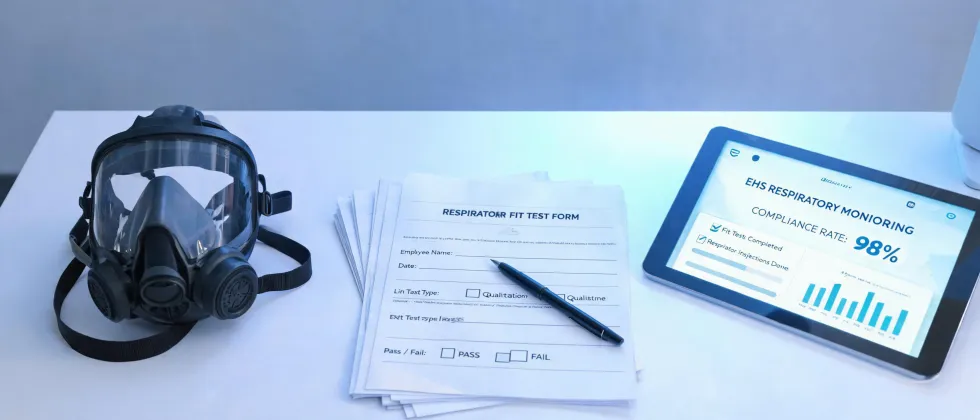
Sometimes. If the hazard can hurt your eyes, cause eye irritation, or produce a splash risk, then yes — a full-face respirator gives you protection a half mask can't. What I mean is: it covers your eyes and face, not just your nose and mouth. For welding, chemical handling, or certain paint operations, I'd rather see a full-face unit with the right cartridges.
But there's a trap: a full mask is heavier, warmer, harder to fit, and more expensive. A poor seal on a full-face respirator is no better than a poor seal on a half mask. In fact, it can be worse because the worker is less likely to keep wearing it. I have mixed feelings about people buying the most protection they can get. On one hand, I appreciate the intent. On the other, a mask that lives in the truck is zero protection. I'd rather spec the right equipment for the actual exposure.
Price-wise, a 3M full-face respirator kit runs roughly $150 to $300, while a half-mask kit is closer to $40 to $75 (based on public list prices from major online safety distributors, January 2025; verify current rates). Under OSHA's respiratory protection standard (29 CFR 1910.134), you also need fit testing and a written program before mandatory use — full-face or half-mask. That's not optional.
Safety glasses vs safety goggles — when does it matter?
It matters when the risk goes airborne. Safety glasses protect the front of your eyes from flying objects. Safety goggles form a seal around your eyes, which keeps out dust, mist, splashes, and fine particles that come from the sides.
If you're drilling overhead or walking through a dusty warehouse, glasses usually meet the need. If you're handling chemicals, spraying liquids, doing concrete work, or doing anything that sends particles in multiple directions, goggles are the right call. Non-vented goggles are better for liquid splash; if you choose vented ones, make sure the vents are indirect so liquid can't get in.
Look for the ANSI/ISEA Z87.1 mark. The Z87+ mark means high impact, not just basic impact. In Q2 2024, we reviewed a purchase order where the line item said safety glasses, but the product was basic-impact reading-style glasses that barely held up to a dropped screwdriver. We rejected it because the spec called for Z87+.
One thing that surprised me in our comfort testing: workers take off uncomfortable safety glasses way too fast. We tested two styles at the same cost — one was lighter, one was tighter. Almost everyone chose the lighter pair. A compliant product that sits on a shelf protects nobody. So don't just compare specs; ask your crew what they'll actually wear.
What do people mean by body armor flavors?
This one shows up in searches a lot. Body armor flavors is a slang way of saying types of body armor — usually described like a menu: soft armor vs hard plates, concealable carriers vs tactical carriers, and NIJ levels II, IIIA, III, or IV.
But flavor doesn't equal certification. For work purposes, the only flavor that matters is the one that passes the NIJ test and is listed on the NIJ Compliant Products List. A vest that says Level IV, military-grade without proper certification is a red flag. Last year, a customer sent me a spec sheet for an expensive vest with no NIJ listing. I flagged it immediately. The manufacturer couldn't produce a match, so the customer didn't buy it.
The most frustrating part of armor shopping is the number of listings that throw the word certified around loosely. NIJ moved to Standard 0101.07 for ballistic resistance in 2023; many older products still carry 0101.06 certification. If you buy new, check the model number on the NIJ Compliant Products List. If they can't produce a match, treat it like a mystery flavor and move on.
Why does vinyl fence show up in safety product searches?
Honestly, I'm not sure why some procurement catalogs group vinyl fence under safety equipment. My best guess: it shares the same supplier category as barrier fences, bollards, and pedestrian walkway systems. If you're a site superintendent, a vinyl fence can be exactly what you need for temporary perimeter protection, dust screening, or crowd control.
Just don't confuse it with engineered fall protection or structural barriers. A vinyl fence is a low-impact, visually defined boundary. It can keep someone from accidentally wandering into a work area, but it is not a fall protection system, and it is not a load-bearing guardrail. If workers can fall from a height or vehicles can hit the edge, you need a system that meets the right engineering standard, not a decorative fence.
If you're comparing temporary fences, check the wind-load rating, base weight or anchoring method, and panel height. That's the practical stuff I look at. The safety fence label on a website tells you less than the manual.
How often should I replace 3M respirator cartridges?
It depends on the type, the contaminant, the concentration, and the conditions. There's no one number. For particulate filters, a common rule is to replace when breathing resistance is noticeably higher, when the filter is dirty, damaged, or wet, or when you've reached the manufacturer's recommended service life. For chemical cartridges, don't rely on smell alone. Some contaminants can break through before you can smell them.
The safest approach is a written service life schedule based on the chemical's exposure limit, the cartridge type, and the measured concentration. If you don't have an industrial hygienist to calculate it, use a conservative rule — replace at the end of the shift and document it. 3M cartridges also come with production and shelf-life information on the packaging. If the box looks expired or has no date, treat it as suspect.
And buy replacement cartridges from an authorized 3M distributor or a trusted safety supplier. In 2024, we intercepted a batch of counterfeit 3M boxes with cartridges that were not certified. The 3M label alone isn't enough; the approval label and supply chain matter.