-
Why I'm Writing This (And What It Cost Me)
-
Comparison 1: 3M 6800 Full Face Respirator vs Uvex Bionic Face Shield
-
Comparison 2: Tinted Safety Glasses vs Clear Safety Glasses
-
Comparison 3: Food-Safe Nitrile Gloves vs Industrial Nitrile Gloves
-
Comparison 4: 3M Certified Installers vs General Contractors
-
So What Should You Actually Do?
Why I'm Writing This (And What It Cost Me)
I've been handling PPE orders for industrial safety procurement for about 9 years. In that time I've personally made—and documented—7 significant mistakes totaling roughly $14,000 in wasted budget. I'm not proud of that number, but I keep a checklist now, and this article is basically that checklist in long form.
Here's what I want to compare: the stuff people think is interchangeable, but isn't. Specifically:
- 3M 6800 full face respirator vs Uvex Bionic face shield—both cover your face, but they're not in the same category
- Tinted safety glasses vs clear—the answer surprised me
- Food-safe vs industrial nitrile gloves—same material name, completely different compliance
- 3M certified installers vs general contractors—for reflective materials where "near me" isn't the right search filter
I'll lay out each comparison honestly, including where I got it wrong. No brand cheerleading, no "it depends" cop-outs. Each section ends with a clear take.
Comparison 1: 3M 6800 Full Face Respirator vs Uvex Bionic Face Shield
These two get lumped together more often than you'd expect. I think it's because they both look like "serious face protection" in product photos. But they're solving different problems.
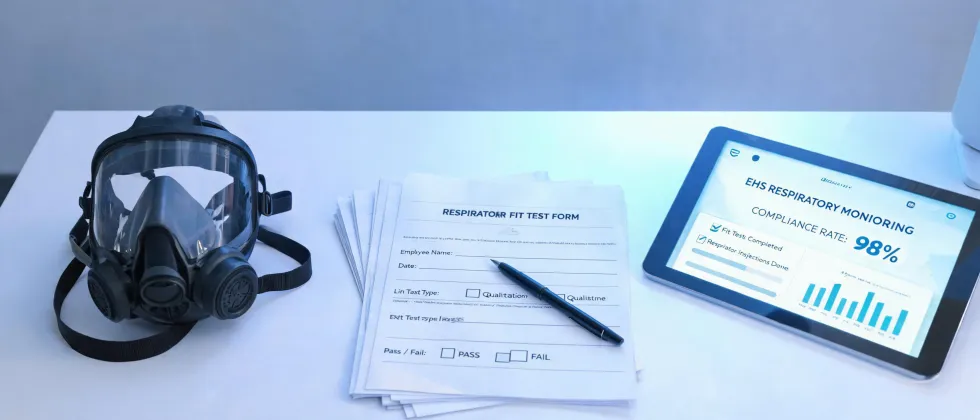
The 3M 6800 is a full facepiece respirator. It seals to your face, filters the air you breathe, and protects your eyes, nose, mouth, and respiratory system from particles and certain gases (depending on the cartridge). It requires fit testing under OSHA 1910.134—that's not optional for employer-provided use. The 6800 is NIOSH-approved, and that approval only applies when you're using the correct 3M cartridges for your hazard. Slap a random filter on it and the approval is void.
The Uvex Bionic is a face shield. It's impact protection. It does not seal, it does not filter air, and it is not a respirator. It stops flying debris, chemical splashes, and some radiant heat. OSHA considers face shields secondary eye protection—meaning you still need safety glasses underneath.
I once had a site supervisor try to sign off on the Uvex Bionic as adequate respiratory protection for a grinding operation. I had to walk him through the difference between "blocks particles from hitting your face" and "filters particles out of the air you inhale." He wasn't happy. But the alternative was a citation and a potentially sick worker.
The take: If the hazard is airborne and inhalable, you need the 6800 (fitted, tested, correct cartridges). If the hazard is flying objects or splashes, the Uvex Bionic is lighter, cooler, and way easier to wear for long shifts. Don't let the visual similarity fool you—one is respiratory protection, the other is barrier protection. Using the wrong one is a compliance problem and a safety problem.
Comparison 2: Tinted Safety Glasses vs Clear Safety Glasses
I used to think tinted safety glasses were a straight upgrade. More features, right? That was wrong, and it cost me a near-miss in a warehouse.
Tinted safety glasses (the kind with gray or brown lenses) reduce light transmission. They're designed for outdoor work: construction sites, roadside crews, anywhere the sun is actually a hazard. ANSI Z87.1 covers impact resistance for all safety glasses, tinted or not, so that's not the differentiator.
Clear safety glasses transmit the most visible light. They're the default for indoor work, low-light environments, and any task where color discrimination matters—think electrical work with color-coded wiring, or quality inspection where you're checking for subtle defects.
Here's the pitfall: I once ordered 200 pairs of tinted glasses for an indoor fabrication shop because the crew "preferred the look." Three weeks later, we had two near-misses where workers didn't see overhead crane hooks moving into their zone. The tint wasn't dark—just dark enough to screw with contrast in a dimly lit bay. We ate the cost of replacing 200 pairs with clear lenses (about $1,800, for anyone keeping score).
The take: Tinted is not better—it's different. If the sun is your light source, go tinted. If you're indoors, under 200 lux, or doing any task where color matters, go clear. If you're moving between environments, get the photochromic ones—but expect to pay 2-3x more, and they don't darken instantly in a car (windshields block most UV, which is what triggers the change).
Comparison 3: Food-Safe Nitrile Gloves vs Industrial Nitrile Gloves
Search "are nitrile gloves food safe" and you'll get a lot of vague answers. Here's the actual situation.
Industrial-grade nitrile gloves are made for chemical resistance, puncture resistance, and durability. They may contain mold-release agents, plasticizers, or colorants that aren't evaluated for food contact. There's no FDA requirement for them to be clean of those additives.
Food-safe nitrile gloves are manufactured under FDA regulations (21 CFR 177.2600 for repeated-use rubber articles, and related guidance). They have to be free of certain contaminants, produced in facilities that meet food-contact standards, and often labeled explicitly as "food safe" or "FDA compliant." The material cost is similar—the compliance cost is not.
I once had a catering client ask if they could just buy our standard industrial nitrile in bulk to save money. I said yes without checking the spec sheet first. It wasn't until their health inspection that anyone realized the gloves lacked the FDA compliance documentation. They passed the inspection, but only because the inspector didn't ask for glove paperwork. That was a lucky break I don't want to repeat.
The take: Nitrile is the material. Food-safe is the compliance status. If gloves will touch food at any point (prep, service, packaging), you need the food-safe version with documentation. For general maintenance, industrial nitrile is fine. Don't assume they're interchangeable just because the box says "nitrile" on both.
Comparison 4: 3M Certified Installers vs General Contractors
This one matters if you're dealing with 3M reflective materials, films, or wraps. The search "3m certified installers near me" gets a lot of traffic, and I get why—people want the brand name on the product and the installer.
3M certified installers have completed 3M's training program, have access to 3M's warranty programs (which can extend coverage significantly), and are listed in 3M's official directory. The certification isn't permanent—installers have to maintain it through ongoing training and documented work.
General contractors who install films and wraps may be excellent at what they do. But they're not in 3M's network, which means the product warranty may not apply to the installation itself. 3M's material warranty often requires certified installation for full coverage. If the wrap fails and the installer wasn't certified, you're stuck in the middle.
I once approved a non-certified installer for a fleet graphics job because they were 40% cheaper and had good references. The wrap started peeling at the edges after 14 months. The material warranty didn't cover it because the installation wasn't certified. Repairs cost $2,200. The original savings were about $900. Do the math.
The take: If you're using 3M materials and want the warranty to mean something, use a certified installer. If the warranty isn't a priority and the installer has a solid portfolio, a general contractor can work. But understand what you're giving up. "Near me" is not the same as "certified near me."
So What Should You Actually Do?
Here's the short version, scenario by scenario:
- Inhalable hazard + face protection needed: 3M 6800 with correct cartridges, fit-tested. No substitutes.
- Impact/splash hazard only: Uvex Bionic (or similar face shield) is lighter, cooler, and adequate. Pair with safety glasses.
- Outdoor work: Tinted safety glasses. Indoor work: Clear. Don't overthink it, but don't get it backwards.
- Food handling: Food-safe nitrile with FDA documentation. Industrial nitrile is for maintenance, not prep.
- 3M materials installation: If warranty matters, find a certified installer. If not, a vetted general contractor can work.
None of these are brand loyalty picks. They're compliance picks. The brand that gets the compliance right is the brand you should use—and for most of these categories, 3M is one of the few that does. But the point isn't 3M vs everyone else. The point is matching the product to the hazard, and that requires reading the spec sheet, not the marketing copy.
I keep a one-page checklist taped inside my supply cabinet now. It's saved me from repeating the tinted glasses mistake twice already. Write your own. It'll pay for itself faster than you think.