-
Step 1: Name the hazard before you name the product
-
Step 2: Pick the right 3M dust mask or respirator—and ask about fit
-
Step 3: Price in fit testing, training, and replacement
-
Step 4: Audit for budget contamination
-
Step 5: Compare total cost, not unit price
-
Step 6: Set a replacement schedule and keep stock moving
-
The bottom line
I'm the procurement manager at a 210-person manufacturing company, and I've managed our safety budget—about $180,000 a year—for the past six years. Every PPE order goes through our cost-tracking system, and I've learned that the cheapest line item is rarely the most cost-effective one. This checklist is for anyone buying 3M PAPR filters, a 3M dust mask, or any other respiratory protection—and wants to keep the total cost honest. It has six steps. Step 4 is the one most people skip, because it feels like accounting instead of safety.
Step 1: Name the hazard before you name the product
Before you put a filter in the cart, write down the hazard. Is it dust, fume, mist, gas, or vapor? What level is the worker exposed to? Check the safety data sheet and any air monitoring data you have. A particulate-only 3M dust mask won't stop chemical vapors. A 3M PAPR filter pack might be exactly right for a high-dust job, but overkill for general sweeping.
In our facility, we attach a one-page hazard assessment to every purchase request. It takes ten minutes and prevents wrong-filter returns, expedite fees, and workers using something that isn't rated for the job. It also makes the next step easier, because you can look at a written need instead of a vague memory.
Step 2: Pick the right 3M dust mask or respirator—and ask about fit
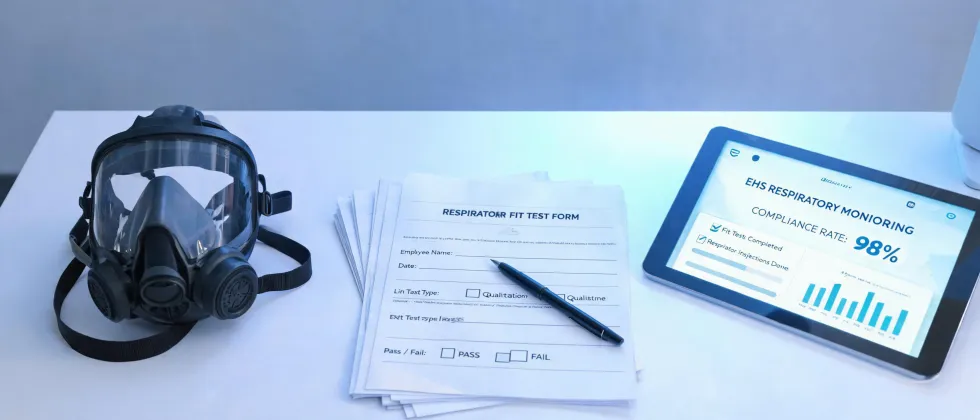
From the outside, the cheapest dust mask looks the same as a fitted respirator. The reality is fit and approval make the difference. A 3M dust mask like the 8210 is fine for low-hazard nuisance dust. But if you need actual respiratory protection, you need a NIOSH-approved respirator and a fit test. If a worker can't get a tight seal because of facial hair, a loose-fitting powered air-purifying respirator (PAPR) hood may be the better choice.
Don't just order the same model you've always ordered. 3M makes cup-style masks, fold-flat masks, valved and unvalved versions. Workers have opinions. If they hate a mask, they'll take it off. That's a compliance problem wearing an expensive uniform.
Look for the NIOSH approval label on every box. I'll admit a mistake: in my second year, I ordered 2,000 dust masks without checking the approval number. They weren't approved. We had to reorder and eat the cost. It wasn't the last reorder I paid for, but it was the most embarrassing.
Step 3: Price in fit testing, training, and replacement
The filter price is only the start. OSHA's respiratory protection standard (29 CFR 1910.134) requires fit testing for tight-fitting respirators, plus medical evaluations and training. If a supplier doesn't list those costs upfront, ask. I've learned to ask what's not included before I ask the price.
For 3M PAPR filters, we log hours in the maintenance system. We also track battery packs, chargers, and replacement hoods. A filter changed too late is a liability. A filter changed too early is wasted money. The numbers will tell you which one is happening—if you actually track them.
One more thing: if you're comparing a PAPR system against a half-mask or full-facepiece, don't stop at the purchase price. A PAPR hood avoids some fit-testing headaches, but the system costs more to maintain. That's a real trade-off. You have to decide whether the extra cost buys enough compliance and comfort.
Step 4: Audit for budget contamination
Here's the step most procurement people skip. At least once a quarter, something unrelated shows up in our PPE cost center. I've seen “factory radio gm wiring harness color codes” on a maintenance order, “horizontal privacy fence” on a facilities PO, and “can i take pepper spray on a plane” in the safety inbox. None of those are 3M products. None of them belong in a respiratory protection budget.
Why does this happen? People search broadly, and the system records an intent instead of a part number. The result is a cost report that lies. If you don't pull those line items out, your per-worker PPE cost goes up without any safety improvement.
So, to answer the one that comes up the most: no, you can't take pepper spray in a carry-on. TSA has specific rules for checked bags. And I don't have the GM wiring color codes memorized—that's a wiring diagram question, not a PPE question. A horizontal privacy fence is a fence. If those searches land in your safety budget, clean them out.
Step 5: Compare total cost, not unit price
After comparing eight vendors over three months in 2023, I found the cheapest filter quote was 14% below our usual supplier. On the total-cost spreadsheet, it was 9% higher. The quote excluded shipping and hazmat disposal, and the minimum order quantity was more than we'd use in a year. The vendor with transparent pricing listed every fee upfront. That's the one I chose.
Build your own total-cost checklist: unit price, shipping, handling, hazmat disposal, fit test supplies, training time, storage, shelf life, minimum order, and expedite history. Add them all up. The line item that looks cheap on the invoice is often expensive by the time it reaches a worker's face.
The numbers said to go with the cheaper option. My gut said something felt off about their support. Turns out “we'll help with the switch” meant they'd send a PDF. To be fair, cheaper options can work for low-hazard nuisance dust. At least, that's been my experience. But when you're buying 3M PAPR filters for a high-exposure job, a filter failure isn't just an accounting variance. It's a worker's lungs. I don't gamble on that.
Step 6: Set a replacement schedule and keep stock moving
Respirator filters have a service life and a shelf life. We use a simple rotation: new filters go in the back, older stock goes in front. Every 3M PAPR filter in our inventory has a first-use date on the packaging. If it's expired, it's out. Filters that sit too long can degrade even before opening.
For disposable 3M dust masks, the rule is simple: replace when they're wet, damaged, or harder to breathe through. For cartridges, replace if you smell or taste contaminant—but don't wait for that. And if a worker says a filter isn't right, change it. Document it. Figure out the pattern later. The replacement cost is lower than the cost of a bad outcome.
Also watch storage. Heat and humidity can shorten filter life. Store respirators and filters in a clean, dry area away from chemicals. That's basic, but it's a common source of waste in small shops.
The bottom line
There's something satisfying about a PPE budget that reflects what it actually costs. It starts with knowing the hazard, choosing the right 3M dust mask or PAPR system, pricing in fit testing and training, and refusing to let unrelated search terms pollute your data.
If you found this article because you asked “can i take pepper spray on a plane,” or you were searching for “factory radio gm wiring harness color codes”—welcome. You've now learned more about 3M PAPR filters than you expected. For the TSA and wiring questions, check official sources. And if you're a procurement person, check your cost report.
