Two things I've learned as the person who orders safety gear for a 160-person contracting and fabrication company: no single product list works for every site, and the cheapest order isn't always the least expensive one. I've been in that chair since 2020, and by now I process 60-80 orders a year—roughly $180k in PPE and site supplies across eight vendors. I report to both operations and finance, so I'm the one who gets yelled at when compliance gear is late and when the invoice doesn't match the PO. That's the perspective this guide comes from.
Depending on the week, I'm buying a 3M 6300 respirator, 3M Scotchlite reflective tape, TIG welding gloves, 6x8 vinyl fence panels, or a full fall arrest system—sometimes all before lunch. This isn't one of those "just pick a good supplier and you're done" articles. It's a scenario breakdown. If you're the person who has to answer "what is a fall arrest system" and "can we get it by Friday?" in the same meeting, this should help you set priorities.
Scenario 1: Maintenance crews doing paint, solvent, or dusty work
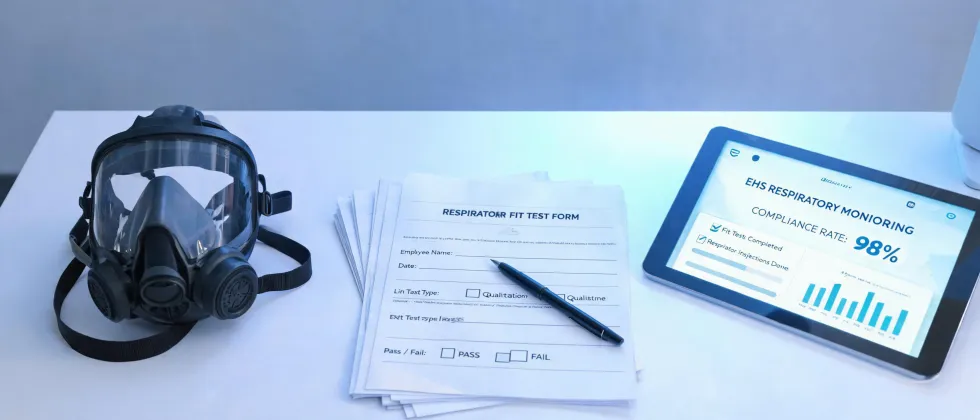
For indoor maintenance, the most common mistake I see is buying disposable dust masks when the crew actually needs chemical or particulate protection. If you're doing that, honestly, the 3M 6300 respirator is the workhorse to compare against. It's a reusable half-mask, and when fitted with the correct cartridges, it handles a lot of jobs—paint, solvent, welding fume, some dusts—without the cost of a powered-air-purifying respirator (PAPR). That's the route we took in 2021, and it cut our per-shift consumable cost pretty significantly.
Things to check when buying the 3M 6300 respirator:
- Cartridge selection has to match the contaminant. Don't assume one cartridge covers everything.
- Fit matters more than brand. If you have a mix of face sizes, order two sizes of facepiece, not one.
- There's an expiration date on cartridges. I've caught expired stock from two different suppliers, so verify before you send it to the field.
One more note: if the crew is wearing a respirator for more than two hours a day, you might be better off budgeting for a PAPR. But for occasional work, the 3M 6300 is, in my opinion, one of the best cost-per-task PPE buys out there.
Scenario 2: Outdoor crews, roadside work, and open sites
Outdoor work changes the priority. A respirator doesn't help if someone gets hit by a forklift. For daytime visibility, the garment class matters, and the tape on it matters even more. We order 3M Scotchlite reflective tape by the roll for trailers, signage, and job-specific high-vis gear. As of January 2025, the silver Scotchlite roll is still what our sign shop asks for—partly for retroreflectivity, partly because it doesn't peel the way cheaper tape does.
If you're affixing tape to your own workwear, though, remember: reflective tape is not a full high-vis garment. ANSI/ISEA 107-2020 has performance classes based on background material, reflective material, and design. A neon vest with a small stripe can look fine on screen and still not meet the standard for highway work. If a client or inspector asks for Class 2 or Class 3, buy a certified garment rather than relying on a tape roll.
On outdoor sites, 6x8 vinyl fence panels are a surprisingly useful thing to have in the purchasing rotation. When you need temporary separation, they're a no-brainer—but they're not guardrails, and they're not a substitute for fall protection. They do one job well: they keep people from wandering into a hazard zone. During our 2024 vendor consolidation project, we used twenty of them to block off a loading area for three days while concrete cured. That kind of visibility buys you more compliance goodwill than a dozen emails.
The caveat: a 6x8 vinyl fence panel will blow over in a gust of wind. If it's protecting an open edge or a trench, you need a real barrier, engineered for the load—not just a privacy panel.
Scenario 3: Welding and fabrication benches
Welding is where I had my biggest "the data says premium, reality says wait" moment. Everything I'd read about gloves said the most expensive pair wins. In practice, for TIG welding, the $12 pairs didn't last a week, and the $45 premium pair didn't change the welder's day much either. What actually worked was a mid-priced pair of TIG welding gloves with goatskin palms and snug fingers. They lasted about three times longer than the cheap pair, and the welder said the fit was close enough to a cloth glove that he could hold a filler rod without fighting the leather. If you've ever watched a welder toss a pair of gloves across the shop after one pass, you know exactly what I mean.
So if you're buying TIG welding gloves, don't approach it like buying general-purpose work gloves. MIG gloves are too bulky for TIG. You want:
- Fitted fingers, not thick padding
- Heat-resistant palm leather, with goatskin as a solid benchmark
- Reinforced seams at the thumb crotch—that's where they tear first
- UV-resistant backs if the welder works close to the arc
To be fair, premium MIG gloves are excellent for heavy work. But they are the wrong tool for TIG. On the procurement side, treat receipt inspection as part of the process. The third time we received "TIG gloves" that were actually unlined fabric gloves, I added "pinch the palm, bend the fingers" to our receiving checklist. That one line has saved more money than any discount code we've negotiated.
Scenario 4: Working at height
If anyone on your site works at 6 feet or more in construction—or 4 feet in general industry—fall protection is not optional. This is the scenario where "cheap and fast" can become a liability statement. Let's make the definition clear first.
What is a fall arrest system? A personal fall arrest system is a combination of an anchorage, a connector, a full-body harness, and a deceleration device—typically a lanyard or lifeline—that limits fall distance and the force on the body. It's not just a lanyard. It's not just a harness. It's the whole energy-absorbing chain. OSHA's construction fall protection rule at 29 CFR 1926.501 is the anchor you'll see cited most often, and for general industry it's 29 CFR 1910.28. Both are online at osha.gov (I checked in December 2024).
When someone asks "what is a fall arrest system, and do we need to buy it this quarter?"—the answer is basically this: if there is any way an employee can fall from an unprotected edge, you need a system, a qualified person to design the anchoring, and a rescue plan. If you're buying a kit, confirm it includes a full-body harness, a lanyard with shock absorber, and an anchorage connector. If the package only includes a harness and a lanyard, keep looking. If a supplier can't tell you which standard it's built to, that's a red flag.
This is the item where I will not use a never-heard-of brand to save 30%. That may sound inconsistent for someone who loves mid-tier TIG gloves, but here's the distinction: a glove failure is a burned hand; a fall arrest system failure is a fatality. Different risk, different standard.
How to decide which scenario applies to you
I'll give you the same checklist I use when I get a request that starts with "we need... by Friday."
- Anyone going to be 6 feet—or 4 feet, general industry—above a lower level? Fall protection comes first.
- Anyone breathing painting, solvent, or welding fume? Airway protection before comfort items.
- Anyone near traffic, forklifts, or moving equipment? High-visibility gear and barriers.
- Anything involving high heat or sharp edges? Gloves and arm protection.
If you check yes on more than one, don't buy piecemeal. Find one supplier who can quote the whole bundle and confirm current stock. In 2024, that single move cut our ordering time from about eight hours a month to maybe two, and it eliminated the "three different couriers show up on different days" problem.
When to pay extra for certainty
I get why rush shipping feels like waste. It can be. But after getting burned twice by "probably on time" promises, I now separate what I call the convenience premium from the risk premium.
Convenience premium is paying $40 in freight for something that could wait three days. I skip it. Risk premium is paying $400 for rush delivery when the alternative is missing a $15,000 event or a shutdown window—or failing an audit. In March 2024, we paid a genuine rush fee on a box of respirator cartridges and a spare fall arrest lanyard because a crew was already on site and the only other option was paying them to stand around. That order started with a phone call and a two-hour window. Normally I'd get three quotes. There was no time. I went with the regular supplier based on trust alone. The freight hurt. The idle time would have hurt a lot more.
So when your brain says "we can't afford the fast option," check whether you're actually saying "we can't afford the delay." If you are, pay the premium, get the tracking number, and move on. You're buying certainty, not speed.
Bottom line: a good PPE purchase starts with the hazard, not with the catalog. Use the 3M 6300 respirator when you need reliable half-mask protection, 3M Scotchlite reflective tape for visibility, proper TIG welding gloves for dexterity, 6x8 vinyl fence panels for temporary separation, and a real fall arrest system whenever the ground decides to get far away. Buy from a supplier you trust to have stock when you're on a tight deadline. In this job, the cheapest order is the one that gets the job done safely, on time, and without a second trip to the field.