I'm an office administrator for a 240-person industrial service company. I manage safety supply ordering across three locations—roughly $700,000 in PPE, fire equipment, and consumables every year, split across eight vendors. I report to operations and finance, which means I feel every canceled order and every missed deadline from both directions. After five years of doing this, I've landed on an opinion that doesn't always play well in a budget meeting: I'll happily pay more for certainty when buying safety supplies. Not because we have money to burn—we don't. Because uncertainty is the most expensive line item I've ever bought.
Why do I say that? Because the lowest quote is only the beginning of the cost. A late delivery shuts down a crew. An unapproved respirator creates a compliance exposure. A glove that tears during food prep becomes a contamination incident. All three of those have happened on my watch. None of them showed up on the original invoice.
The Sticker Price Is Not the Real Price
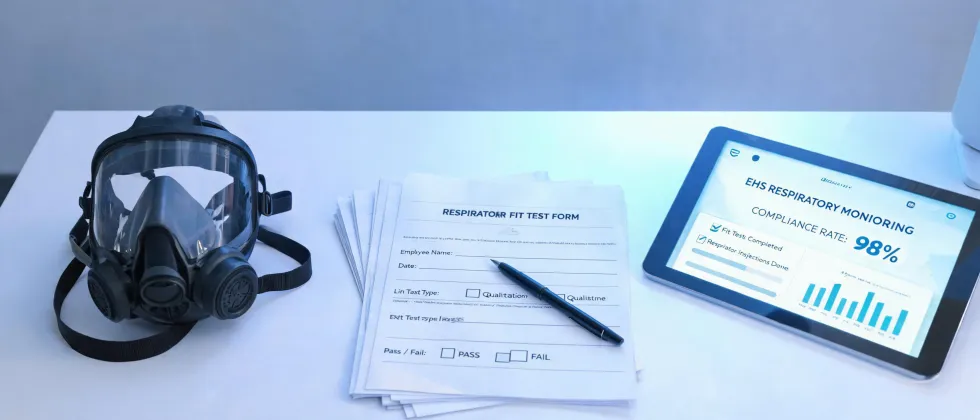
In 2021, we almost bought 200 disposable respirators from a new supplier at 35% below our regular distributor. The listing said "3M dust respirators" in bold, and the lead time was "one week—probably." I asked for the NIOSH approval documentation. The line went quiet. Then the supplier sent a certificate with a product name that didn't match the model on the packaging. I cancelled the order and went back to our regular distributor, paying $0.12 more per unit.
According to OSHA's respiratory protection standard (29 CFR 1910.134), respirators used in the workplace must be NIOSH-certified. The certification number, usually in the form TC-84A-XXXX, is printed on the packaging or label. If a vendor can't show that number for a "3M dust respirators" listing, the product doesn't belong in your facility. It might still filter dust. But "might" is not a safety specification.
The same logic applies to the 3M Versaflo respirator we bought for the paint shop. That's a powered air-purifying respirator, and the list price made my finance director wince. But the deciding factor was the fact that 3M designs the hood, blower, battery, and filters to work as a complete system. We knew the cartridges would fit because they're specified for that unit. We also knew we'd need training and proper seal checks before workers used it. A cheaper generic system might have worked. But "might" again. I don't bet on "might" when someone is spraying isocyanates.
Looking back, I should have ordered a spare battery with the Versaflo. At the time, it felt like an unnecessary $300. When the original battery died during week 11 of a 12-week project, we paid $95 for overnight shipping to get a second one. That's a small example of the time-certainty principle: the spare battery would have been cheaper if I'd bought it before we needed it.
When an Emergency Becomes a Regular Purchase
Last March, our warehouse manager found two fire extinguishers that failed hydrostatic testing. The fire marshal was scheduled for the following Monday. I typed "fire extinguisher near me" into a search engine at 4:35 PM and got a list of suppliers within 20 miles. The nearest one could deliver two replacement units that evening for a $45 delivery fee.
Would I pay that fee again? Without hesitation. The alternative was canceling the inspection, rescheduling eight workers, and paying for a second visit. The $45 was actually the cheapest part of that transaction. There's something satisfying about a rush order that shows up exactly when promised—after the stress of the search, seeing the delivery driver with two tagged extinguishers is the payoff.
Why does a fire extinguisher "near me" matter? Because when a compliance deadline is three days away, a local supplier's truck is more reliable than a national carrier's tracking page. The quote was about 12% higher than our normal supply house. The certainty of a 6:10 PM delivery was worth it. According to NFPA 10, extinguishers require regular maintenance and inspection; a missing hydrotest tag is the kind of finding that turns a routine audit into a corrective-action plan.
Sometimes the Right Purchase Is Ugly or Boring
Not every order is a high-ticket 3M system. Sometimes it's a fence. In May, the maintenance manager asked me to source a snake fence for an outdoor electrical substation. I had no idea that was a thing. My first instinct was to buy the cheapest option from an online warehouse. Then I read the spec sheet: the tensile strength was low, and the delivery window was "2-3 weeks." I called a fencing contractor who gave me a firm install date and a written warranty. The cost was about 30% more, and it got installed before the summer snake season. We haven't had a single incident near that substation since.
I have mixed feelings about this one. Part of me wanted to laugh at the idea of safety-buying a snake fence. Another part knows that an electrical substation with grass, warm equipment, and no barrier is a liability waiting for a victim. The fence didn't need to be exotic. It needed to meet a specification and be in place by a deadline. That's certainty.
The same principle shows up in a much more common debate: vinyl vs nitrile gloves for food. Our cafeteria manager used to order whatever box was cheapest. Then we had an employee handle raw chicken with a vinyl glove that tore mid-shift. The glove didn't cause an outbreak, but it was close enough to scare everyone. According to the FDA Food Code, single-use gloves used in food service must be suitable for the task. The code doesn't mandate nitrile for every task, but when the task involves raw poultry, oily foods, or frequent changes, nitrile is more durable and less likely to tear. The price difference is a few dollars per case. A food-contamination event costs more than that in lost product and reputation.
What About the Budget? The Objection I Always Hear
I can hear the purchasing manager across the table: "Easy for you to say. My budget was cut." I get it. I have mixed feelings about rush fees too—part of me hates paying extra for something that should have been planned better. But I've also eaten the cost of a late order and a shutdown line. That cost doesn't come out of anyone's budget category. It comes out of the company's P&L and the purchaser's credibility.
In 2024, a vendor promised 60 cases of food-handler gloves for "probably by Friday." Friday came and went. We paid $300 in express shipping to get a partial order from another supplier by Monday. The original bargain ended up costing us 11% more than the price from our reliable distributor would have been—before you count the time we spent chasing it. That math never appears in the initial quote, but it appears in a month-end review.
So now I follow a few rules:
- Every purchase order includes a written delivery date, and I follow up the day before it's due.
- Every safety product supplier must provide approval or certification documents before the order is placed, not after.
- For emergency needs, I keep a shortlist of local suppliers—fire extinguishers, spill kits, and other items where proximity makes a difference.
This isn't a product review. It's a set of habits built from mistakes. I still buy standard items at standard prices. I still compare quotes. But I won't automatically choose the vendor with the lowest invoice if they can't commit to a date, a standard, or a phone call. In safety, a delivery date is not a minor detail. It's part of the product.
I don't pay for gold-plating. I pay for a promise that is written down and kept. That's true whether the order is a 3M Versaflo respirator, a rack of 3M dust respirators, a replacement extinguisher from the nearest supplier, a snake fence for a substation, or a case of nitrile gloves for the cafeteria. The premium I pay for certainty is small compared to the cost of being wrong. After five years of managing this job, that's the one line item I'll never cut.
This is based on my purchasing experience through Q1 2025. Product availability and prices change quickly, so verify current specs and local regulations before you place your own order.