-
Start with the Fence, Not the Purchase Order
-
Respiratory Comparison: Where Does the 3M 1860 N95 Mask Earn Its Price?
- What should you consider when choosing the type of hearing protection you use?
-
Reflective Material Comparison: Nike Air Max Plus TN 3M Reflective Black Is Not PPE
-
Final Comparison: Build the Decision Around the Actual Shift, Not the Catalog
When I first started in procurement, I thought specifying “3M” was enough. Seven years and several hundred purchase orders later, I know that 3M is not a substitute for a hazard analysis. I still buy 3M products, but I buy them when the total-cost math makes sense: unit price, compliance cost, training cost, and the risk that PPE sits unused in a locker.
That is the comparison I want to share here. I manage PPE budgets in the high six figures for a manufacturing operation, and I have negotiated with more than forty suppliers since 2018. In this guide, I’m walking through three categories where I see procurement teams make the same mistakes: disposable N95 respirators, hearing protection, and reflective gear.
Start with the Fence, Not the Purchase Order
The first comparison has nothing to do with brand. It is hazard control versus PPE. If you can put a physical fence around a noisy machine, or isolate a dust-generating process behind a wall, that control is almost always cheaper and more reliable than asking every worker to wear PPE perfectly all day.
I am not anti-PPE. I am pro-honest-cost. A 100-foot chain-link fence can do more for noise exposure than a thousand earplugs that workers remove because they forgot the purpose of the plugs. So when someone asks me which 3M product to buy, I usually answer with another question: have you removed what you can remove first? Once you have built that barrier, PPE has a fair chance to work.
Respiratory Comparison: Where Does the 3M 1860 N95 Mask Earn Its Price?
The search term “3m 1860 n95 mask” still shows up constantly on procurement lists, especially from facilities that built inventory during the pandemic. The 3M 1860 is a NIOSH-approved N95 respirator and an FDA-cleared surgical mask. It also offers fluid resistance, which is what separates it from an ordinary industrial N95. If you are in a healthcare setting where blood or fluid splash is possible, that feature matters. If you are working with concrete dust, you may be paying for clinical features you do not actually need.
In 2020, any 3M 1860 N95 mask was better than no mask. That is no longer a buying strategy. In 2025, the right question is “what hazard are we filtering?” For airborne particulates in many industrial tasks, a 3M 8210 or similar N95 can do the job at a lower unit price. For gases, vapors, or oxygen-deficient atmospheres, neither product is appropriate. A mask is not a universal respirator.
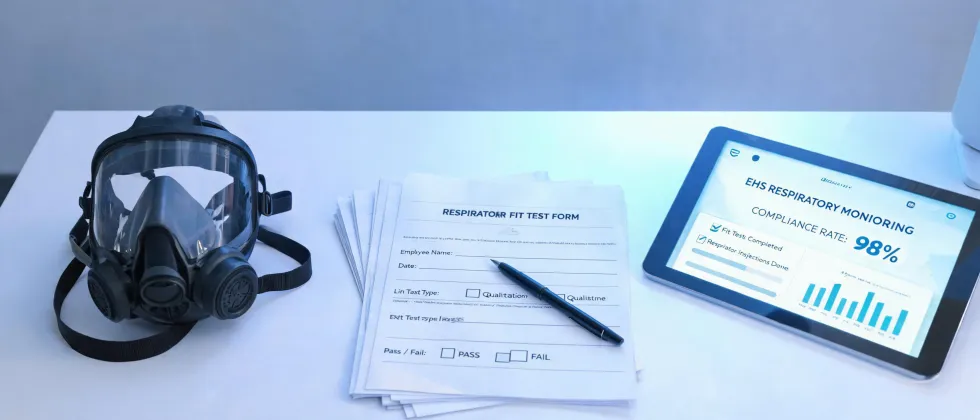
The same logic applies when comparing disposable N95 masks to reusable elastomeric respirators. I have watched procurement teams compare a box of 3M 1860 N95 masks with a half-mask respirator and stop at sticker shock. The reusable mask body can cost $25 to $50, and filters add cost. But the total-cost model changes when a full-time crew goes through multiple disposable respirators in one work week. Once fit testing, spare parts, cleaning, and filter changeouts are included, the reusable option sometimes wins by the middle of the first quarter.
In one 2024 comparison, I reviewed eight vendor quotes for N95 masks. The lowest price per box was 12% below the highest. After freight and minimum order quantities were added to the landed cost, the difference nearly disappeared. That is the normal pattern: unit price is where cheap options look best and where hidden costs are stored.
What should you consider when choosing the type of hearing protection you use?
If I ask one question before a hearing-protection purchase, it is not “what NRR do we need?” It is “what is the actual 8-hour noise exposure?” Under OSHA’s 29 CFR 1910.95, an 8-hour time-weighted average of 85 dBA triggers a hearing conservation program. Below that level, optional protectors can prioritize comfort and communication. Above that level, you need a real selection procedure, not just the highest number on the box.
After the noise survey, I weigh five factors:
- Attenuation. The protector should bring exposure down to a safe level. More attenuation is not always better if it isolates workers from voices, warning signals, or machine sounds that they need to hear.
- Daily wear time. A high-attenuation plug worn for only part of the noisy period can be less protective than a lower-attenuation protector worn consistently. The best protector is the one workers keep in their ears.
- Compatibility. Earmuffs may conflict with hard hats, welding helmets, and respirator straps. Plugs may be harder to handle in cold weather or dirty environments.
- Communication and safety. If workers are lifting one earmuff cup to hear a coworker, they are also lifting the protection. Electronic or level-dependent muffs may be worth a higher bid price.
- Cost per worker-day. A foam earplug can cost only cents, but the program cost includes selection, training, fit checks, and documentation. That is the number I actually track.
One of the less obvious conclusions I have reached is this: the highest NRR product is not always the best occupational choice. I have seen a crew issued 33 NRR foam plugs, but the plugs spent more time on the floor than in ears. A lower-attenuation but more comfortable protector, worn during the full noisy shift, would have provided better real-world protection.
How to Wear Loop Earplugs Correctly
The phrase “loop earplugs” usually refers to consumer reusable earplugs with a small stem or loop handle. In a workplace hearing conservation program, the first step is to use a protector with a known rating and a proper fit check. Consumer plugs are not automatically a substitute for occupational hearing protectors. If you already use Loop earplugs for sleeping, commuting, or loud events, the fitting technique is essentially the same as for any reusable plug:
- Wash your hands and inspect the earplug tip for dirt, cracks, or wear.
- With your opposite hand, reach over your head and gently pull the outer ear up and back to straighten the ear canal.
- Hold the earplug body or loop, not just the tip, and insert it with a gentle twisting motion until it fits snugly.
- Stop if it hurts. A smaller tip size or more careful insertion angle is better than forcing a tight fit.
- Check the seal. If your own voice suddenly sounds louder or more “inside your head,” the plug is usually sealed well.
- Remove slowly and clean the earplugs according to the manufacturer’s instructions.
For occupational use, make sure the earplugs are rated for the noise level and that employees have been trained. A perfect seal is still ineffective if the product is not appropriate for the hazard.
Reflective Material Comparison: Nike Air Max Plus TN 3M Reflective Black Is Not PPE
Reflective products create a confusion that I never expected to see in procurement, but I see it often. Someone will send a product request or search query for “Nike Air Max Plus TN 3M reflective black” and ask whether it can satisfy a workplace visibility requirement. It cannot, and the reason is simple: a sneaker colorway is not an ANSI/ISEA 107 garment.
The Nike Air Max Plus TN does use 3M Scotchlite reflective detailing in some colorways, and that reflective trim is effective at bouncing light back toward a source. That can help a pedestrian be seen on a dark street. But a sneaker does not meet the same background-material, retroreflective-tape, and configuration standards as certified high-visibility apparel. If workers think reflective shoes are the same as reflective vests, that is a false sense of compliance.
From a procurement perspective, the spec should name the standard, not just the material. A high-visibility garment with 3M Scotchlite reflective material is not enough by itself; it needs to be designed and tested to a recognized standard. I also ask suppliers for test certificates on authentic 3M reflective tape. Lookalike tape can look bright for a month and then fail after washing. The worker assumes they are visible because the garment still looks reflective.
Final Comparison: Build the Decision Around the Actual Shift, Not the Catalog
If I had to compress this into one sentence, it would be this: buy 3M where the hazard, use case, and total-cost model justify it, but do not let a recognizable brand name replace a clear specification.
- Respiratory. Specify the 3M 1860 N95 mask where fluid resistance and a surgical N95 are genuinely required. For ordinary particulate exposure, compare an industrial N95 or reusable elastomeric respirator before paying a clinical-product premium.
- Hearing. Conduct the noise survey first. Then choose based on attenuation, daily wear time, communication, compatibility, and cost per worker-day. Train employees on how to fit earplugs—loop-style or occupational grade—before blaming the product for poor results.
- Reflective. For workplace visibility, use certified high-visibility garments. Put the Nike Air Max Plus TN 3M reflective black in the lifestyle category, not the PPE category.
One last thought. I started by saying that you should put a fence between people and danger when you can. A hearing protection program is a fence with many gates: every time a worker removes a plug, a gate opens. The same is true for a respirator that is not fit-tested or a reflective vest that is not part of a real visibility standard. The best procurement decisions close those gates before the invoice arrives.