-
Step 1: Walk the floor before you open a catalog
- Step 2: Match the respirator to the hazard, not the brand reputation
-
Step 3: Evaluate hard hats by standard first, features second
-
Step 4: Resolve the vinyl vs nitrile gloves question by task
-
Step 5: Plan for the incident you didn't see coming
-
Step 6: Verify documentation before you approve payment
-
Common mistakes I still see buyers make
-
Final thought
If you're the person handed the "we need PPE" request and you're not a safety specialist, this checklist is for you. I'm the office administrator for a mid-sized manufacturing facility, and for the last five years I've managed all our safety supply ordering—roughly $45,000 a year across six vendors. I've specced respirators, compared hard hat brands, argued with maintenance about glove materials, and coordinated a fence defacement cleanup that required more personal protection than anyone initially expected.
Switching our ordering to a proper online portal cut our monthly procurement time from about six hours to two. But an efficient process for the wrong item still gets you the wrong item. This is the process I use now. It's not the textbook version—it's the one that survived contact with a real budget, real workers, and at least one inspection.
Step 1: Walk the floor before you open a catalog
When I took over purchasing in 2021, my predecessor left me a stack of requests that said "need respirators" and "gloves, assorted." Useless. I learned that lesson after a wrong order sat in the warehouse for six months.
Take thirty minutes. Walk the facility. Ask three questions:
- What tasks are actually performed? (Painting, chemical mixing, welding, light assembly?)
- What do the Safety Data Sheets for those materials say?
- What do workers complain about regarding the current gear? Comfort isn't optional—if something's uncomfortable, they'll take it off, and that defeats the entire purpose.
Step 2: Match the respirator to the hazard, not the brand reputation
Once you know your hazards, respirator selection gets a lot more concrete. For our facility, the range looks like this:
- 3M 6000 respirator series (6200/6300 half masks): the workhorse for particulates and some vapors, depending on cartridge. The 6000 series shares bayonet cartridges and filters with the rest of the 3M industrial line, which makes stocking easier.
- 3M full facepiece reusable respirator 6800: what I order when the task needs eye protection at the same time—spray painting, chemical cleanup, that category. The 6800 gives a wider field of view than a half mask, and the facepiece is reusable; you swap out cartridges rather than throwing away the whole assembly.
I learned the "full facepiece" vocabulary the expensive way. I put a purchase order through for a full facepiece respirator—or rather, I thought I did. The vendor's catalog had the 6000 series half mask listed under "full facepiece options." The order sat unopened for three weeks before the maintenance lead opened the box and pointed at it. We were using the same words and meaning different things. Now I put the model number in every PO and double-check it before I hit send.
Check before you buy: The 3M 6000 and 6800 respirators are NIOSH-approved under TC-84A, but the cartridges must also match the hazard. A P100 filter stops particulates. The 6001 cartridge handles organic vapors. They're not interchangeable.
Fit testing isn't a formality
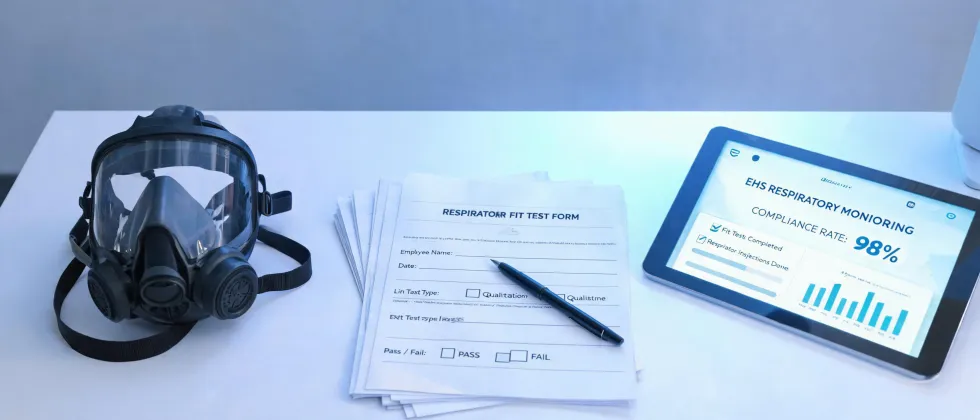
If you're in the US, OSHA's respiratory protection standard, 29 CFR 1910.134, requires a fit test before any tight-fitting respirator goes to work. I used to treat that as paperwork. Then we had a worker who couldn't get a seal with a half mask because of his glasses, and only the full facepiece solved it. Now fit testing is Step Zero for every new hire and every new model. It's not a rubber stamp; it's how you find out whether the equipment actually fits the person.
Step 3: Evaluate hard hats by standard first, features second
Hard hats look like a commodity purchase until you look closer. The first question isn't brand. It's whether you need Type I or Type II protection under ANSI/ISEA Z89.1. Type II covers top and side impact. That one distinction narrows the field faster than anything.
During our 2024 head protection review, I compared the Milwaukee Bolt hard hat against comparable 3M models. On paper, the Bolt was competitive on price and feature list: ratchet adjustment, accessory slots, decent weight. My gut said we shouldn't decide from a spec sheet alone. So we ordered samples from both and ran a two-week wear test with the crew.
The Milwaukee Bolt hard hat is genuinely good gear. We ended up standardizing on 3M, but only because the 3M models integrated more cleanly with the earmuffs and faceshields we already stock. If we didn't have that existing accessory base, the decision could easily have gone the other direction. The lesson: your hard hat decision should account for what else lives on your workers' heads.
Step 4: Resolve the vinyl vs nitrile gloves question by task
"Vinyl vs nitrile gloves" is the question I get more often than any other, and the answer is rarely a clean either/or. It depends on the task.
- Vinyl gloves: less expensive, looser fit, weaker chemical and puncture resistance. They're acceptable for short, low-risk tasks—light handling, inspection, keeping hands clean. They're not the right call for solvents, oils, or anything with sharp edges.
- Nitrile gloves: better chemical resistance, significantly better puncture resistance, snugger fit, higher cost per pair. When someone is handling chemicals or working longer than ten minutes at a stretch, nitrile earns the price difference.
Everything I'd read said vinyl is fine for light industrial use. In practice, I found that cheap vinyl gloves tore during donning often enough that the cost per usable glove was nearly the same as nitrile—plus the frustration factor. We switched to nitrile for anything beyond basic tasks, and kept vinyl around for the jobs where it's genuinely sufficient. The conventional wisdom wasn't wrong exactly; it just didn't account for our specific usage patterns.
Step 5: Plan for the incident you didn't see coming
Here's the step most buying checklists skip: the vandalism cleanup. Facilities get defaced. Fences get painted by someone with a grudge and a spray can. The Tom Sawyer Island fence defacement in 2024 was a public example, but the same thing happens at warehouses and plants all the time.
Cleaning graffiti off a fence typically means solvent-based removers. Those solvents release organic vapors—which means an organic vapor cartridge, like the 3M 6001, on a 6000 series or 6800 respirator. The solvent itself may require chemical-resistant gloves beyond standard nitrile. The scraping creates particulates, so eye protection and coveralls belong in the kit too.
I know this because I ignored it once. The maintenance lead asked for organic vapor cartridges, and I ordered P100 filters because they were what we had in stock. We had to stop the cleanup job two hours in and wait two days for the right cartridges. That failure cost us time and money, and it's the reason Step 5 exists on this list now. When in doubt, check the SDS and buy the cartridge that matches the chemical.
Step 6: Verify documentation before you approve payment
This is the unglamorous step that saves your department from real pain. Before I approve any PPE order now, I check four things:
- NIOSH approval label on respirators and cartridges.
- ANSI/ISEA Z89.1 compliance for hard hats.
- Glove compatibility against the specific chemicals in the SDS.
- Invoice quality—if a vendor can't produce a proper invoice, it's a red flag. I once accepted a handwritten receipt from an otherwise cheap supplier, finance rejected the expense, and I ate the cost out of the department budget. Never again.
And even with all the checks, I still get the post-decision doubt. The first time I approved a bulk order for the 6800s, I hit confirm and immediately thought: what if the crew finds them too heavy and won't wear them? The two weeks until the fit test were stressful. The fit test passed, and the maintenance lead said it was the best respirator he'd had. Until that moment, I wasn't fully confident.
Common mistakes I still see buyers make
- Skipping fit tests because "he's been wearing the same model for years." Doesn't matter. Retest annually and whenever the model changes.
- Buying cartridges without confirming the hazard. Particulate filters, organic vapor cartridges, and combination cartridges solve different problems.
- Choosing vinyl gloves because they're cheaper per box. If they tear on the way onto your hand, the per-use cost changes quickly.
- Ignoring storage. Respirators and cartridges degrade. Store them sealed in a clean area, and don't stock more than you'll use within the filter's shelf life.
Final thought
This checklist gets you to a workable starting point. It's not a substitute for your safety program, and I'm not claiming it's universal—at least, not beyond facilities like ours. The official references are where you confirm requirements:
- OSHA 29 CFR 1910.134 for respiratory protection
- ANSI/ISEA Z89.1-2014 for head protection
- NIOSH approval lists for respirators and cartridges
Verify current requirements at those sources, because regulations do change. As of early 2025, these are the standards we're buying against. Match the equipment to the task, verify the certifications, document the fit tests, and stock for the weird incidents—the PPE will do its job.
