The audit that made me swear at my own spreadsheet
It was 6:45 on a Tuesday in January 2025. I had just pulled our fourth-quarter PPE spend report, and the number made me swear. We had gone over our safety budget by 11%. Again. For the second year in a row.
I'm the procurement manager at a 140-person industrial fabrication shop. I've managed our safety supplies budget—roughly $64,000 a year—for six years. That means I've reviewed hundreds of invoices, negotiated with more than 60 vendors, and made enough buying mistakes to know exactly where those mistakes hide.
I'm not a safety engineer. I'm the person who signs the purchase orders. But after six years of doing this, I can tell you which decisions actually saved money and which ones only looked like they did.
The easy decision that wasn't easy
Every January, I do a line-item audit. I sort every order from the past year into categories, compare unit prices, and look for patterns. The first time I did it, I found $4,600 in waste. The second year, I found less. By year four, I was pretty proud of my cost tracking spreadsheet.
But the spreadsheet almost fooled me.
Take respirators. We go through a lot of 3M 8210 N95 respirators—for sanding, grinding, paint prep, and general dusty work. In 2024, I compared quotes from four suppliers. Vendor A quoted $0.52 per respirator. Vendor B quoted $0.58. I almost bought from A without thinking harder. Then I added in the freight: $95. Vendor B shipped free.
On 2,000 units, Vendor A's total was $1,135. Vendor B's total was $1,120. The 'cheaper' option was actually $15 more. It's tempting to think you can just compare unit prices, especially for a product as common as the 3M 8210 N95. But identical specs from different vendors can produce very different totals. That's the 'always get three quotes' advice that misses the point if you only compare the first line of each quote.
Some quotes had a $12 'small order' fee. One had a fuel surcharge nobody mentioned until the invoice. Another required a 50-unit minimum per SKU, which forced us to order more than we needed. I had to get burned before I added a freight column to every comparison. Now it's the first thing I check.
The Friday my spreadsheet failed
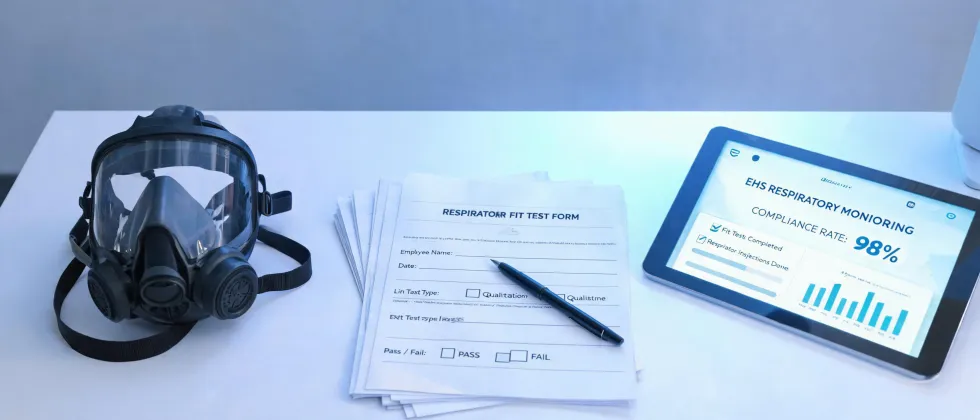
Then there was the day my spreadsheet failed. In April 2024, our safety manager got word that a state inspector would be on-site in ten business days to review the respiratory protection program in our welding shop. We had 14 welders on the respirator roster. We had 12 3M welding respirators in stock, but two were the wrong size.
Our regular supplier said seven to ten days for delivery. That was too tight. I found a distributor who could get two 3M welding respirators to us by the next morning—for $74 in freight. I paid it without sending it through my usual approval flow.
For a guy who obsesses over a $15 freight difference, that hurt. But then I asked a better question: What's the cost of failing that inspection? A shutdown order. A $12,000 contractor delay. A bad report that would follow us for years. The $74 was cheap.
That's the lesson I keep coming back to: when you pay extra for speed, you're not just buying speed. You're buying certainty. And in an emergency, certainty is the product.
Can earplugs cause tinnitus? It was the right question to ask
The same audit led to a totally different conversation. One of our machine operators asked me directly, 'Can earplugs cause tinnitus?' I didn't have a good answer. I had an opinion, but not an answer.
So I did the research. According to NIOSH, noise above 85 decibels over an 8-hour shift can cause permanent hearing damage. Earplugs reduce that exposure. Properly fitted earplugs do not cause tinnitus—but the loud noise they're protecting you from can. If your ears ring after a shift, the ringing isn't from the earplugs. It's from the noise you were around. The earplugs didn't block enough of it, or they weren't fitted right. I'm not a doctor, and persistent ringing should be checked by a professional. But for most workers, the better question isn't whether earplugs cause tinnitus. It's whether they're getting enough protection.
What most people don't realize is that 'cheap' hearing protection isn't cheap if it doesn't fit. Our original foam plugs cost about $0.11 per pair—most of them were 3M, by the way. But when we ran a fit check, three workers were getting very different levels of protection from the same plug. The shape of your ear canal changes how the plug seals. We ended up spending more on training and individual fit checks. That was a hidden cost I had missed for almost two years.
OSHA requires fit testing for tight-fitting respirators under 29 CFR 1910.134. I always budgeted for that. It took me too long to treat hearing protection fit with the same seriousness.
The line item I almost cut for the wrong reason
The audit didn't just cover respirators and earplugs. We also buy security supplies, including Sabre red pepper spray for the gate guards. For two years, I looked at that line item and thought, 'We've never used it. Why are we paying for it?'
Then I watched the September footage from the wood fence along the contractor staging area. Someone cut through a section at 2:40 in the morning. The guard radioed for backup. The spray stayed in its holster. But knowing it was there gave her time to make a safer call instead of confronting someone in the dark.
That changed my definition of 'use.' Safety products aren't wasted just because nothing bad happened. The wood fence and the pepper spray both do their job when nothing happens. The same logic applies to every harness, lanyard, and respirator cartridge sitting in our stockroom.
What the audit taught me
At the end of that audit, I wrote a one-page list of lessons. I look at it every time I open a quote:
- Total cost beats unit price. Always. Especially for anything you buy in bulk, like 3M 8210 N95 respirators.
- Time certainty is part of total cost. If late delivery stops a job, the savings from a slow vendor disappear.
- Fit, training, and compliance are not add-ons. A 3M welding respirator is only as good as its fit test.
- Unused safety products can still be doing their job. Like Sabre red pepper spray. And the wood fence I once thought was just a fence.
- Questions like 'Can earplugs cause tinnitus?' are not objections to your product choice. They're clues that people don't understand the actual risk. Answer them with sources, not opinions.
Bottom line
Look, I still run the numbers. I still get annoyed by freight charges. But now I run the right numbers.
The cheapest quote isn't the cheapest once you add shipping, delays, fit issues, and the cost of being wrong. The most expensive safety item is the one that isn't there when you need it. That's a procurement lesson no price comparison can teach you.
So if you're putting together a safety budget, don't start with 'what's the lowest price?' Start with this: 'What happens if this arrives late, doesn't fit, or isn't there?' The answer tells you what you're really paying for.
