-
1. Respiratory Protection: 3M 60923 P100 Cartridges vs. Generic
-
2. High-Visibility: 3M Reflective Jacket vs. Budget Jackets
-
3. Facility Safety: Glass Deck Railing vs. Aluminum Guardrails
-
4. Footwear: Lightweight Tactical Boots vs. Traditional Safety Boots
-
5. Fall Protection: Roof Harnesses and How to Use Them Safely
-
Where to Spend, Where to Save
I've been the procurement manager at a 320-person construction and facility services company for six years. That means I've managed our safety equipment budget—roughly $38,000 to $42,000 annually—negotiated with 25+ vendors, and documented every order in our cost tracking system.
When I audited our cumulative spending for 2025 planning, the total crossed $180,000. So I did what I do every few years: a category-by-category comparison of what we bought, what we paid, and what actually performed. This article is that comparison.
Here's what I'm comparing—and the framework I use:
- Respiratory protection: 3M 60923 P100 cartridges vs. generic alternatives
- High-visibility clothing: 3M reflective jackets vs. budget reflective jackets
- Facility safety: Glass deck railing vs. aluminum guardrail systems
- Footwear: Lightweight tactical boots vs. traditional steel-toe safety boots
- Fall protection: Roof harness systems—and how to use a safety harness on a roof properly
The framework is simple: total cost of ownership (TCO), not unit price. That means service life, replacement frequency, training burden, and compliance rates. Prices below reflect our actual invoices and distributor quotes as of March 2025.
1. Respiratory Protection: 3M 60923 P100 Cartridges vs. Generic
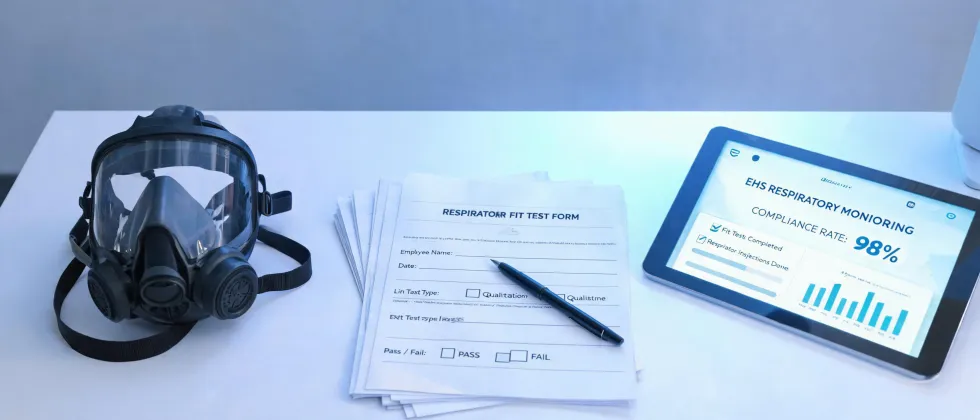
The price gap between genuine 3M 60923 cartridges and generic alternatives is hard to ignore—about 50% per pair. The 60923 pairs a P100 particulate filter (99.97% efficiency) with organic vapor (OV) protection and fits 3M 6000/7000 series half-face and full-face respirators. At volume, we pay $13-16 per pair. Generics ran $6-10.
A cheaper per-unit cost isn't automatically a bad deal. But when we tested 4 generic brands in 2023, the real costs surfaced:
- Two couldn't produce NIOSH approval records matching current file numbers.
- One brand caused fit-test failures for 6 of 10 workers when paired with our 3M 6500 series masks—the flange geometry didn't seal consistently.
- We spent about $1,200 on additional fit testing, retraining, and return shipping. That erased the entire annual savings from buying generic.
I assumed "same specs" meant identical results across vendors. Didn't verify. Turned out the spec sheet doesn't tell you how the cartridge seats on a 3M facepiece. That's a lesson that cost me a line item on a P&L statement.
The nuance: if your work is particulate-only—sanding, grinding, concrete cutting—the 3M 2091 P100 pancake filter at $8-10 per pair does the job without the OV layer. Don't pay for a feature you don't need. But if solvents, paints, or chemical vapors are in the mix, the 60923 is worth every dollar of the premium.
Bottom line: for OV + particulate work, genuine 60923 is the cheaper choice over time because fit reliability eliminates costly retesting. For dust-only work, buy the simpler P100 filter.
2. High-Visibility: 3M Reflective Jacket vs. Budget Jackets
Our crews wear high-visibility jackets eight months a year, so this is a purchase we make at scale. The comparison came down to two very different stories.
3M reflective jacket (e.g., the 7060 series): ANSI/ISEA 107 Class 3, reflective striping on torso and sleeves, breathable shell. Distributor pricing: $55-85 per jacket at volume.
Budget reflective jackets: $20-40. Usually Class 2 or unrated, thinner reflective tape, and fabric that doesn't breathe.
Our compliance checks over 18 months produced a direct comparison:
- Budget jackets showed visible reflective tape delamination after 15-20 industrial washes. The 3M jackets held tape integrity past 30 washes.
- Workers assigned budget jackets took them off 2.3x more often during warm days—because the fabric didn't breathe. A jacket that's hanging in the truck provides zero visibility.
- Average service life: 4-6 months for budget, 14-18 months for 3M.
When I calculated cost per month of actual wear, the budget jackets ran $4-6 per wear-month. The 3M jackets ran $3.50-4.50. Here's the part I didn't expect: the premium product was cheaper on a per-month-of-use basis. Everything I'd read about high-vis gear said budget options always come out ahead on cost. In practice, the replacement cycle and compliance factor flipped that equation.
Bottom line: if your crews wear high-vis daily, the 3M reflective jacket is the TCO winner. If high-vis is occasional—less than two days a week—buying budget is defensible.
3. Facility Safety: Glass Deck Railing vs. Aluminum Guardrails
This one sits slightly outside PPE, but it's a safety investment that showed up in our budget. In late 2024, we replaced the railing on our warehouse mezzanine and dock-adjacent elevated areas. Two quotes stood out:
Glass deck railing (semi-frameless): $160-280 per linear foot installed. Zero maintenance after install, unobstructed sight lines, 40+ year service life with tempered laminated glass.
Aluminum guardrails: $85-140 per linear foot installed. Powder-coated, but coatings wear; repainting runs $2-4 per linear foot every 5-7 years. Solid panels create blind spots.
The glass system costs nearly double upfront. For a cost-focused buyer, that seems like an easy rejection. But we had two forklift near-miss incidents at the mezzanine edge in the 18 months before the replacement—both tied to blind spots created by solid panels. The safety coordinator and I modeled the cost of one lost-time injury: OSHA reporting, downtime, investigation, worker's comp. The number exceeded the entire glass premium.
Here's the honest caveat: if you rent your facility or plan a move within 7 years, aluminum is the financially correct answer. The glass payback requires time—or a documented blind-spot hazard.
Bottom line: glass deck railing is a cost-justifiable safety upgrade for building owners with long hold periods. For short-term tenants, aluminum is the right call.
4. Footwear: Lightweight Tactical Boots vs. Traditional Safety Boots
Foot protection is where I see the most aggressive "buy the cheapest thing that meets spec" behavior. I used to do the same. Then the data changed my mind.
In our 2023 audit, our field team of 47 workers was split between traditional steel-toe boots ($72-95 per pair) and lightweight tactical-style safety boots ($110-155 per pair). Both met ASTM F2413-18 impact and compression standards.
Over 12 months:
- Traditional boots: 28% replacement rate within 8 months—delaminated soles, comfort complaints, and workers buying personal boots instead of wearing the issued pair.
- Lightweight tactical boots: 9% replacement rate over 12 months.
- Comfort complaints logged: 31 for traditional, 7 for lightweight.
The replacement math alone cost us about $1,700 extra across the team—not counting the compliance problem of workers not wearing the issued gear. The surprising part for me was the construction difference: the tactical boots use cement-built soles that held up better on concrete and uneven terrain than the older stitch-and-glue construction in the traditional boots. The "tactical" label wasn't marketing. It reflected a genuinely better build.
Bottom line: lightweight tactical boots cost more upfront but reduce replacement rate and improve compliance. If your team works on their feet 8+ hours a day, they're the TCO winner.
5. Fall Protection: Roof Harnesses and How to Use Them Safely
This is the category where cutting costs can cost more than money. For roof work, we compared three approaches:
Full-body harness with shock-absorbing lanyard (personal fall arrest): a 3M harness with 6-ft shock-absorbing lanyard runs $90-150 per unit. Budget harnesses at $50-80 look identical on paper. What we found across three years of training logs:
- Budget harnesses had coarser adjustment hardware, and workers misadjusted them twice as often during fit checks.
- Metal hardware on budget units showed corrosion at 9-11 months, especially for crews that stored gear outdoors.
- The most common usage errors—attaching the lanyard D-ring below the shoulder, not snugging the leg straps, and connecting incompatible hardware—happened at a similar rate across both harness types. No harness fixes a training gap.
Fixed-ladder/rail-guided systems: $800-2,500 per installation point. Expensive upfront, but eliminates daily harness donning for crews who access a roof regularly. If you're putting workers on a specific roof edge more than a few times a month, this pays off fast.
Guardrail/edge protection: the hierarchy-of-controls answer. If the edge can be physically guarded, that's structurally safer than any harness and removes fall distance entirely. Best TCO over 5+ years, when the building allows it.
How to use a safety harness on a roof properly: anchor the lanyard above shoulder height, keep the fall distance under 6 feet, snug both leg straps so the harness doesn't ride up, and check the snap hooks are compatible with your anchorage hardware. We train on this quarterly, and we demonstrated every step in a recent 45-minute refresher before renewing our harness inventory.
Bottom line: don't optimize on price for fall protection. Compare systems—harness vs. fixed-ladder vs. guardrail—because the right approach varies by building. But within whatever system you choose, buy from a supplier whose hardware and documentation are verifiable.
Where to Spend, Where to Save
Based on six years of data, here's my scenario-based guidance:
Spend the premium when:
- Workers face solvent or chemical vapor exposure—genuine 3M 60923 cartridges justify their premium through fit reliability alone.
- Crews wear high-vis gear daily—the 3M reflective jacket wins on cost per wear-month.
- You own your facility and have a 7+ year horizon—glass deck railing eliminates blind spots and maintenance cycles.
- Your team is on their feet all day—lightweight tactical boots cut replacement costs and boost compliance.
- Any task happens at height. Fall protection is never the place to optimize for price.
Save the money when:
- Respiratory exposure is dust-only—buy the simpler 3M P100 filter instead of the 60923 OV combination.
- You're leasing your facility short-term—aluminum guardrails are the financially sound choice.
- High-vis use is occasional—the budget jacket's shorter lifespan won't matter at that frequency.
The pattern across every category is the same: the price on the invoice is not the price you pay. I've learned to ask "what's NOT included" before asking "what's the price." The vendor who shows you the full picture upfront—even when the total looks higher—usually costs less in the end.
If you have your own data from PPE purchasing, I'd genuinely like to hear if it matches this. Every procurement shop's use patterns are different, and that's exactly why "which is better" is the wrong question. The right question is always: "which is better for this context?"