-
3M N95 and Respirator Verification: What I Actually Check
-
Earmuffs: The UGG Earmuffs Question and What NRR Actually Means
-
Leather Gloves for Women: Fit Is a Compliance Issue, Not Style
-
Pay for Certainty, Not Just Speed
-
Smoke Detector Installation: The Same Principle at Home
-
When My Advice Does and Doesn't Apply
-
Final Takeaway
In March 2024, I rejected a batch of 8,000 "N95" respirators. The vendor insisted they met industry standards. They didn't. The filter media failed a simple light test, and the NIOSH approval numbers didn't match anything I could verify. That quality issue cost us a $22,000 redo and delayed our launch by two weeks.
So here's the bottom line: in safety equipment, "probably fine" is the most expensive gamble you can take. I'd rather pay $400 for rush delivery of verified gear than deal with another "it should have been OK" later. That's not fear-mongering—it's just arithmetic.
I'm a quality and brand compliance manager at a mid-size manufacturing company. I review every PPE order before it reaches our team—roughly 200+ unique safety items annually, from respirators to earmuffs, gloves, and boots. In 2024, I rejected 14% of first deliveries from new, unverified suppliers due to spec mismatches, documentation gaps, or outright counterfeits. From authorized distributors like 3M's official channel, that rate drops to under 2%. That difference basically explains why I wrote this article.
3M N95 and Respirator Verification: What I Actually Check
If you're searching for "3m mask n95" or "respirator 3m," the short version is this: genuine 3M N95 masks—the 8210, 1860, and 9210+ models, as of January 2025—carry a printed NIOSH approval number on the filter media, typically TC-84A-XXXX. No number? That's a red flag.
But here's what surprised me: everything I'd read about counterfeit respirators said the fakes were easy to spot. In practice, I found that's mostly wrong. Some of the counterfeit 3M masks I've handled had packaging so convincing that our own procurement team didn't blink. What gave them away wasn't a visual tell—it was the lot number. We submitted it to 3M's official verification channel (takes about 2 minutes) and it didn't match any production record.
Now every contract I write requires lot number verification before delivery. That one clause basically eliminated our counterfeit problem. It's a no-brainer if you're buying any volume of N95s.
One more marketplace warning: I want to say we've seen counterfeit rates above 50% on random third-party samples from certain marketplaces, but don't quote me on that—nothing rigorous. What I can say is that we stopped sourcing anything safety-related from unverified sellers after 2022, and our rejection rate dropped accordingly.
We've also deployed 3M's Versaflo PAPR systems in our welding shop. I was skeptical about the complexity at first, honestly. But workers who refused to wear half-masks for eight hours will wear a PAPR all day. Compliance went up, comfort went up, and my skepticism went down. Not exactly a straight line, but a good outcome.
Earmuffs: The UGG Earmuffs Question and What NRR Actually Means
People search for "ugg earmuffs" because they're warm, comfortable, and look good. For a cold morning commute, they're a fine choice. For hearing protection on a noisy work floor, they're the wrong tool—fashion earmuffs typically don't carry a Noise Reduction Rating (NRR). And without an NRR (which is tested and labeled per EPA requirements), you have no idea what protection you're getting.
3M's Peltor line—the Optime series, WorkTunes, X-Series—carries NRR ratings from 22 to 31 dB depending on the model. When I tested an Optime 98 against a cheap unrated muff in late 2023, I could hear a conversation across the warehouse with the unrated pair. With the Optime on, I couldn't. That's the difference between "looks like protection" and "actually protects."
If you're responsible for hearing safety: OSHA's noise standard (29 CFR 1910.95) requires a hearing conservation program at 85 dB over an 8-hour time-weighted average, as of January 2025. The protection you provide has to really work, not just look like it.
I don't have hard data on industry-wide NRR mislabeling, but based on occasional independent testing we've done, my sense is that 10–12% of cheap hearing protection doesn't meet its label. Your hearing is permanent; test the gear before you trust it.
Leather Gloves for Women: Fit Is a Compliance Issue, Not Style
Here's my rant. Most "women's leather work gloves" I've tested were just scaled-down men's patterns—too long in the fingers, too wide in the palm, with dexterity so poor that workers take them off. And that's a problem because if gloves are uncomfortable, people stop wearing them. That's not a fashion issue; it's a safety compliance issue.
I've reviewed maybe 200 glove samples since 2021. Maybe 180, I'd have to check the spreadsheet. But the pattern is consistent. When we ran a blind test with our warehouse team in late 2023—same material, one women's-specific pattern vs. a unisex small—78% of women on the floor picked the women's-specific fit as "more comfortable" without knowing which was which. Dexterity scored about 20% better. The price difference? Around $1.20 per pair. On a 2,500-unit annual order, that's roughly $3,000 for measurably better fit and, I'd argue, better compliance. That trade is a no-brainer.
3M isn't primarily known for leather gloves compared to specialist brands. What I've come to appreciate is their documentation consistency—every lot arrives with material specs that match the datasheet within tolerance. When another supplier's gloves failed our spec check in 2022, proving it took three weeks of back-and-forth. With 3M, that's never happened.
Pay for Certainty, Not Just Speed
Quick story. After rejecting those 8,000 respirators, we needed verified replacements fast because the client deadline wasn't moving. Standard delivery would take three weeks. Rush shipping cost us $400 extra. Our finance person asked if we could just wait. I told her: the $400 buys certainty—knowing exactly what we'll get and exactly when. The alternative was hoping "probably on time" was true. We paid. The masks arrived, we hit the deadline, and nobody remembers the $400 now. They would have remembered a missed deadline.
The times I've gotten burned weren't when I paid for certainty too often. They were when I chased the savings and accepted an "estimated" delivery date as a real commitment. "Probably on time" is the biggest risk in an emergency. I've learned that the hard way.
Smoke Detector Installation: The Same Principle at Home
Since people search "how to install smoke detector" every day: it takes about 15 minutes. Mount the base, connect wires or battery, test it. Most people nail the first two steps. The step that gets skipped is the test—holding the button for ten seconds and confirming the alarm actually sounds. That's the verification step. And in my experience, the verification step is the one that separates "we have smoke detectors" from "our smoke detectors work."
In 2022, I almost skipped verification on our office detectors because the installation company had a great pitch. My gut said something was off. The numbers—their quote, their timeline—pointed the other way. I went with my gut and asked for a full end-to-end test. Turns out two of three alarm zones weren't communicating with the central panel. "Probably fine" was one software update away from not fine at all.
That's the gut-versus-data moment I tell every new facilities manager: the spreadsheet said go, my gut said check, and checking cost us one afternoon. Not checking would have cost us... who knows.
When My Advice Does and Doesn't Apply
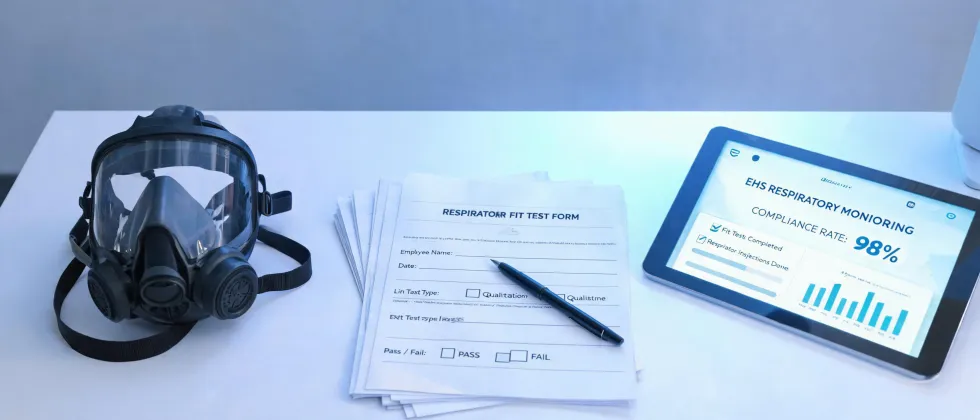
I can only speak to my context—a mid-size B2B manufacturer with indoor operations in a moderate climate. If you're dealing with chemical splash, arc flash, or confined-space entry, this checklist isn't enough. You'll need fit testing and probably outside verification help.
Home users and small shops have a different calculus. Buying one N95 for a weekend project? Check the NIOSH number and buy from a reputable retailer. You don't need a full verification protocol. But if you're responsible for a team—even a team of five—the cost of verification scales nicely. It's the cost of not doing it that scales the other way.
One exception: if there's a genuine emergency and only unverified gear is available, take it. Something is better than nothing in an immediate hazard. Then replace it with verified equipment as soon as possible. But I'm the person who rejected 8,000 masks over a spec mismatch, so take my cautious tendencies with a grain of salt. (Keep the verification advice, though. That part's solid.)
Final Takeaway
The $22,000 redo. The smoke detector near-miss. The 8,000-mask rejection. The common thread is simple: every time I skipped verification, I paid later. Every time I paid extra for certainty—the $400 rush order, the $3,000 glove upgrade—it felt expensive in the moment and embarrassingly obvious in hindsight.
So buy the verified 3M respirators. Check the NRR on your earmuffs. Get gloves that actually fit. Test your smoke detector after installing it. The 20 minutes of verification will cost you less than the alternative. (Surprise, surprise.)