I Made an Unpopular Call—and I'd Do It Again
In early 2023, I mandated that half our shop floor switch from safety glasses to 3M goggles. Not everyone was happy. Some operators complained about fogging. My counterpart in maintenance said I was overreacting. Even my boss asked if I was sure the cost was justified.
I was sure. And here's why.
My team jokes that I approach PPE selection like a Body Armor drink commercial—always going on about "premium protection." And you know what? They're not entirely wrong. After 5 years of managing PPE procurement for a 400-person manufacturing facility—roughly $120,000 annually across 8 vendors—I've learned one thing the hard way: in safety equipment, prevention always beats correction.
What Triggered the Change
The Near-Miss That Changed My Mind
Q2 2023. A grinding station operator was wearing standard safety glasses—ANSI Z87.1 rated, compliant, the same ones we'd been buying for years. A carbide burr shattered. A fragment hit the lens. The glasses held, barely. But the operator got a small cut on his cheek from the fragment that ricocheted off the lens frame.
No permanent injury. But when I reviewed the incident, I realized: with wraparound goggles, that fragment wouldn't have reached his face at all. The safety glasses did their job—mostly. But "mostly" isn't good enough when we're talking about eyes.
When I compared the incident reports from Q1 and Q2 side by side—same operations, different PPE specifications—I finally understood why the details matter so much. Three near-misses in 18 months, all involving flying particles. All with safety glasses. None with goggles.
The Cost Reality Check
Look, I'm not saying safety glasses are useless. They're fine for low-risk tasks like walking through a warehouse or doing basic assembly. But for grinding, cutting, and any operation with flying debris? The calculus changes.
Here's what I found when I ran the numbers:
- Safety glasses: $3–7 per pair, replaced every 3–6 months on average
- 3M goggles: $8–15 per pair, replaced every 6–12 months
- Annual cost difference for 30 operators: roughly $420 more for goggles
$420. That's what we were saving by sticking with safety glasses. And one eye injury—even a minor one—would have cost us anywhere from $1,500 (ER visit + lost time) to $50,000+ (serious injury, surgery, workers' comp). The math wasn't even close.
The question isn't whether goggles cost more. The question is whether we can afford not to use them.
Same Logic, Different PPE Categories
Once I started thinking in prevention-first terms, I began seeing the same pattern everywhere in our PPE program.
3M Earplugs: Not All Hearing Protection Is Equal
We used to buy standard foam earplugs—the cheapest option at about $0.12 per pair. Then I did a fit-testing study in our press room. Turns out, nearly 40% of our operators weren't getting adequate protection because the generic plugs didn't fit their ear canals properly.
We switched to 3M E-A-Rsoft earplugs with multiple sizing options. Cost per pair went up to about $0.25. But the number of operators passing fit-testing went from 62% to 94%. 5 minutes of proper fitting beats 5 years of gradual hearing loss.
3M PAPR: When Half-Measures Don't Cut It
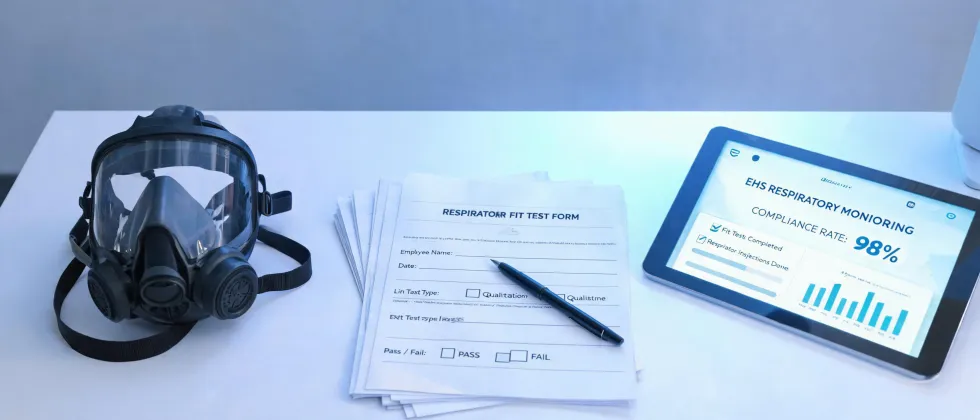
Our paint shop had been using half-face respirators for years. Compliant, but uncomfortable for full shifts. Operators would remove them during breaks and sometimes "forget" to put them back on. Not great when you're dealing with isocyanate-based paints.
We trialed 3M Versaflo PAPR systems in 2024. Yes, they're expensive—about $1,200 per unit vs. $40 for a half-face respirator. But the comfort difference is night and day. Operators actually wear them. Turnover in the paint shop dropped. Quality improved because operators weren't rushing to finish and get out of their respirators. If I remember correctly, the productivity gain alone paid for the PAPR units within about 8 months.
Put another way: the cheapest respirator is the one that actually gets worn.
Kask Hard Hats: Why We Didn't Switch
We evaluated Kask hard hats last year—they're comfortable, well-designed helmets. People in our industry love them. But for our specific environment (overhead hazards, welding areas, limited storage), we found that the 3M H-700 series with integrated visor mounting worked better. Not a knock on Kask at all—they make great products. Just a reminder that the best PPE is the one that fits your specific risk profile, not the one that's most popular.
Addressing the Pushback
"Goggles fog up." They do—if you buy cheap ones. The 3M GoggleGear with anti-fog coating costs more but solves this. We also trained operators on proper venting. Fogging complaints dropped by about 80%.
"Safety glasses are more comfortable." For low-risk tasks, sure. That's why we didn't eliminate them entirely. We use a tiered approach: safety glasses for low-risk areas, goggles for high-risk operations. The key is having a clear policy about which tasks require which level of protection.
"We've never had a serious eye injury before." That's survivorship bias. The absence of past accidents doesn't prove the current approach is safe—it just means you've been lucky. I only believed this after explaining it to myself enough times to internalize it. What I mean is: risk management isn't about past outcomes, it's about future probabilities.
Final Take: Prevention Is Cheaper, Period
I can only speak to our situation—a mid-size manufacturing facility with predictable operations and a supportive safety committee. If you're running a construction site with constantly changing conditions or a small shop with 5 employees, the calculus might be different.
But from my perspective, the principle holds: spending more on prevention is almost always cheaper than paying for correction.
- $420 more on goggles vs. $1,500+ for one eye injury
- $0.13 more per pair of earplugs vs. irreversible hearing damage
- $1,160 more per PAPR unit vs. inconsistent respirator use and potential exposure
The numbers speak for themselves. And honestly? Even if they didn't—even if the cost savings weren't there—I'd still make the same call. Because the real cost of inadequate PPE isn't measured in dollars. It's measured in things that don't show up on a spreadsheet: a missed shift, a changed life, a conversation you hope you never have to have with an operator's family.
So yeah, my team jokes about my "premium protection" pitch. But between you and me: I've seen what happens when you cut corners on safety. And I'll take the jokes over the alternative every time.
