I've spent the last six years handling PPE and emergency equipment orders for industrial sites. The job is about 20% paperwork and 80% answering the same questions in slightly different versions. It took me four years and a $900 ordering mistake to understand that a good safety buyer doesn't memorize every product number; they ask the obvious question before choosing the part. So here are the questions I've actually been asked—and the answers I've landed on.
Is the 3M 6500 respirator the one I should order?
The 3M 6500 respirator is a reusable half-mask respirator. I order it when a team needs something straightforward to clean and maintain. But the mask is not the filter. The cartridge or filter attached to it is what actually protects the worker. If the job creates dust, metal fume, or airborne particles, choose a particulate filter. If the job involves solvent or chemical vapors, choose an organic vapor or combination cartridge. That seems basic, and I still got it wrong once because I did not read the work order closely enough.
I once ordered two dozen 3M 6500 respirators set up with particulate filters for what I thought was a sanding task. The crew was also cleaning equipment with a solvent. A worker told me he could smell solvent through the respirator. That is a warning sign, not a minor complaint. We stopped the job, rushed in the right organic vapor/particulate cartridges, and ate about $900 in shipping and lost time. Now the first question on my checklist is not which mask; it is what hazard the worker is breathing.
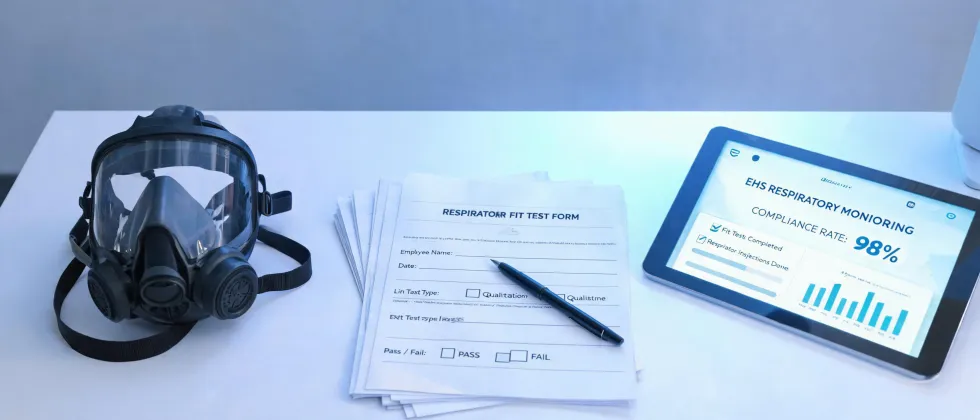
There is also the regulatory side. In the U.S., OSHA's Respiratory Protection Standard (29 CFR 1910.134) requires a medical evaluation and fit testing before employees are required to wear respirators. Do not skip that step. A 3M 6500 respirator is excellent equipment, but equipment does not replace training and fit testing.
Where do I find the 3M safety glasses catalog?
The current 3M safety glasses catalog is easy to find online, either on 3M.com or through your safety distributor. But I do not start in the catalog. I start with ANSI Z87.1. If your risk assessment calls for impact protection, look for eyewear marked Z87+ on the lens or frame. A stylish frame means nothing if it will not stay on a face.
My first eye protection mistake was buying 150 pairs of one style because the price was good. Every pair met the standard. But they did not fit a third of my crew. Some workers needed longer arms; some needed a wider nose bridge; two wore prescription glasses and had to put the safety glasses over them, which never worked well. The glasses wound up on equipment and toolboxes instead of faces.
After that, I ordered sample kits from the 3M safety glasses catalog, let employees wear them for a day, and bought two or three models instead of one. It cost a little more, but compliance improved because the fit improved. If you have prescription-glass wearers, order an over-glass style or look into prescription inserts. An uncomfortable worker will always find a reason to take the glasses off.
Do I need safety glasses while working on a cattle fence?
Yes, and that is not someone being dramatic. I used to think a cattle fence was low-risk farm work. Then I helped repair a section of fence and saw what happened when a brace slipped. Steel wire under tension can whip, spring, and curl in directions you do not expect. Sunglasses and cheap glasses do not count unless they carry an impact rating.
If you are mending a cattle fence, put on eye protection marked ANSI Z87.1 before you take the tension off. Add heavy gloves, and if you are cutting wire or using a grinder, hearing protection too. I would rather sweat in a pair of glasses for an hour than explain why nobody bothered to grab them for a job that takes five minutes. Now I keep a backup pair in my truck kit right next to the fencing tools.
Where can I find a fire extinguisher recharge near me?
The wording people usually use is fire extinguisher recharge near me. Search engines will show the nearest service company, but distance should be the last filter, not the first. Ask whether they follow NFPA 10, whether the technician is trained to service portable extinguishers, and whether the service tag includes a date and the technician's name.
NFPA 10 requires portable extinguishers to receive maintenance at least once a year and to be recharged after any discharge. Even if someone emptied an extinguisher for just a few seconds, it should not go back on the bracket until it has been recharged or replaced. Check the gauge and pin during monthly visual inspections too.
My own mistake was assuming a general maintenance contractor was taking care of this. They were doing a visual inspection and signing a tag, not actually checking or recharging the units. One extinguisher in our maintenance shop had a dead gauge and a current-looking tag. I found it during our internal audit, one week before an external inspection. We fixed it before the external auditor arrived, but I have never trusted a tag since. If the cylinder body is dented, rusted, leaking, or missing parts, do not look for a recharge; replace the unit.
What's the difference between bear spray and pepper spray?
Both contain capsaicin-based irritants, so the mix-up makes sense. The difference is not just the container. Bear spray is designed to defend against a charging bear. It comes out as a wide fog cloud, the kind you can spray between yourself and the animal without needing a perfect direct hit. It is made to affect a bear's nose, eyes, and breathing before the bear gets to you.
Personal pepper spray is designed for self-defense against another person. It tends to be a more targeted stream, foam, or gel aimed at the attacker's eyes and face. Some versions are small and pocket-sized because the user needs quick access in closer situations. You are not trying to create a wind drift; you are trying to stop one specific threat.
So do not swap them. The small keychain pepper spray may not produce enough of a wide cloud to stop a bear. A big can of bear spray is not a reasonable personal-defense product when other people are around, and the label won't tell you to use it that way. Match the canister to the threat, and practice with one canister so you know what the spray pattern actually does.