Last month I rejected a pallet of fence gate latches. The part number matched. The coating matched. The only difference was a metal thickness about half a millimeter below the approved drawing. The supplier said it was within industry tolerance. The project manager said I was being fussy. I said it was a different product.
I do this for a living. Over the past seven years, I have reviewed roughly 600 unique SKUs a year for an industrial safety company, from PPE and work-site tools to fencing hardware. In Q1 2025, I rejected about 9 percent of first deliveries. Very few failed because of obvious damage. Most failed because of gaps that looked too small to matter.
If you have ever signed for a delivery and thought, “it’s probably fine,” you are not lazy. You are using a mental shortcut. That shortcut is exactly where quality programs go to die.
The problem isn’t the product. It’s the acceptance decision.
A product is not good or bad by itself. It becomes good when it meets a specification. Remove the spec, and you have guesswork. For a fence gate latch, guesswork can mean a gate that sticks, sags, or fails to latch when it should.
A trusted brand is a strong hint, not a control plan. I specify 3M products often because the documentation is usually traceable, but I still check the label. Brand names compress uncertainty; they don’t eliminate it.
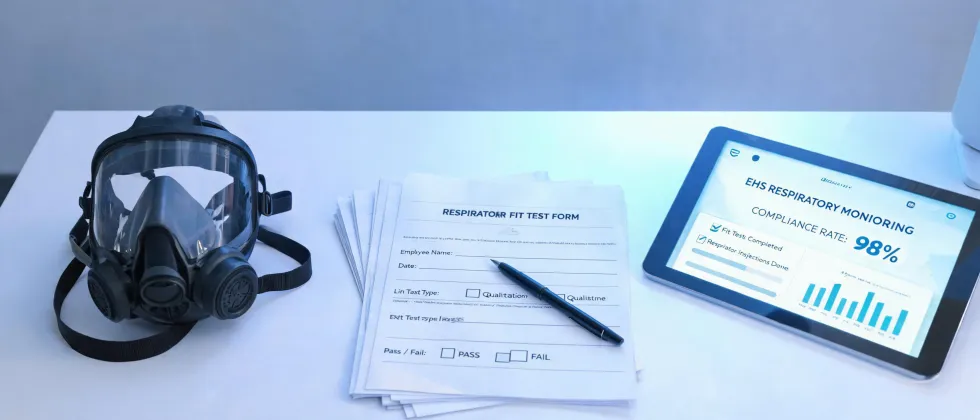
Take 3M dust respirators. The phrase “dust respirator” makes it sound like one product. It is not. There are N95 filtering facepieces, half masks with replaceable cartridges, P100 filters, and powered-air systems, each designed for different hazards and protection levels. When a purchase order says only “3M dust respirators,” someone down the chain has to decide what “close enough” means. Usually they choose by price or convenience.
I once watched a crew use N95-style masks for solvent vapor exposure. The masks worked perfectly as particulate filters; they just were not the right filters for vapor. The product was not defective. The specification was. Nobody had asked what the respirator was supposed to do before someone clicked “order.”
Why we accept “close enough”
I have been on both sides of this conversation, so I’m not pretending it is easy to reject. The habit of accepting close enough usually comes from three places.
First, saying yes is more comfortable than saying no. A receiving clerk, a safety manager, and a procurement specialist all know that a rejection triggers calls, emails, and delays. The moment you accept a nonconforming item, everyone is happy until they are not. In 2022, I signed off on a small trial order of fence stretchers because I did not want to be the reason a project slipped. The jaw width wasn’t what the field team used for that wire. I told myself it was compatible. A month later, one slipped under tension. No one was hurt, but two workers lost most of a day to a sagging fence line. Now every contract includes the exact jaw width.
Second, “industry tolerance” sounds like a fact, but it is a negotiation. Every product family has standards. But if you haven’t written your tolerance and acceptance criteria into the purchase order, the supplier uses the reading that helps the part ship. In my experience, the phrase “within industry standard” appears most often when someone has not verified the part against your actual requirement.
Third, regulatory labels get mistaken for context. People search for “3M 1100 earplugs NRR” because they want a single number to compare. NRR is a useful standardized measurement. It is not the same as knowing whether a worker inserted the earplugs correctly, wore them for the whole shift, or needs a different type of protection. When quality is reduced to a label number, we ignore the gap between a certified product and a safe process.
I also apply the same logic to claims. Federal Trade Commission guidance says advertisers have to substantiate objective claims. I want that same substantiation on a purchase order. If no one can show why a product meets a requirement, the word “quality” is decorative.
What’s the real cost?
The temptation is to say, “Let’s see if it works.” Sometimes it works. The only way to know for sure is to test every unit in real conditions, and that would be too expensive. So you accept a small uncertainty. The question is how much uncertainty you are willing to fund.
When I compared the rejected gate latches side by side with the approved samples, nobody could see the difference without a caliper. That is usually the moment people decide I am being too fussy. But the spec sheet did not have a guess; it had a number. The downside of rejecting was a late shipment. The upside was not having to explain a gate failure later. I kept asking myself whether a schedule delay was worth an unknown failure. The answer did not take long.
Consider a fence stretcher. It looks simple: put it on wire, apply tension, done. But jaw shape and tooth hardness decide whether the tool holds a particular wire gauge, whether it slips under load, and whether it can be released safely. If you buy the cheapest compatible-looking unit, you don’t discover the flaw during the quote. You find it during the pull.
The same logic applies to a gate latch. A half-millimeter difference may be irrelevant in a climate-controlled warehouse and very relevant on a gate that gets bumped by equipment and expands in heat. You can’t see the future. You can only inspect against a specification that you have chosen for a reason.
I don’t want this article to be a collection of worst cases. Most mismatches aren’t dramatic. But every mismatch is a cost transfer: the cost of a decision made today gets moved to a day you don’t yet know. That is why I get suspicious when someone calls a deviation “minor.” A minor deviation is simply a deviation whose cost hasn’t shown up yet.
Here is an example from a different world: someone searches for “how to stop pepper spray burn on skin.” It is a fair and practical question. But it is a symptom-stage question. The exposure has already happened, and the goal at that point is damage control. The earlier set of questions—how the spray was carried, stored, used, or cleaned—matters more. In PPE, the same backwards question appears when a program buys an N95 mask for a hazard that requires a full-facepiece, or checks hearing protector NRR without checking fit and training.
If an audit shows up months later, the file either contains evidence—approved part numbers, test reports, lot numbers, training logs—or it contains a supplier’s verbal reassurance. The second one is not an audit finding I want to defend.
The short version of what works
Does every purchase need a separate quality audit? No. But there is a low-cost version that works.
- Write the specification before you choose the supplier. A PO that says “3M dust respirators” is better than nothing. A PO that says “NIOSH-approved N95 particulate respirator, model number, lot traceability required” is a quality plan.
- Use the first shipment as a receiving inspection, not an assumption. Open a few cartons, compare the markings to the requirement, and confirm that the paperwork matches the physical product. This is not extra work; it is the price of knowing what you bought.
- Treat price as one line in total cost, not the whole story. Cheaper is fine when it meets the spec. The total cost story changes when a nonconforming item slips through, causes rework, or contributes to a safety incident.
- Feed problems back. A rejected gate latch should change the next supplier list. An earplug fit problem should change training. If quality observations stay in a reject log, tomorrow will look exactly like yesterday.
Most quality failures are not inspection failures. They are specification failures that show up late.
I have spent the last seven years looking at products that almost passed. Most of them looked perfect—until somebody asked the question the original spec was supposed to answer.
Quality is not a personality feature. It is the relationship between a hazard, a specification, a product, and the person using it. That is why I care about half a millimeter on a fence gate latch. It is why I ask about 3M dust respirators beyond the category name. And it is why the NRR on 3M 1100 earplugs only makes sense when you know the noise level, the wearer, and the training around fit.
Buying better starts with defining better. Everything else is just a very expensive hope.