-
What a reflective sneaker taught me about high-visibility apparel
-
PAPR vs CAPR is a family history, not a cage match
-
Face shields: the Uvex Bionic search is actually a compatibility search
-
3M certified installers and a “privacy fence” that wasn’t
-
Counterpoint: Why not just pick 3M and move on?
-
The bottom line
Since 2020, I’ve been the person who orders safety supplies for a company with about 400 employees across three locations. I process 60–80 orders a year and manage relationships with eight vendors. I report to both operations and finance, so when an order goes wrong I hear about it from two directions.
Here’s the opinion I’ll defend in this article: The 3M logo is not a safety plan. It’s a signal of quality, but it’s not a substitute for specifications, compatibility checks, and certified installation.
What a reflective sneaker taught me about high-visibility apparel
Search for “nike air max plus tn 3m reflective black” and you’ll see a sneaker with reflective trim. It’s not a safety product. But it’s a useful reminder that consumers recognize 3M reflective material as something special. If a shoe brand puts 3M detailing on a lifestyle sneaker, that material has performance data behind it.
That’s exactly why I stopped buying high-visibility vests by photo. A few years ago, I asked a new supplier for documentation that their vests met ANSI/ISEA 107. They couldn’t provide it. The samples looked shiny, but shiny isn’t retroreflective. We stuck with a distributor who offered 3M Scotchlite reflective material and actual test documentation. It wasn’t the cheapest vest, but it was the only one with proof.
I don’t have hard numbers on non-compliant vests sold every year. I have my own near-miss, and that was enough.
PAPR vs CAPR is a family history, not a cage match
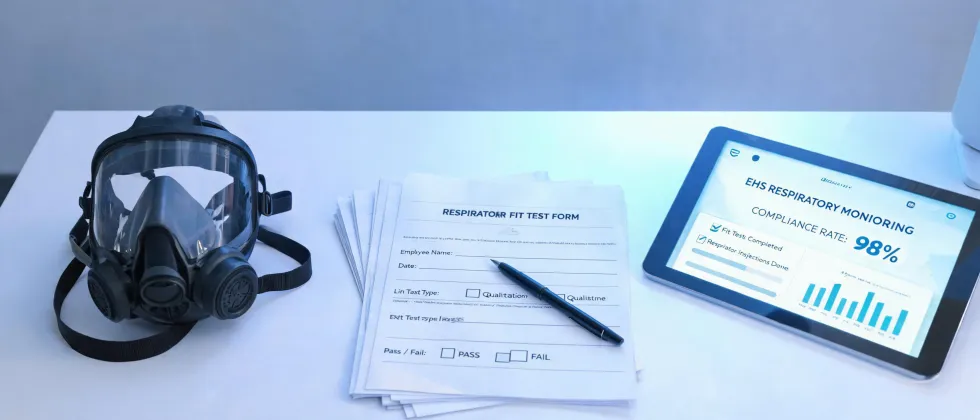
One of the more confusing requests I’ve handled came from a supervisor who typed “PAPR” into the system as if it were one product. It isn’t. PAPR stands for powered air-purifying respirator. CAPR stands for controlled air-purifying respirator, and it’s usually a form of PAPR that uses a hood or helmet to deliver filtered air to the wearer.
I almost ordered a replacement blower based on the model number from our inventory spreadsheet. It looked right. The safer step was to call the 3M technical service line. The rep asked me to name the hazard, describe how long the worker would be in the area, and confirm whether they needed a hood or a facepiece. I had two of the three answers. The third changed the order.
If you’re comparing “PAPR vs CAPR,” don’t search as if one is newer or better than the other. CAPR is part of the PAPR family in most cases. The real question is whether your crew needs a loose-fitting hood or a tight-fitting facepiece—and whether the filters match the contaminant. A buyer doesn’t need to become a respiratory specialist, but they need to ask for the person who is.
Face shields: the Uvex Bionic search is actually a compatibility search
A lab manager once forwarded a link to the Uvex Bionic Face Shield and asked if we could order it for our 3M hard hats. It looked like a nice shield. But “looks compatible” is not the same as “is compatible.” A face shield has to mount correctly, sit far enough from the face, and meet the performance standard for the hazard—usually ANSI Z87.1 for impact, plus splash protection where chemicals are present.
We requested a sample and checked the bracket alignment against our hard hat accessory slots. That step isn’t optional, in my opinion. A shield that doesn’t fit properly leaves a gap, and a gap defeats the purpose. In that case, we went with a 3M face shield designed for our existing headgear. The Uvex product wasn’t the enemy; the unknown fit was.
3M certified installers and a “privacy fence” that wasn’t
Now for the odd one. A facilities team asked for “privacy fence ideas” for a glass-walled meeting area. The search results showed wood screens, planters, and partition systems. What we actually needed was privacy without losing daylight. A 3M certified installer recommended architectural privacy film.
Why did certification matter? Film installation is unforgiving. Dust, humidity, wrong blade pressure or an uneven squeegee can ruin a large piece of film. I know this because I tried to apply a small film panel once. It looked fine for maybe six hours. Then the edges started lifting. The commercial installer had formal training on cleaning, wet application, trimming and heat forming. The film has held for over a year.
The phrase “privacy fence ideas” doesn’t usually overlap with 3M in search results. But from a purchasing perspective, both start with a problem statement. Once we defined the problem, the product category changed—and the installation skill became part of the specification.
Counterpoint: Why not just pick 3M and move on?
I hear that from people who think I’m overthinking procurement. They’re partly right. 3M makes reliable products, and the brand carries a lot of weight. But I’ve made mistakes before by choosing a good product for the wrong application. One year I bought a bulk case of 3M earplugs because the cost per pair was great. It was a good product. It was also wrong for the maintenance crew, who needed muffs for short bursts of high noise. That error wasn’t the brand’s fault. It was mine for not asking the right question.
In 2024, when we consolidated PPE vendors for all three locations, the easiest savings came from better product matching, not from squeezing suppliers on price. We reduced returns by asking about fits, standards, and installation requirements before placing orders. The invoice is not the best place to discover a mismatch.
The bottom line
I still search for 3M products regularly. I’ve also searched for reflective sneakers, Uvex Bionic face shields, PAPR vs CAPR, and privacy fence ideas. Search terms are useful starting points, but they’re not technical specs. The logo is a promise of engineering and quality. An informed buyer makes sure the rest of the promise—right product, right fit, right installer—is kept.