If you ask me, buying safety gear by unit price alone is the most expensive mistake a safety manager can make. I say that as someone who made it for two years and burned about $18,000 on avoidable waste. I'm an advocate of reliable branded PPE when the task demands it. But this article is not a 3M advertisement. It's a case for buying by spec, not by the lowest line item.
I've been handling safety equipment orders since 2017. I've personally made and documented 14 significant mistakes, from wrong respirator filters to a temporary fence that fell over on a windy Tuesday. We've processed maybe 200 orders. Maybe 180, I'd have to check the system. That's the reason I now keep a pre-buy checklist.
Lesson 1: NIOSH approval is the floor, not the finish line
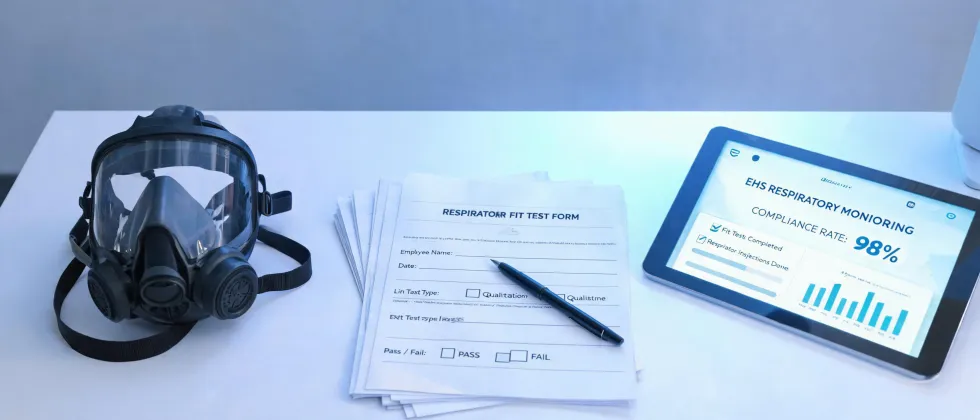
In my first year, I ordered 500 N95 masks from a distributor because they were 32 cents cheaper per mask than the 3M option. They looked fine on paper. They met the NIOSH standard. The surprise wasn't that the cheap masks were bad, but the kind of bad. Three of our eight workers failed fit testing. The nose clips bent after 20 minutes. We tossed 420 masks and paid a rush fee for decent ones. Total damage: about $1,800.
NIOSH defines an N95 mask as one that filters at least 95% of airborne particles in lab testing. But a mask that doesn't fit is zero percent protection in the field. In the U.S., the OSHA respirator standard, 29 CFR 1910.134, requires fit testing for tight-fitting respirators before first use. That's not a formality. It's the difference between a box of masks and functioning PPE.
That's why I search for 3M masks N95 when I reorder. They fit my crew better, and the nose clips survive a full shift. If you have workers who don't trust the mask, they won't wear it correctly. That creates a culture problem you can't solve with a purchase order.
3M P100 filters: the cost-per-hour lesson
For grinding and welding, we use half-face respirators with P100 filters. I bought a batch of no-name P100 filters once. They clogged so fast that workers changed them every two hours. The 3M P100 filters lasted a full shift. The cheaper filters were labeled compatible, but the air flow resistance wrecked their service life. Replacing filters twice as often costs more in the long run. That's the part that never shows up in the unit price comparison.
P100 is the highest filtration class in the NIOSH particulate filter rating, capturing at least 99.97% of airborne particles. It's also oil-proof, so it handles a wider range of industrial settings. But nobody in the real world keeps a filter on the shelf because it has a nice efficiency number. They keep it because it works with the respirator they actually use.
Lesson 2: A temporary fence is a safeguard, not a decoration
In September 2022, I rented the cheapest temporary fence panels for a trench and material storage area. I saved about $200 for the week. On night two, wind gusts flipped three panels. The site was unsecured. A delivery driver ended up inside the controlled area, and the general contractor's safety manager came to tell me, in detail, why that was unacceptable. No one was hurt. We were lucky.
The replacement cost was $1,250 for the reclamation fee, plus a day of project delay. The better fence system with wind anchors would have cost $140 more for the same period. That one hurt because it was so easy to prevent. Now our checklist says: any temporary fence left overnight needs an engineered system with proper anchors, not the cheapest option from the nearest rental yard. Local safety codes and site conditions often require temporary fencing around excavations, but the minimum legal spec is not always enough for an overnight perimeter.
Lesson 3: "Can I use latex gloves for cooking?" is the wrong question
A client asked me once:
Can I use latex gloves for cooking?
The short answer is, not if you serve food to the public. Latex can form a barrier, but it also creates allergy risks, and some powdered latex gloves can leave residue on food. The better question to ask is: Is this glove made from materials approved for food contact?
And that brings me to black nitrile gloves. I see people buy black nitrile gloves because they look professional. But the color means nothing. If you need gloves for food prep, check the label for food contact approval. Black nitrile gloves sold for automotive or industrial use are not automatically safe for cooking. The same principle applies to disposable gloves everywhere: match the material to the task, not to the aesthetic.
Why this is an efficiency story, not a brand story
The way I see it, standardization is an efficiency play. After the temporary fence disaster and the glove confusion, I built a simple digital checklist. It includes target standards, part numbers, and vendor notes. It cut our safety kit turnaround from five days to two days. It also stopped the last-minute best price panic orders.
We moved from scattered email threads to one shared spreadsheet. Not fancy, but it eliminated the data entry errors we used to have on glove sizes and filter part numbers. Since Q1 2024, we've caught 47 potential errors using that checklist. That's more than a feel-good number; it's thousands of dollars in avoided waste.
The surprise wasn't that the expensive options performed better. It was that the total cost was lower in every case. The cheap N95 masks, the cheap P100 filters, the cheap temporary fence—all of them wasted labor time, project time, or compliance credibility. None of those savings ever showed up as a discount on the invoice.
There's something satisfying about ordering a safety kit and knowing it won't come back to haunt you a week later. After all the stress, seeing the delivery show up complete and correct—that's the payoff.
The pushback I hear
To be fair, I'm not saying every purchase has to be premium. Generic flagging tape? Fine. Simple dust masks for visitors? Fine. If you are a homeowner doing a weekend project, cheap N95 masks and a plastic temporary fence might be enough. My experience is based on about 200 orders at mid-sized construction and industrial sites. If you're working with a much smaller setup, your experience might differ.
Granted, there are times when a local vendor is the faster option. A one-day event barrier, a daily-use glove, a respirator that needs refitting—local suppliers can be lifesavers. The point is to build a checklist that separates safety-critical items from convenience items. Then use price as the tiebreaker, not the decision-maker.
If you ask me, the bottom line is this: safety gear is not a commodity. Buy by spec, check the label, secure the barrier, and only then compare price. The cheapest product is worth it only if it can do the job without bringing your operation to its knees.
