I'm the person who checks safety gear before it gets shipped out. For the last four years, I've reviewed 200+ unique items a year—PPE, industrial supplies, even some things that don't fit neatly into a PPE category. And the number one thing I've learned is this: safety decisions don't have one right answer.
If someone says 'just buy X and you're covered,' they're probably not the one who has to deal with the consequences. The right answer depends on where you work, what you're protecting, and who's holding you accountable.
So this isn't a 'best of' list. It's a decision tree. Here are three scenarios I see all the time, and how I'd handle each one.
Scenario A: Regulated Industrial Worksite
If you're a safety manager, plant engineer, or contractor working in a facility with OSHA, ANSI, or NIOSH requirements, you don't get to choose based on comfort alone. You choose based on compliance and risk.
Respirators: 3M Half Facepiece Reusable Respirator
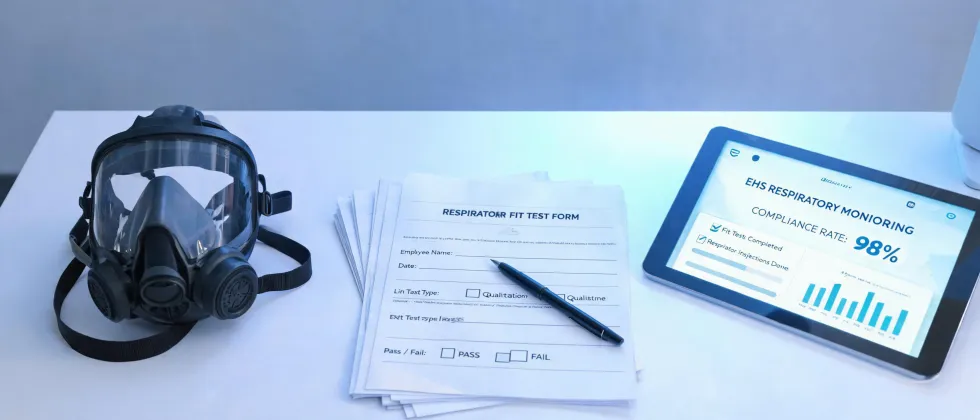
The 3M half facepiece reusable respirator is the one I most often specify for particulate, vapor, and fume exposure. It's not flashy. It doesn't need to be. It needs to seal, filter correctly, and pass fit testing.
I've seen buyers try to save $15 per unit on a respirator that wasn't NIOSH-approved for the contaminant in question. That's not saving; that's a future citation. In 2023, I rejected roughly 14% of first delivery samples due to off-spec sealing. The vendor redid it at their cost, but the schedule took a hit. That schedule slip cost more than the premium would have been.
When I calculate total cost of ownership (TCO), I include fit testing, cartridge replacement, training, and downtime. That's why in our facility, the 3M half facepiece reusable respirator is the baseline for most jobs that need respiratory protection. Verify current approvals for your specific chemical; do not assume one cartridge covers everything.
Hearing Protection: 3M Combat Arms Earplugs
Hearing loss is weird because you don't notice it in the moment. You notice it in your fifties, and by then it's gone. The 3M Combat Arms earplugs are a good example of a product that does double duty: they reduce high-level noise, but they also let you hear voices and alarms when the earplug is in 'open' mode. I've seen them used on firing ranges and in manufacturing; both settings need situational awareness.
A note from my own experience: I was skeptical about hearing protection that claims to let you hear speech. So I ran a quick blind test with our team—same background noise, two different earplugs. About 7 out of 10 people said the Combat Arms earplugs made conversation easier. It wasn't a scientific study, but it was enough for me to understand why soldiers talk about them.
Head Protection: Type 2 Hard Hat
A type 2 hard hat under ANSI/ISEA Z89.1 means it meets Type II requirements: top impact plus lateral impact. That's not a minor difference. If you're working near swinging loads, scaffolds, conveyor systems, or confined spaces with overhead hazards, lateral protection can be the difference between a bad headache and a skull fracture.
We switched from Type I to Type 2 hard hats in our facility in 2022. The trigger was a near-miss: a suspended beam swung and grazed a scaffold pole maybe two feet from a technician's head. Nobody got hurt, but I kept asking myself if we were overcorrecting. The upside was a more defensible spec. The risk was having to reorder stock and retrain people. We did it anyway. I'd make the same call today.
Scenario B: Home Safety and Small Worker / Residential Spaces
Not every safety question happens in a factory. Some of the most important ones happen in your hallway or your backyard.
Smoke Detector Reset After Changing Battery
This one is more common than you'd expect. People search for 'how to reset smoke detector after changing battery' because they replace a battery and the detector still chirps. The usual fix is simple:
- Remove the battery.
- Press and hold the test button for 15 seconds to drain residual power.
- Put in a fresh battery, close the unit, and test.
If it still chirps, turn off the breaker for 30 seconds, then restore power. And if it still beeps after that, check the replace-by date. A smoke detector's lifespan is typically 10 years; after that, resetting isn't the real fix—replacement is. Never disable the alarm because a new battery didn't instantly clear the error.
Pet Containment: Halo Dog Fence
Okay, this isn't PPE. But 'how do I keep my dog safe when there's no physical fence' is a safety question, and I get why people land on a Halo dog fence when they search for a solution.
I don't sell pet fences, and I don't have a dog, so I'm not going to review one from the inside. What I can tell you as a quality person: a Halo dog fence uses GPS rather than buried wire, which makes it useful for large or oddly shaped properties. But it's still a training system, not magic. If your dog blows through boundaries under distraction, the collar needs time to correct. That means you need to test it the same way you'd test any safety system—under the conditions you'll actually rely on, not just when the dog is calmly walking in the yard.
Scenario C: Mixed Use—Contractors, Solo Operators, Weekend Job Warriors
This is the group that gets the least good advice. You're not in a permanent plant, but you're not sitting in a home office either. You need a 'go bag' that covers both worlds.
For this scenario, I'd build a small kit around three things:
- 3M half facepiece reusable respirator for occasional spray finish, solvent, or dust work.
- 3M Combat Arms earplugs for loud equipment or range/work environments.
- A Type 2 hard hat for site visits where there's any chance of overhead work.
You don't need a warehouse. You need a reliable floor. The TCO math is different here because you're not buying in bulk. But the total cost of buying cheap and replacing it—or worse, showing up without the right thing and being turned away—is higher than buying a decent version once.
How to Know Which Scenario You're In
If you're still not sure, ask three questions:
- Who sets the requirement? If there's an OSHA, ANSI, insurance, or client requirement, that's non-negotiable. Start there.
- What's the worst failure mode? A missed respirator seal is gradual. A smoke detector failure is sudden. A dog escaping into traffic is immediate. The more severe the failure, the more you should lean toward certified, well-tested equipment.
- What happens if you're wrong? If the answer includes 'injury,' 'fine,' or 'lawsuit,' don't try to save 10%. If the answer is 'annoying,' then maybe you can prioritize cost.
This worked for me, but our situation is a mid-size facility with a formal safety program. If you're a one-person operation, your buying path is different. If you're on a site with strict contractor rules, your version of 'different' is tougher, not easier.
The point isn't which brand is better. The point is to stop treating safety equipment like a commodity. Decide based on what the equipment has to do, what standard it has to meet, and what it costs over the full life of the product—not just the price tag.
