The morning the audiologist called
In Q2 2023, I was three years into my role as procurement manager at a 120-person metal fabrication shop. I managed a $180,000 annual PPE budget—everything from navy coveralls to fire extinguisher cabinets to hearing protection. On a Tuesday morning, our safety director forwarded an email from the occupational audiologist. Three employees had shown standard threshold shifts (STS) on their annual hearing tests. Not huge, but enough to trigger a mandatory follow-up.
My first thought: the earplugs. We'd switched to Howard Leight earplugs NRR 33 the previous fall because they had the highest noise reduction rating on the market. I'd negotiated a bulk price that saved us about $1,200 annually compared to our old vendor. The math was simple: same protection, lower cost. What could go wrong?
Digging into the process
I pulled the purchase orders. We had bought 4,000 pairs of Howard Leight earplugs in the last 12 months. Inventory looked fine. But when I walked the floor, I noticed something odd. About a third of the workers had the earplugs dangling from their necks or stuffed in their pockets. Some wore them incorrectly—not rolled down, not inserted deep enough. One guy admitted he only wore them when a supervisor was watching.
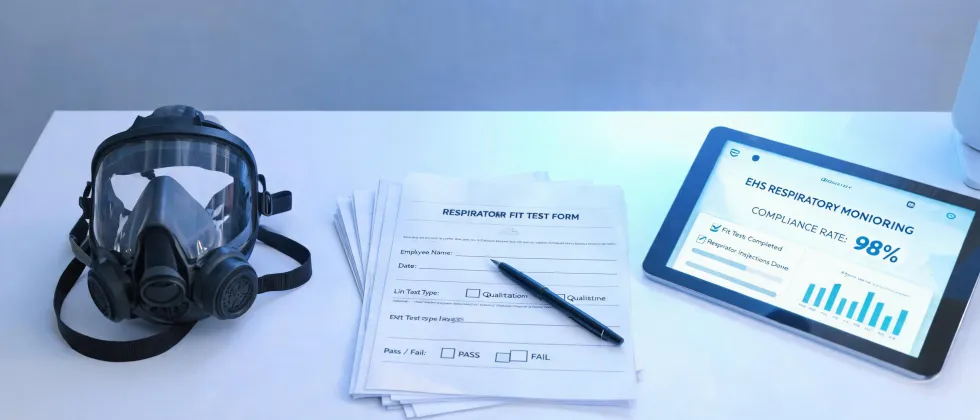
That's when I realized: we never trained anyone on how to use them. We assumed the printed instructions on the box were enough. The vendor sent a poster, but it was still in the shipping tube. We didn't have a formal onboarding process for PPE. When someone new started, they got a pair of earplugs and a wave toward the noisy area. I'd been so focused on the unit price—$0.38 per pair versus $0.42 for the previous brand—that I'd missed the bigger cost.
'Who is responsible for making sure that workers know how and when to use PPE?' I asked our safety director. He shrugged. 'We both are, technically. But OSHA puts it on the employer.'
He was right. According to OSHA (29 CFR 1910.132(f)(1)), employers must train workers on when PPE is necessary, what PPE is necessary, how to don and doff it, its limitations, and how to care for it. We had no documentation. No training records. No verification.
The hidden costs pile up
We had to retrain all 120 employees—not just the three with STS. That meant pulling people off the floor in groups of 15, two hours per session. At an average burdened labor rate of $42/hour, that's $10,080 in lost production. Plus we hired an outside trainer for $1,800. The audiologist required follow-up testing for the three affected workers: $450. And we had to update our written PPE program—another $600 for a consultant. Total: roughly $12,930.
Wait, let me correct that. The labor cost was closer to $8,400 because we ran some sessions during scheduled downtime. Still, the total came to about $11,250. All because we skipped a $450 training video and a one-hour toolbox talk. (Based on publicly listed distributor prices for Howard Leight NRR 33 earplugs, February 2025—prices vary by volume and region.)
I kept second-guessing myself. What if I'd just paid the extra $0.04 per pair for the previous brand that came with on-site training? The unit price was higher, but the vendor included a train-the-trainer session. I'd dismissed it as a sales gimmick. The upside was $1,200 in annual savings. The risk was exactly what happened. I calculated the worst case: a full retraining. Best case: nothing. The expected value said take the savings. But the downside felt catastrophic in hindsight.
The pivot: building TCO into PPE procurement
After that mess, I changed our process. Now every PPE purchase—whether it's Howard Leight earplugs, navy coveralls, or fire extinguisher cabinets—goes through a total cost of ownership (TCO) checklist. Training is a line item. For hearing protection, I require vendors to provide either an on-site training session or a documented digital training module. We also designated a PPE coordinator (our safety director) with written responsibility for training verification.
I compared Howard Leight NRR 33 against two other brands using the new TCO model. Howard Leight's unit price was $0.38, plus $0 for training (because the vendor now includes a free online module). Brand B was $0.35, but charged $300 for a training kit. Brand C was $0.40 and included on-site training. Over three years, Howard Leight actually came out lowest—not by much, but enough.
We also applied the same logic to fire extinguisher cabinets. The cheap cabinets from a big-box store had no mounting hardware or inspection tags. By the time we bought the missing parts, they cost 22% more than the commercial-grade cabinets that included everything. And for navy coveralls, we started requiring vendors to include a sizing guide—returns were costing us $18 per exchange.
What I learned (and what it cost)
We spent about $11,000 fixing a problem that a $450 training investment would have prevented. The three workers with STS now require annual monitoring—not a huge cost, but a reminder. Our workers' comp premium went up slightly because of the recordable incidents.
The biggest lesson: efficiency isn't just about speed or unit price. It's about closing the loop. A cheap earplug that nobody wears correctly isn't cheap. A fire extinguisher cabinet without an inspection tag isn't compliant. And the answer to 'who is responsible for making sure workers know how and when to use PPE' is simple: the employer. But as the procurement manager, I'm the one who signs the POs. So I'm part of that responsibility too.
Now I keep a one-page TCO calculator on my desk. It's not perfect—I still miss things. But it's better than the 'lowest unit price' spreadsheet I used to rely on. And I always ask the vendor: 'What does training look like?' If they shrug, I move on.