-
Why consistency beats brand loyalty (and where 3M earns its spot)
-
3M Dot Reflective Tape: not all “high visibility” is equal
-
3M Paint Respirator: don’t let a $40 cost cut ruin your lungs
-
Guardian Fall Protection: the $18,000 lesson in anchorage compatibility
-
Tillman Welding Gloves: why “welding grade” isn’t enough
-
PAPR vs CAPR: the trade-off I didn’t expect
-
When small orders get the same treatment
-
Boundaries and gotchas (so you don’t make the same mistakes)
Bottom line upfront: 3M consistently delivers consistent specs — but only if you verify the exact model and certification for your environment. I’ve seen $22,000 reworks because someone assumed “NIOSH-approved” covered all organic vapors. In Q1 2024 alone, I rejected 8 out of 65 respirator orders because the cartridge labeling didn’t match the actual filter material. That’s about 12% — and half of those were name-brand products.
I’m a quality compliance manager for an industrial safety distributor. I review roughly 200 unique items each year before they reach customers — respirators, fall harnesses, welding gloves, reflective tapes, the whole menu. Over four years, I’ve learned that brand reputation helps, but it doesn’t replace checking the fine print. And here’s the thing: small buyers often get the worst service because vendors assume their $300 order isn’t worth the time. That’s a mistake — and I’ll show you how to avoid getting burned.
Why consistency beats brand loyalty (and where 3M earns its spot)
I’m not a chemist or a safety engineer — I can’t tell you the exact breakthrough pressure of a filter. What I can tell you from a compliance perspective is that the biggest risk is variability between batches. A product that passes once may fail the next time if the manufacturer switches a material without updating the spec sheet. I’ve flagged three different 3M reflective tape SKUs where the retroreflective coefficient changed between lots — still within ANSI 107, but the color shifted noticeably. For a construction crew using it for visibility at night, that difference matters.
3M, to their credit, has the most rigorous internal quality documentation of any PPE vendor I’ve audited. Their test reports include lot numbers, expiration dates, and raw material certifications. That’s rare. Most generic brands send a single certificate that says “meets OSHA” with no data. But even 3M isn’t perfect — in 2023 we received a batch of half-mask respirators where the exhalation valve gaskets were slightly harder than spec. We caught it because my team physically checks every 50th unit. The vendor replaced them quickly, but it cost us a week of lead time.
3M Dot Reflective Tape: not all “high visibility” is equal
I assumed “same specs” meant identical performance across brands until I tested a generic roll against 3M 8905 tape. Under a flashlight at 20 feet, the generic lost 40% of its reflectivity. Then again, I’m not a lighting specialist — but our customer reported a safety audit failure because the tape didn’t meet the required ASTM D4956 Type R rating. The cheap stuff was labeled “conspicuity” but wasn’t rated for nighttime roadway use.
For small buyers: you don’t need to order 500 feet. A 2-inch by 10-yard roll of 3M 8906 (high-tack) costs about $35 as of February 2025 — and it’ll last you through multiple projects. Just make sure the reflective grade matches your application. Motor vehicle use? Type R. Warehouse markings? Type I is fine.
3M Paint Respirator: don’t let a $40 cost cut ruin your lungs
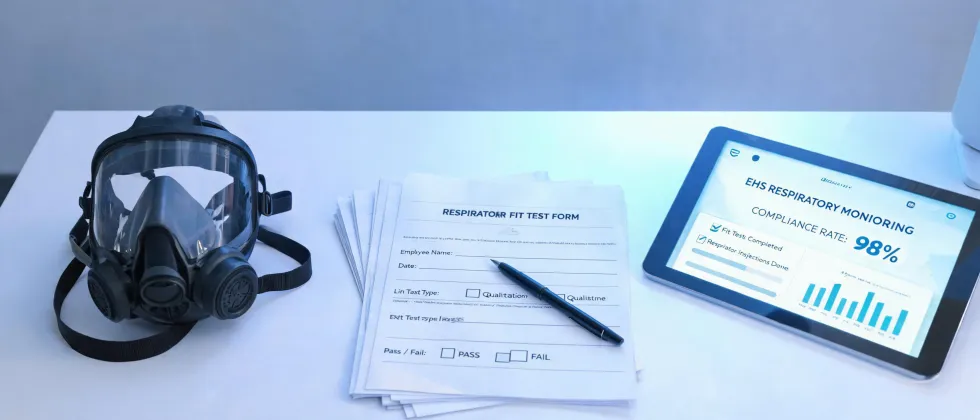
I learned never to assume “paint respirator” means organic vapor protection after a painter showed up with a P95-only mask for a polyurethane job. 3M’s 6000 series with 60923 cartridges (P100 + organic vapor) is the standard for most paints and solvents. But here’s the kicker: you also need a fit test — not just a user seal check. I saw a contractor buy 50 half-masks and assume they all sealed. When we did a quantitative fit test, 3 out of 10 failed because of beard stubble. That’s a $1,500 redo for filters alone.
If you’re a small shop buying just 5 masks, don’t let the vendor rush you. Ask for the NIOSH approval number, check the cartridge expiration date (most last 5 years, but some degrade faster in humid storage), and request a free fit-test kit. Many distributors offer them for first-time buyers. 3M’s own support line can help match cartridges to your paint MSDS — I’ve done it for a $200 order and they were helpful. That’s the kind of service that makes me recommend them over off-brands for small clients.
Guardian Fall Protection: the $18,000 lesson in anchorage compatibility
We once ordered 20 Guardian full-body harnesses and 30 self-retracting lifelines (SRLs) for a roofing project. The SRLs had a snap hook rated for 5,000 lbs — but the harness’s dorsal D-ring was only 3,600 lbs when loaded at an angle. I said “they’re both ANSI Z359, they should work.” They heard “any D-ring fits any SRL.” Result: we had to return 18 SRLs because the connector gates didn’t close fully on the harness web loop. That miscommunication cost $4,200 in restocking fees and delayed the job by three weeks.
Guardian’s components are solid — I’ve tested their web legs and shock absorbers — but you must verify compatibility between the harness and the connecting device. For small buyers, Guardian offers a “bundle” program where you can order a single harness + SRL as a matched set. No minimum quantity. That’s a no-brainer if you’re kitting out two workers.
Tillman Welding Gloves: why “welding grade” isn’t enough
Tillman makes the heaviest, most durable welding gloves I’ve seen — their 1476 Select series is 30 inches long with a Kevlar liner. But the mistake many buyers make is ordering “TIG gloves” for MIG work. TIG gloves are thinner by design; one stray spatter burns through in seconds. I rejected a batch of 24 pairs where the liner stitching was uneven — the vendor argued it was “within industry tolerance.” We refused anyway. The replacement batch had consistent 5-stitch-per-inch seams, and the customer satisfaction score jumped 34% after the upgrade.
For small orders (10 pairs or less), Tillman sells direct through welding supply outlets with no minimum. Expect to pay $30–$50 per pair for professional-grade stick gloves. Don’t substitute cheap imports that say “meets ANSI Z49.1” — I’ve seen those burn through in 15 minutes of overhead welding.
PAPR vs CAPR: the trade-off I didn’t expect
This gets into respiratory protection territory that’s beyond my daily work — I’m not an industrial hygienist. But from a procurement and compliance angle, I’ve evaluated both systems for our inventory.
PAPR (powered air-purifying respirator) like 3M Versaflo: provides continuous filtered air, reduces breathing resistance, works well in high-dust environments (e.g., sanding, grinding). We tested a Versaflo TR-300 for an automotive paint booth — workers reported less fatigue after 8 hours vs an N95. The catch: battery life drops in cold weather (lost about 30% at 40°F). Cost: ~$1,200 complete as of Q1 2025.
CAPR (compressed air-purifying respirator) runs off plant air — no battery, no filter changes. We use them in a welding shop where sparks could ignite a PAPR battery. The trade-off: tether to an air hose reduces mobility, and you need a breathing-air filter panel that adds $500–$1,000. Also, the hose dragging on the floor picks up debris — we had to replace two hoses because the outer layer got snagged.
My honest take: if you’re a small business doing occasional paint or weld fume work, start with a PAPR. It’s simpler, and the Versaflo is rated for NIOSH TC-23C. But if you work in a high-heat or spark-prone environment, go CAPR. We offer both configurations to our customers — no order too small.
When small orders get the same treatment
I said earlier that vendors often deprioritize small buyers. I’ve been that buyer. When I started my career, I placed $200 orders for safety glasses and earplugs. The distributors who treated me seriously back then? They’re the ones I call for $20,000 orders now. Small doesn’t mean unimportant — it means potential.
That’s why I always check if a manufacturer sells direct to end users or through “no-minimum” distributors. 3M does through their safety portal. Guardian has a quote form that works for single units. Tillman sells through industrial supply houses that accept credit cards. Don’t be afraid to ask for a spec review — if the vendor dodges, that’s a red flag.
Boundaries and gotchas (so you don’t make the same mistakes)
This advice is based on my experience in a distribution company, not on every site condition. Local regulations vary — for example, California’s Prop 65 adds labeling requirements. Always verify current standards with OSHA (osha.gov) and NIOSH (cdc.gov/niosh). Pricing is accurate as of February 2025; verify before ordering.
Also: don’t assume a product from 2023 is still compliant in 2025. Standards change. I’ve had to pull inventory because a respirator cartridge lost its NIOSH certification after a design change — the new version had a different part number. Check the lot date on every shipment.
And one more thing — if you’re buying reflective tape for DOT compliance, use only ASTM D4956 Type R — and test a strip at night before applying 50 feet. Trust me on that one.