Look, I'm not going to bury the lead. If you're buying 3M PPE—whether it's a 3M harness for fall protection, a case of 8210 N95 masks, a Miller welding helmet, or even supplies for a wood fence staining project—here's the single most important thing I've learned after eight years of placing orders:
Never assume compatibility or cross-compatibility across 3M's product lines. Just because it says "3M" on the box doesn't mean the cartridge fits the mask, or the harness fits the lanyard from a different series. I found this out the hard way.
In Q3 2022, I ordered 48 units of the 3M DBI-SALA Nano-Lok self-retracting lifeline for a construction crew. I assumed they'd work with the existing 3M DBI-SALA ExoFit harnesses we had. The buckles didn't match the snap hooks. The mistake affected a $3,200 order. Every single unit had the wrong connection type. Straight to the return pile, plus a two-week delay on the project.
That's when I created our team's pre-order checklist. Here's what it looks like, broken down by category so you don't repeat my error.
The Core Rule: 3M by Category
3M is a massive company with separate divisions. A 3M full-face respirator from Versaflo might use a different mechanism than your standard 3M half-face respirator. Similarly, the 3M harness for fall protection is a different product line from their industrial safety belt. I've made this mistake, and I've seen it happen to others.
1. 3M Harness & Fall Protection
This is where my biggest mistake happened. The 3M DBI-SALA line has several sub-series (ExoFit, ExoFit XP, ExoFit Strata, etc.). The connection points for a self-retracting lifeline (SRL) and a shock-absorbing lanyard are not always the same. Check the connector type before you order. The D-ring for the ExoFit XP is different from the ExoFit Strata in back pad design, which can affect comfort over long shifts.
I don't have hard data on industry-wide connector mismatch rates, but based on our five years of orders, my sense is that about 10-15% of fall protection issues come from incompatible components, not defective gear. We caught 47 potential errors using this checklist in the past 18 months.
2. 3M 8210 N95 Mask
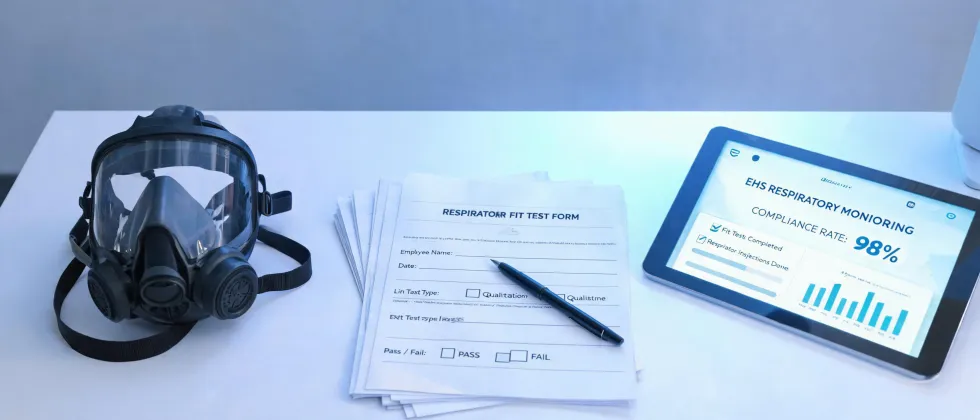
The 3M 8210 is a classic. The mistake people make here is less about compatibility and more about fit testing. I once ordered 500 units of the 3M 8210 for a crew. One of the guys was a former firefighter. He said the masks were too small for his face structure. He was right. The 3M 8210 has a standard fit. For women or individuals with smaller faces, the 3M 8210 Plus is a better choice. For larger faces, the 3M 8511 is an option.
To be fair, 3M's N95 line is robust. But if you're buying for a team, buy a variety pack first. Test five different models (3M 8210, 8210 Plus, 8511, 9210, 9211) and see which one passes the seal check for the majority of your crew. We wasted $450 on masks that didn't fit half the team.
This was accurate as of January 2025. Market conditions change, so verify current pricing and availability at 3M.com.
3. Miller Welding Helmet (by 3M)
Miller is a 3M brand. I've had to manage Miller welding helmets for a team of welders. The common mistake is about auto-darkening filter lenses. A Miller helmet from the Classic series uses a different lens module than the Digital Elite series. I once ordered 12 replacement lenses for a Miller Digital Elite, thinking they were universal for the whole Miller line. They weren't.
How to choose a welding helmet? Here's the short answer: prioritize the shade range and switching speed. Miller's Big Window 2.0 offers a 1.6x larger viewing area compared to standard models (based on 3M product specs, accessed March 2025). For heavy industrial use, the Digital Elite with its X mode for air filtration is worth it. For occasional use, the Classic series is fine.
I have mixed feelings about recommending the most expensive model. On one hand, the switching speed is undeniable—it protects your eyes from arc flash in less than 1/25,000 of a second. On the other, for under $200 for a Classic series, you get 90% of the protection.
4. Wood Fence Staining (Not 3M)
This one's a curveball. Many of you searching for wood fence staining might be looking for 3M's industrial adhesives or sealants. Here's my honest take: 3M makes great adhesives, but for wood fence staining, their product line is limited.
If you're staining a fence, you're better off with a dedicated stain brand. I learned this when a colleague tried to use 3M Scotch-Weld on a wood fence—it didn't work. The vendor who said "this isn't our strength—here's who does it better" earned my trust for everything else.
For best results on a wood fence, use a semi-transparent stain from a brand like Thompson's or Ready Seal. 3M's strength is in adhesives for industrial bonding, not aesthetics for wood finishing.
Putting It All Together: Actionable Checklist
Here's the checklist I now maintain:
- For fall protection: Confirm connector type (D-ring size, snap hook style) before ordering 3M harness or SRL.
- For N95 masks: Order a fit test kit first. Don't order bulk without testing.
- For welding helmets: Check the lens module compatibility. Is it Digital Elite or Classic series?
- For any 3M product: Verify the product series. 3M has 12+ internal divisions.
Prices as of April 2025; verify current pricing at 3M.com or your distributor.
No Hard Feelings: The Bottom Line
I'm not saying 3M is difficult to work with. I'm saying 3M's scale works against you if you don't check compatibility. I still buy 3M for 80% of my PPE needs because their reliability is unmatched. But I learned the hard way that "3M" is not a single product line.
The surprise wasn't the price difference. It was how much time I wasted fixing avoidable mistakes. If you take one thing from this, let it be this: when buying 3M harness, N95 masks, Miller welding helmets, or any other 3M product, verify the series, verify the compatibility, and test before you order in bulk.
Disclosure: This checklist is based on personal experience. Regulatory information (OSHA 1910.134 for respirators) is for guidance only. Verify current regulations at osha.gov.